
Upon arriving in Rotterdam we met with our tour guide where he taught us all about the historic port city and its influence in business and trade. During the tour my International Environmental Law and Sustainability and Global Corporate Leadership class learned that Rotterdam is the second largest city in the Netherlands, despite significant losses the town experienced during WWII, and has the largest port in Europe with an annual rate of production amounting to some 450 million tonnes. The total length of the port area is more than 40 kilometers with approximately 30,000 seagoing vessels and 110,000 inland vessels visiting the Port of Rotterdam every year. We also learned that the Port of Rotterdam is both a global hub and a strong industrial cluster. Currently, the port faces various challenges, including: the shifts in the energy sector, the emergence of the bio-based and circular economy as well as the increase in scale of container shipping in combination with the formation of alliances among shipping companies. The Port of Rotterdam copes with these challenges by nourishing existing large-scale sectors and at the same time by innovating and expanding the port’s portfolio.
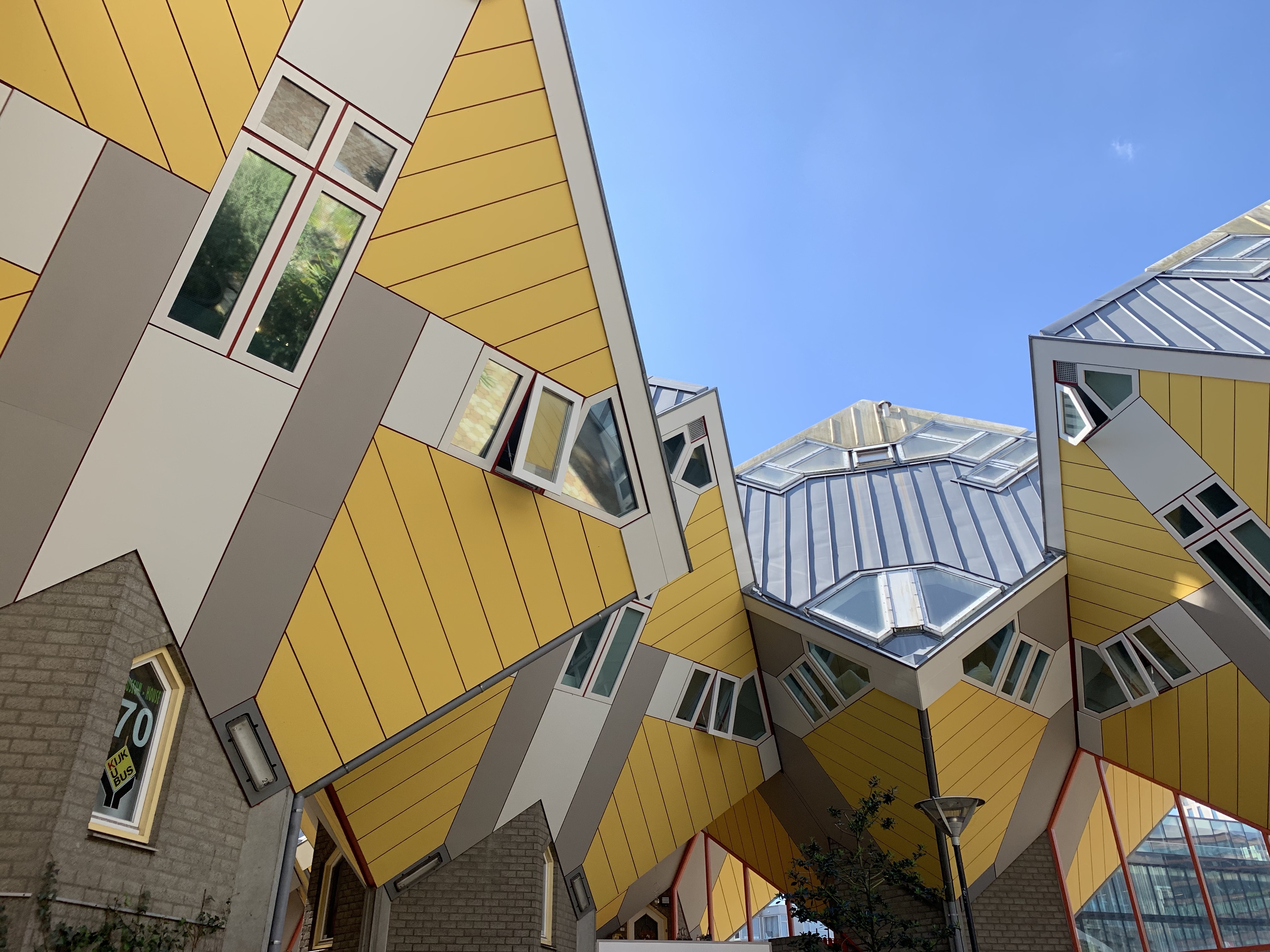
Moreover, we learned was that since the mid-20th century the city of Rotterdam has championed innovative architecture and now features the largest concentration of stunning, modern buildings in the Netherlands. After being leveled by Hitler’s bombs in 1940, the city has come to blend both old and new architecture. The city and harbor were rebuilt and as the years passed by, new buildings went up including the Erasmus Bridge, Euromast and the Cube Houses, which mimicked houses of the past, along with Laurenskerk and the Witte Huis.
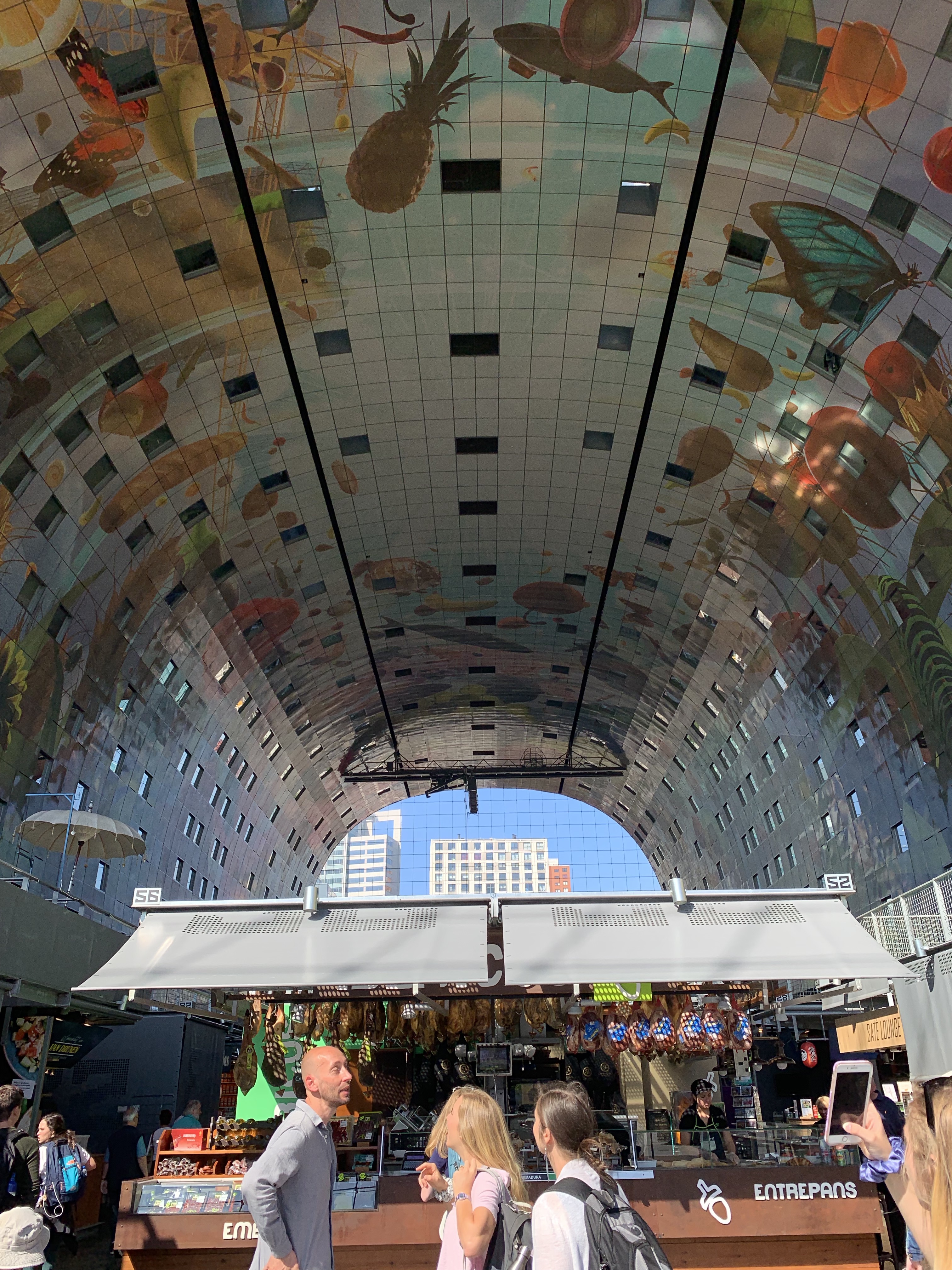
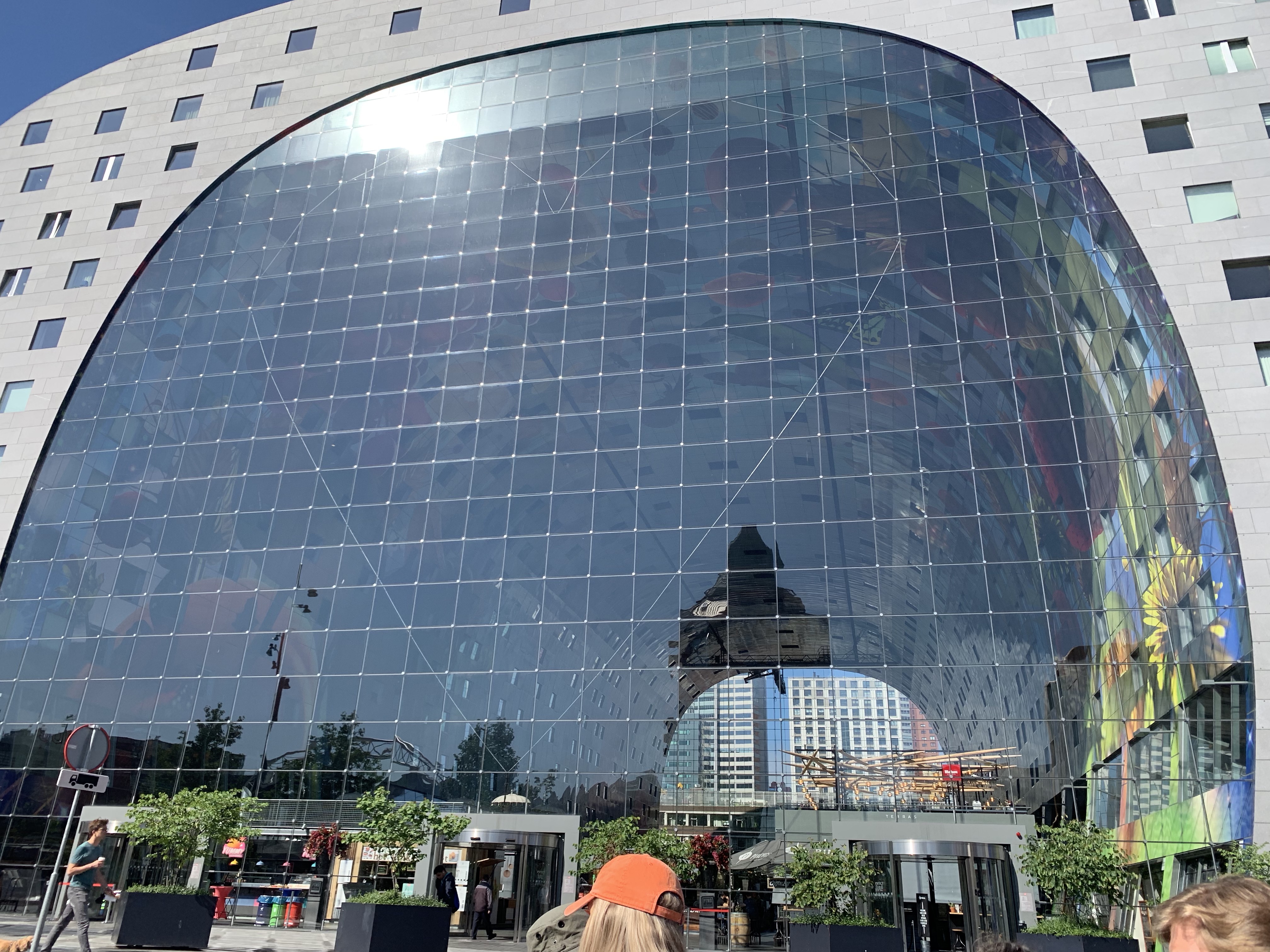
A highlight of the tour was visiting Markthal, the city’s newest market hall. Created by artists Arno Coenen en Iris Roskam and designed by leading Dutch architectural firm MVRDV, the underside of this massive, arched building features vibrant fruits, flowers, and insects and is the largest artwork in the world at 11,000 metres squared. Called Hoorn des Overvloeds (Horn of Plenty), the building can be seen fully illuminated after nightfall and is known as the “Sistine Chapel of Rotterdam”.
BlueCity
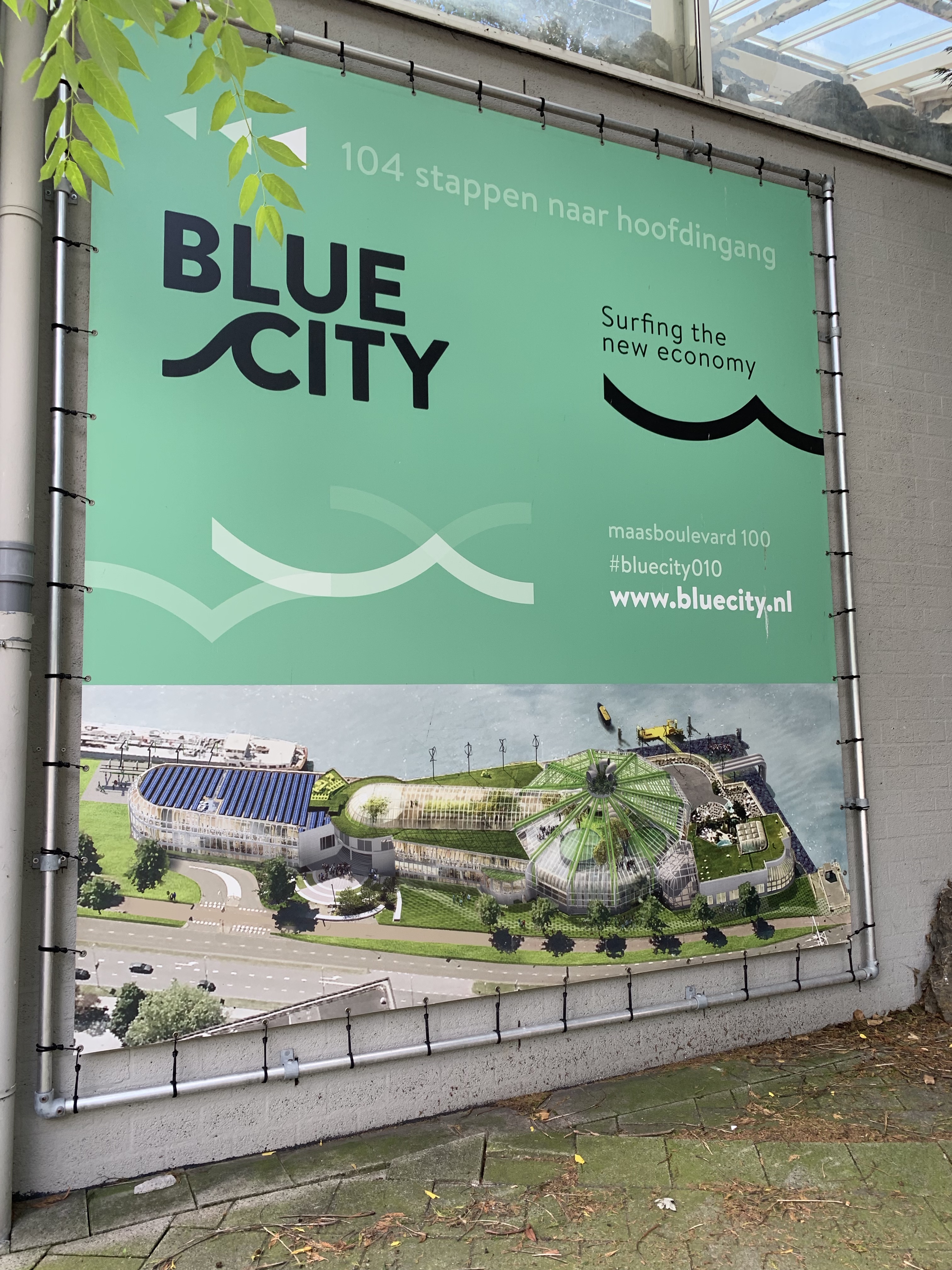
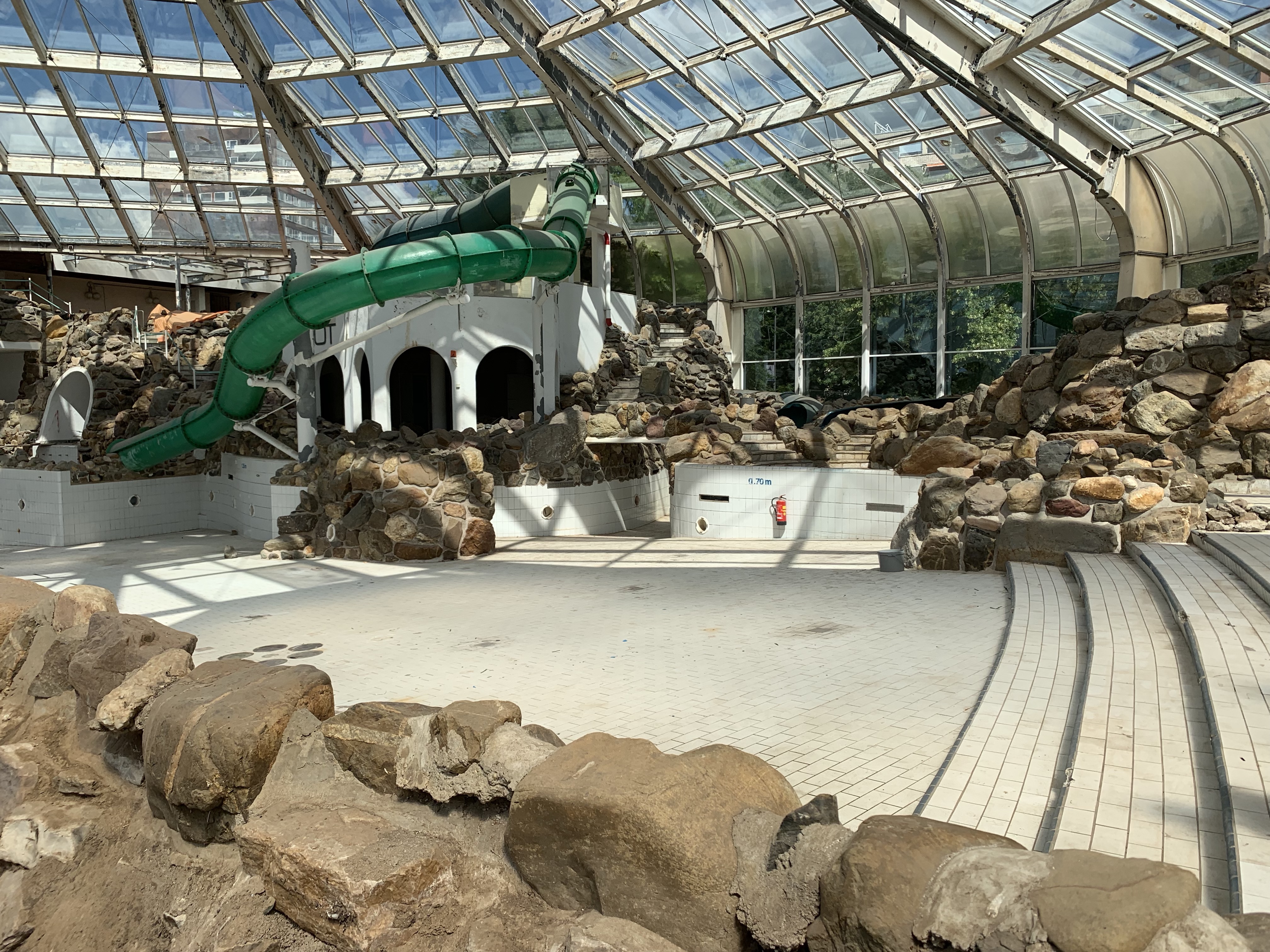
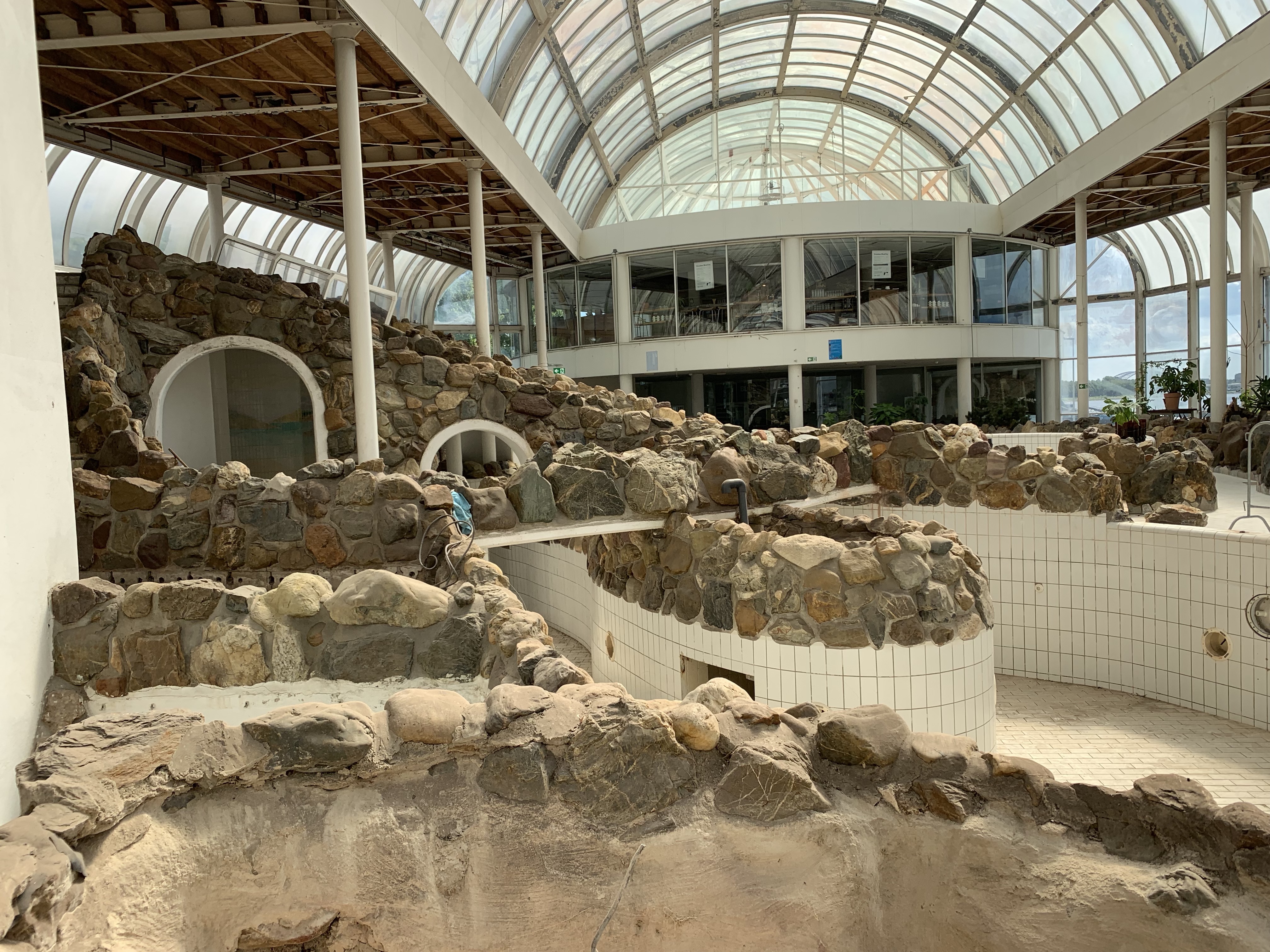
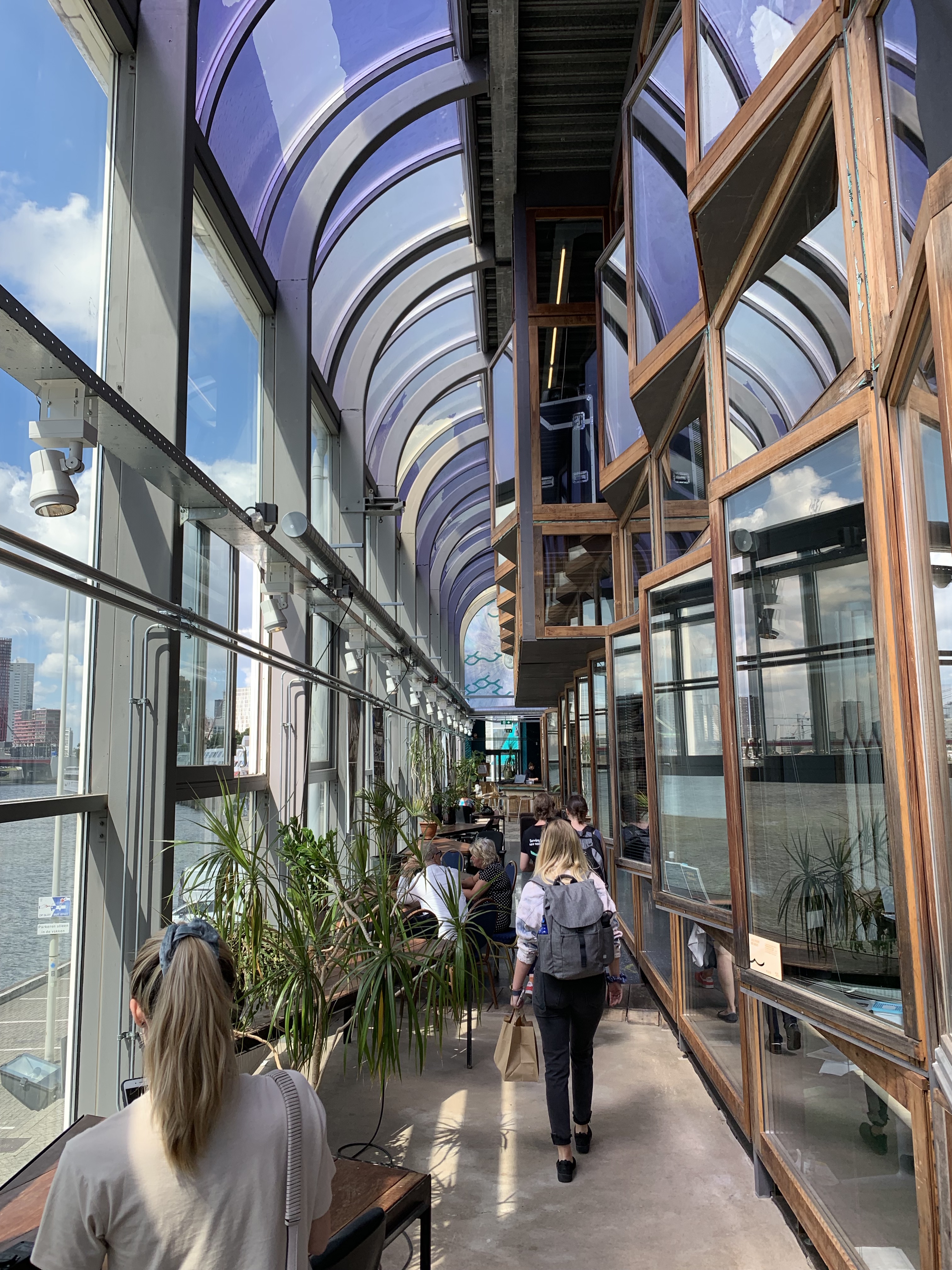
After our walking tour of Rotterdam we went to BlueCity. Located in the former subtropical swimming oasis Tropicana, BlueCity is a circular hub, workplace and exemplary city for innovative entrepreneurs & companies that is largely based on the principles of the blue economy: they work with what is locally available, based on collaboration instead of competition, and generate a variety of income flows, by deploying output from one process as input for another process for example – exactly as nature does. Furthermore, they overlay the circles of the circular economy, resulting in networks; in turn, these are interlinked. All this with one and the same target: continuous innovation, job creation, reducing the waste mountain by seeing ‘waste’ as a commodity and amassing social capital without depleting the environment.
Kinderdijk
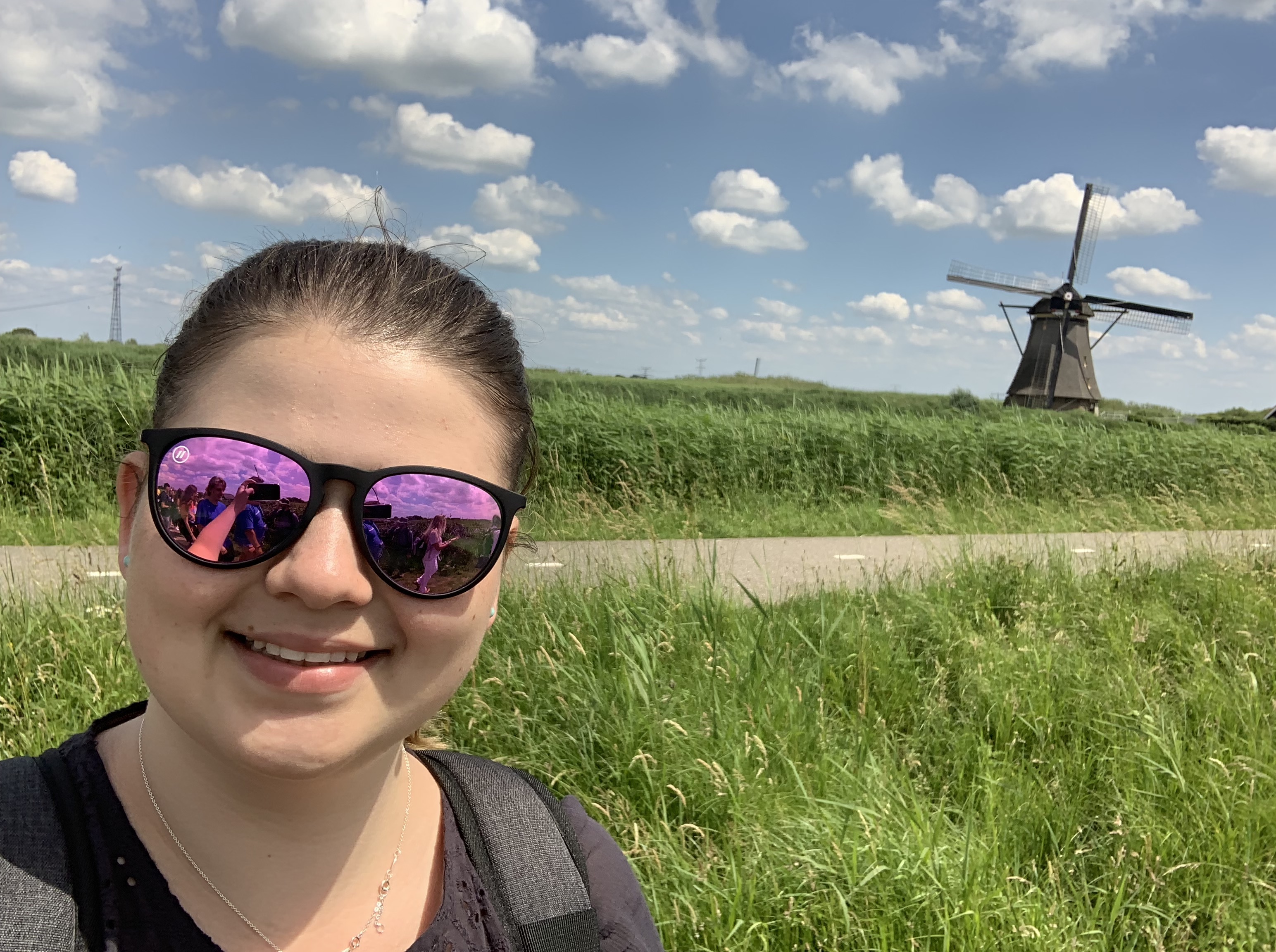
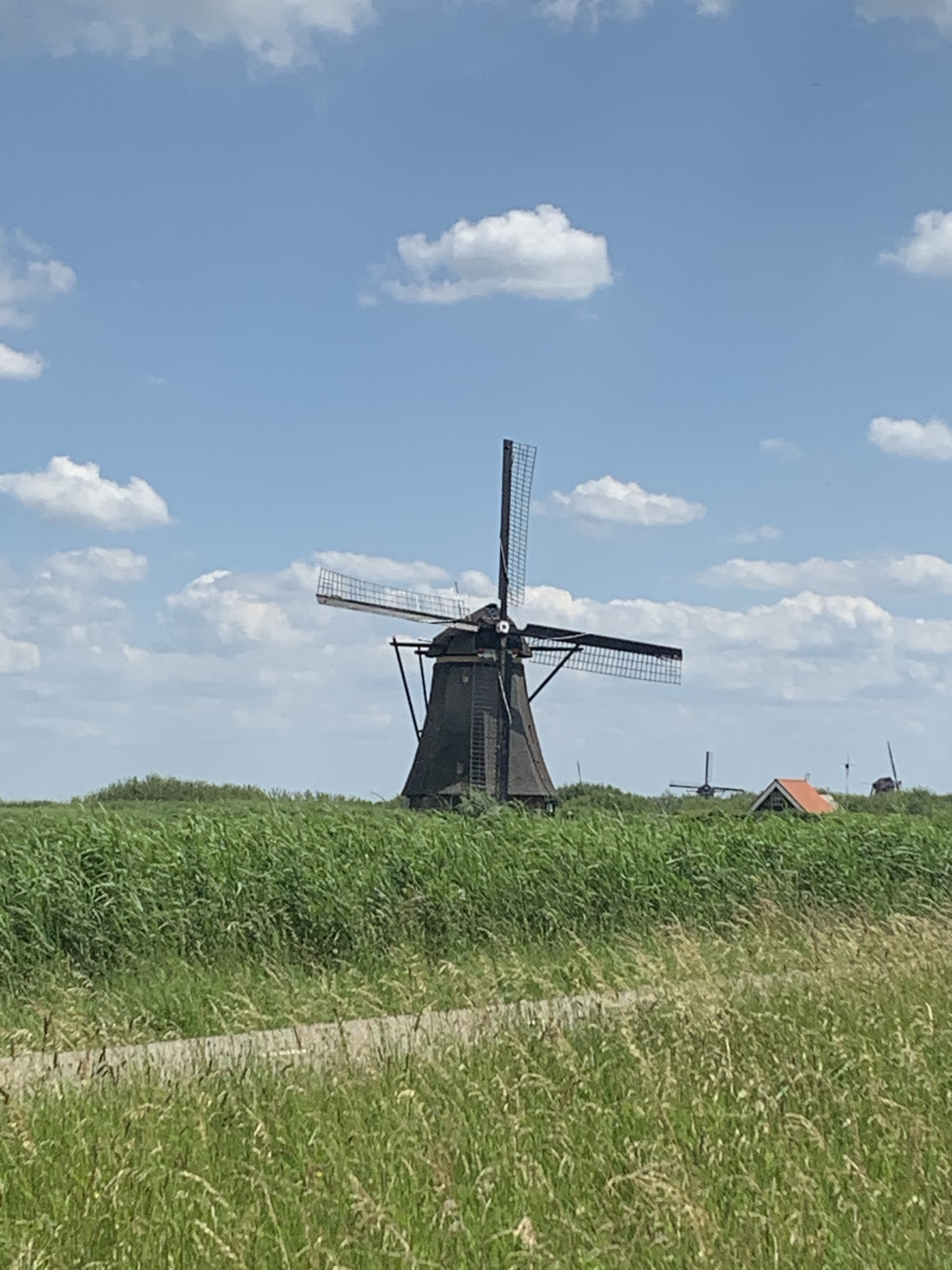
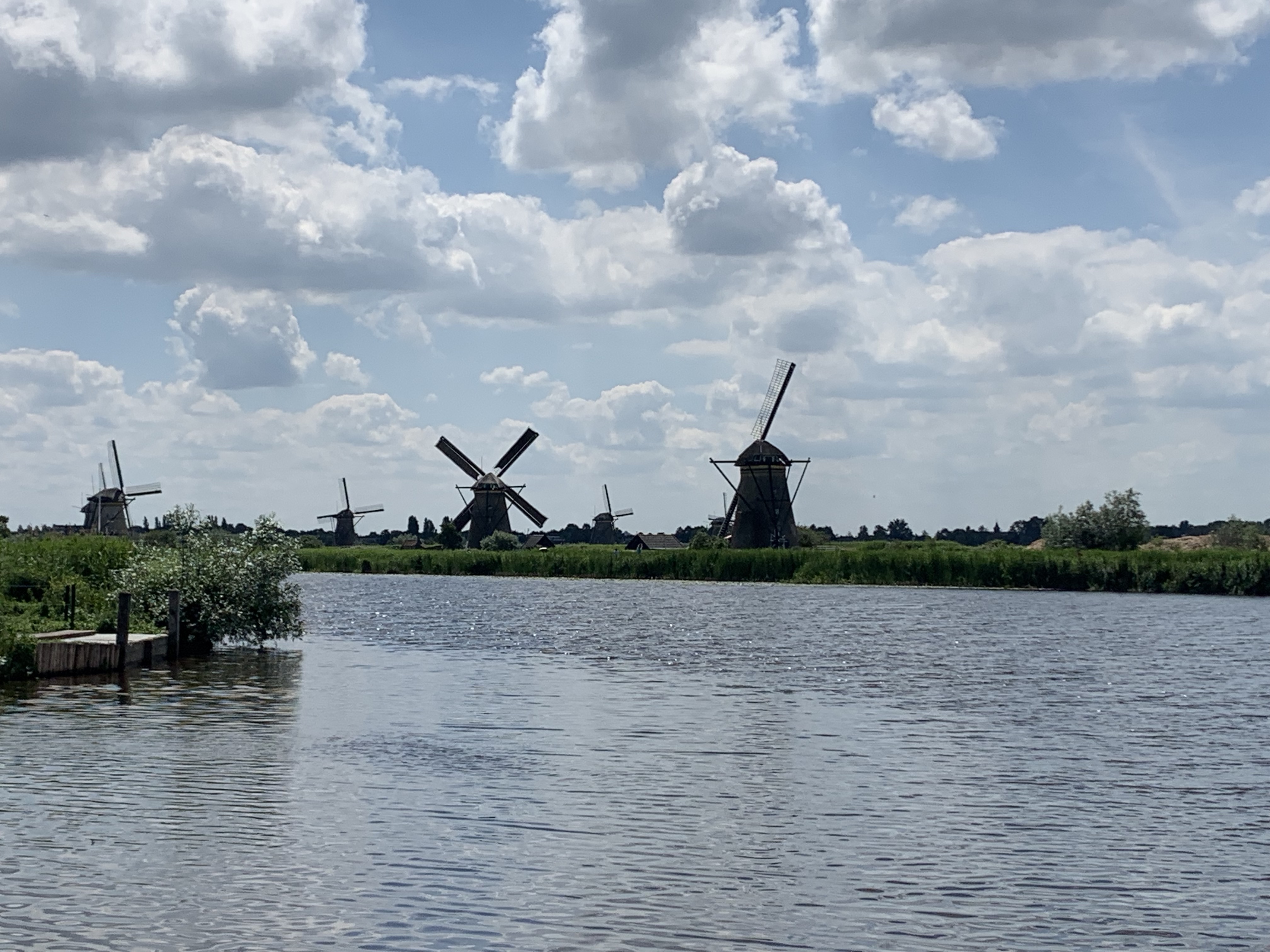
After visiting BlueCity, we visited Kinderdijk where our tour guide, John, told us about the history of the windmills and the Netherlands proud and ancient tradition of living, struggling, and working together with water. Situated in the Alblasserwaard polder at the confluence of the Lek and Noord rivers, we learned that sometime in the 13th century, Zuid-Holland’s peat rivers ceased to drain as they had been, creating a pattern of flooding that devastated the beautiful landscape at Alblasserwaard, which already existed below sea level. Berms (barriers) were built to prevent flooding, but pumping stations needed to be constructed to continue water flow from low to high areas. As a result, a series of nineteen windmills were built to pump water into a reservoir at an intermediate level between the soil in the polder (low-lying tract of land) and the river. The reservoir could then be pumped out into the river by other windmills whenever the river level was low enough.
Today, the construction of hydraulic works for the drainage of land for agriculture and settlement continues with modern technology – dykes, reservoirs, pumping stations, administrative buildings, and some preserved windmills but the main waterworks are provided by two diesel pumping stations near the entrances of Kinderdijk.
If it weren’t for these windmills and the Netherlands were to let nature run its course at Kinderdijk, some 40% of the Netherlands would be flooded, and 60% would be under threat from the waters!
Unilever
At the end of the day, Jake gave his presentation on consumer goods giant, Unilever. He informed us that Unilever is a British-Dutch transnational consumer goods company co-headquartered in London, United Kingdom, and Rotterdam, Netherlands and is Europe’s seventh most valuable company with €50.98 billion. Its products include food and beverages, cleaning agents, beauty products, and personal care products such as Breyers, Lipton, Dove, TRESemmé, etc.
Additionally, Jake informed us about Unilever’s sustainable living plan which sets out to decouple their growth from their environmental footprint, while increasing their positive social impact. Their Plan has three big goals to achieve by 2030 (improving health and well-being for more than 1 billion, reducing environmental impact by half, and enhancing livelihoods for millions) underpinned by nine commitments and targets spanning their social, environmental, and economic performance across the value chain. They continue to work with others to focus on those areas where they can drive the biggest change and support the UN Sustainable Development Goals (SDGs).
ING
After Jake gave his presentation on Unilever, Molly gave us her presentation on ING. She informed us that ING is headquartered in Amsterdam (the orange lion on ING’s logo even alludes to the Group’s Dutch origins) and is one of the biggest banks in the world with $1.1 trillion. As a dutch multinational banking and financial service company, they primarily focuses on retail banking, direct banking, commercial banking, investment banking, asset management, and insurance services. Additionally, they serve 37.4 million clients in more than 40 countries around the world (Australia, Germany, France, Italy, Poland, etc.).
Furthermore, as a financial institution, Molly informed us that ING realizes that they play a major role by financing change, sharing knowledge, and using their influence to create lasting sustainable change. They believe that being sustainable is not just about reducing their own impact but that it’s in all the choices they make—as a lender, as an investor, and through the services they offer to customers. Thus, sustainability is inherent to their purpose of empowering people to stay a step ahead in life and in business.
Since 2007, ING has been climate neutral and plans to procure 100% renewable electricity by 2020 for all buildings they operate worldwide (as part of their RE100 initiative). They also plan to reduce their CO₂e emissions by 50%, their global residual waste by 20%, and their water footprint by 20% all 2020 (base year 2014). Lastly, they plan to remain carbon neutral by offsetting their remaining carbon emissions.
 Sarah's European Voyage