
Crossing the broader into Belgium, the country felt both similar and different to the Netherlands. Unlike Maastricht which has a quaint small town feel and is surrounded by a wonderfully scenic landscape with cobbled roads, graceful architecture, pleasantly cool weather, and smiling and helpful people, Liège is a much bigger city and has more of a gritty charm with its post-war architecture and rusting factories. It definitely felt like a place built on hard work and hard times. In many ways, traveling to Liège felt a little bit like time travel – definitely feels a few decades behind the present. A striking similarity between the two cities was definitely their rivers. Just like the Maas River runs through the middle of Maastricht, the Meuse River cuts through the city of Liège in a powerful way.
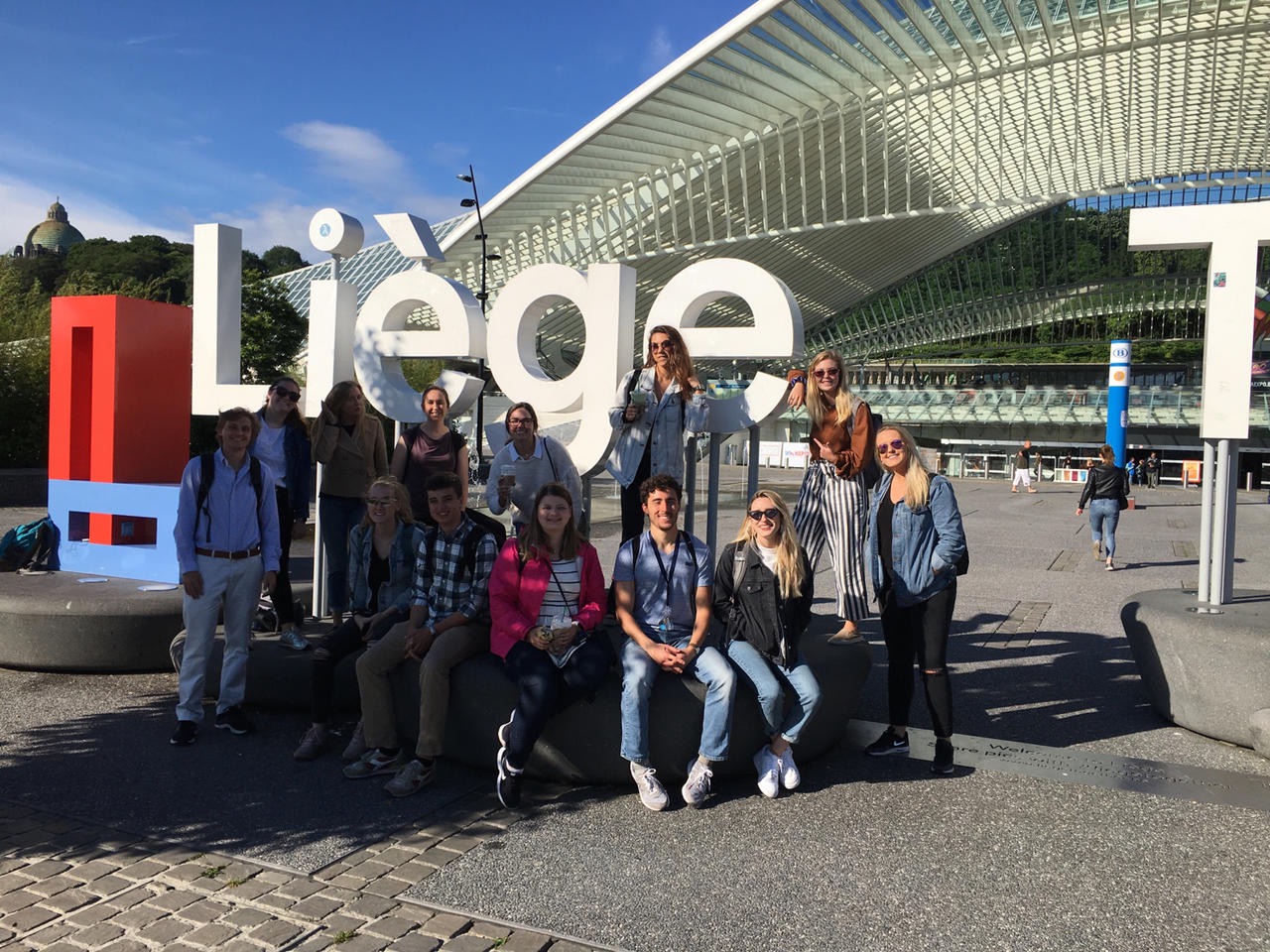
Upon arriving in Liège after a relatively short 32-minute train ride, my International Environmental Laws and Sustainability and Global Corporate Leadership class entered into the Liège- Guillemins train station which was a breath to be held with its beautiful vaulted glass and steel canopy. It’s definitely one of the most avant-garde and awe-inspiring train stations in Europe. What was attractive to is how much the modern feel of the station directly contrasted to the historical and gritty charm of the city itself.
After admiring the Liège- Guillemins train station and taking pictures, my International Environmental Laws and Sustainability and Global Corporate Leadership class, went to find a few taxis to take to the Liège airport for our 9:30 tour. While waiting for a taxis, a group of us encountered quite an aggressive argument (in French and not Dutch I might add) between two Belgians. The taxi driver who started the argument wanted us to enter his four-person sedan since he was first in line, but there were five of us who needed to get to the airport. We tried to make our way to a van that would accommodate all of us but this taxis driver would not have it and started to get very angry. We eventually had to walk away for a bit until things cooled down. At this point, other taxis drivers were getting out of their cars to argue with this angry taxi driver as well. Just like us, they couldn’t understand why this driver was not letting all of go in one van. Eventually, all the taxi drivers started to calm down a bit and one taxi driver (with a van) motioned for us to come over. We maneuvered our way around the angry taxi driver and hopped into the van and finally headed towards the airport for our morning tour – Talk about the first impression of a city!
Liége Airport Tour
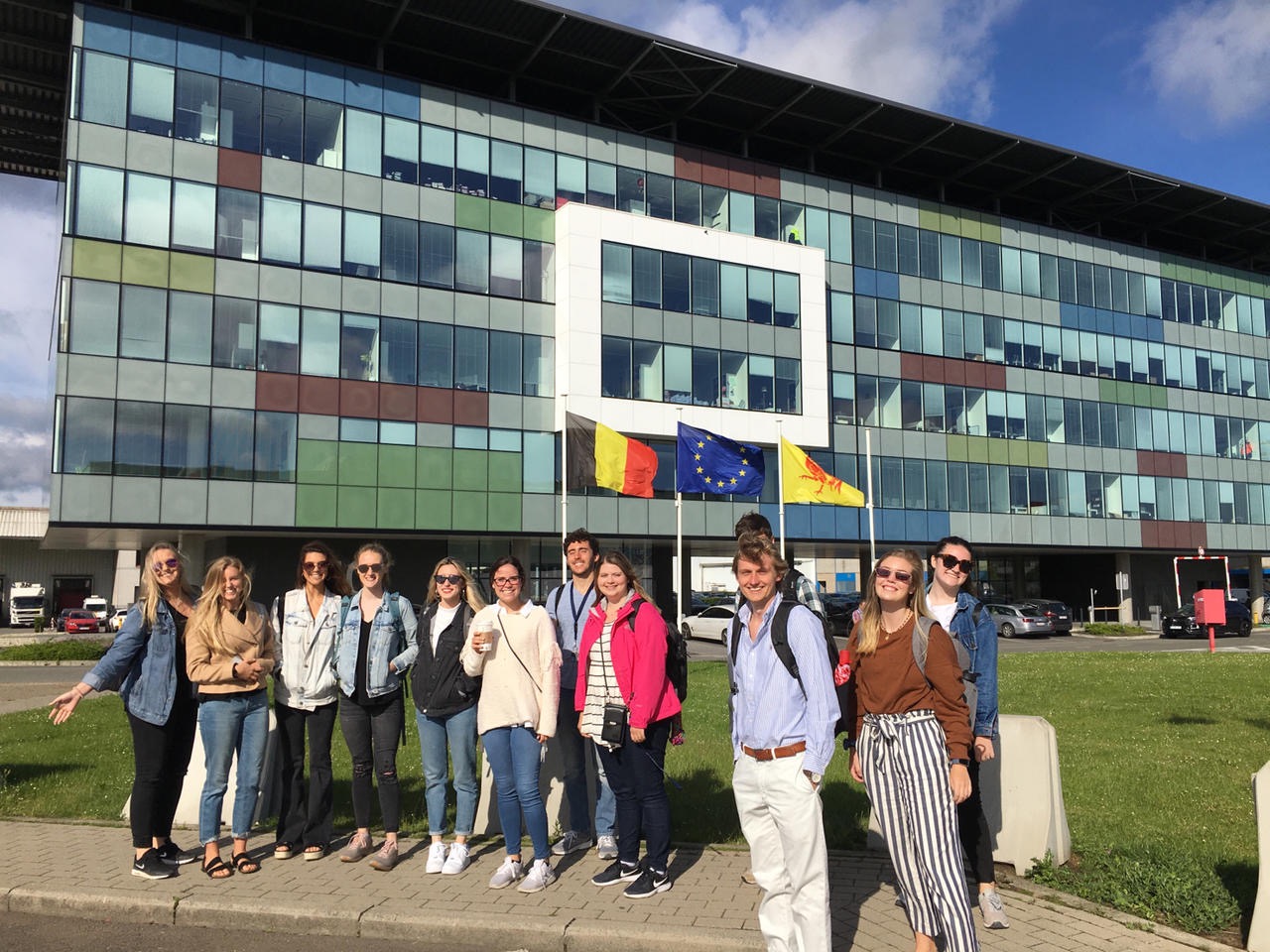
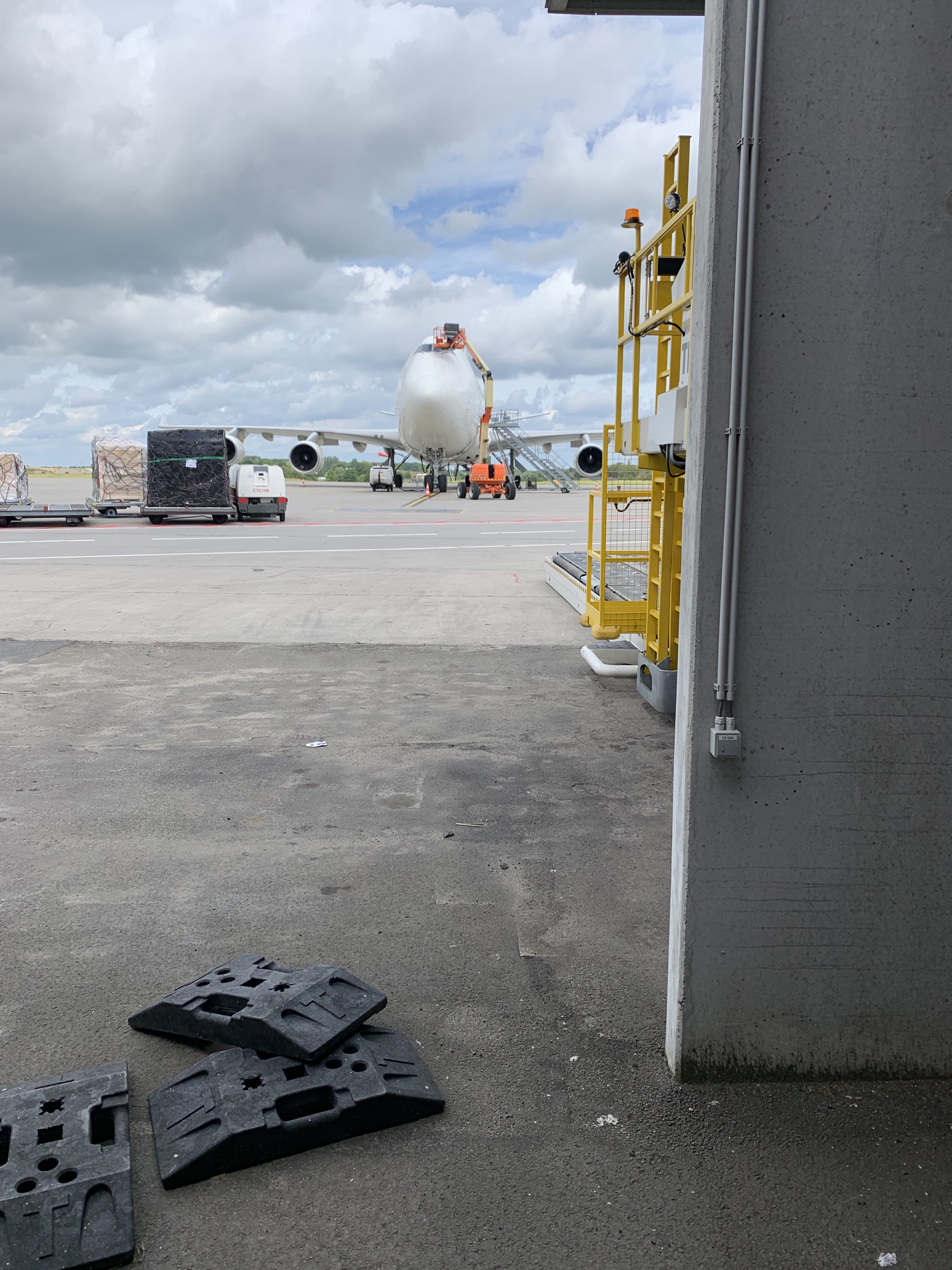
Upon arriving at the Liège airport we were taken to an amazing conference room where we were introduced to Dongqing Zhang, our tour guide, who provided an excellent overview of the airfield which is the #1 Belgian Cargo airport and 7th European Cargo. During his presentation he told us that for 20 years, Liège airport has been a rising star in the world of Cargo and logistics with an average of 8% growth per year because other airlines opt for passenger planes that make extra money through in-air and secondary sales; they have a total of 871,000 or 80,000 tons of cargo a year with a €40 million turnover; and their airfield provides 15,000 direct and indirect jobs. Dongqing Zhang also told us that Liège airport is connected to 60+ cities in Europe along with cities in the United States such as New York, Atlanta, Memphis, Los Angeles, and Dallas.
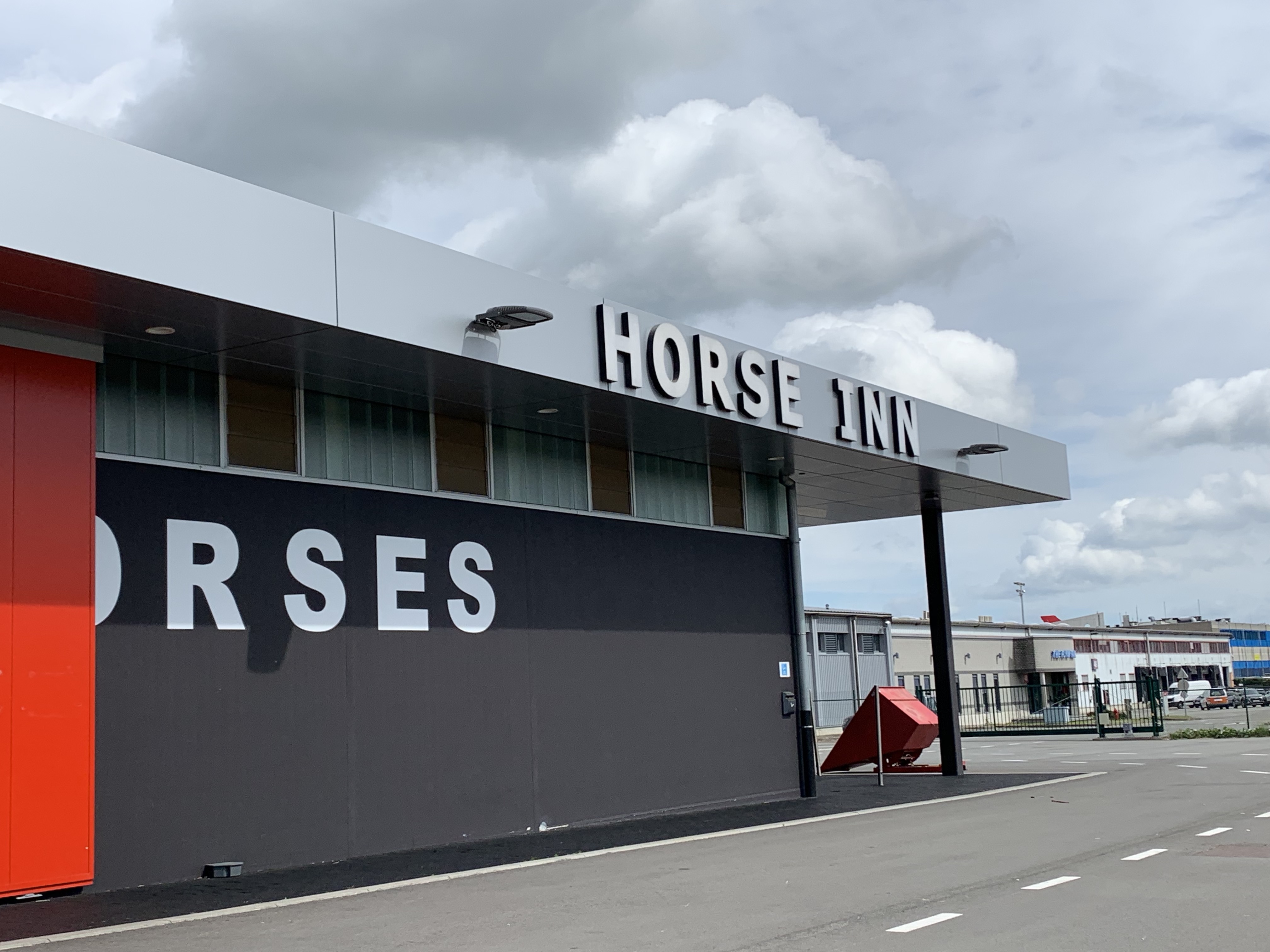
A highlight of the presentation and the tour was learning that they not only fly e-commerce, express packages, large shipments, pharmaceuticals, and perishables but also live animals —specifically horses. To accommodate these horses the airfield has a Horse Inn were all the horses that fly out of Liège are are taken care of and catered toward to make sure their flight is a stress free as possible.
Walking Tour
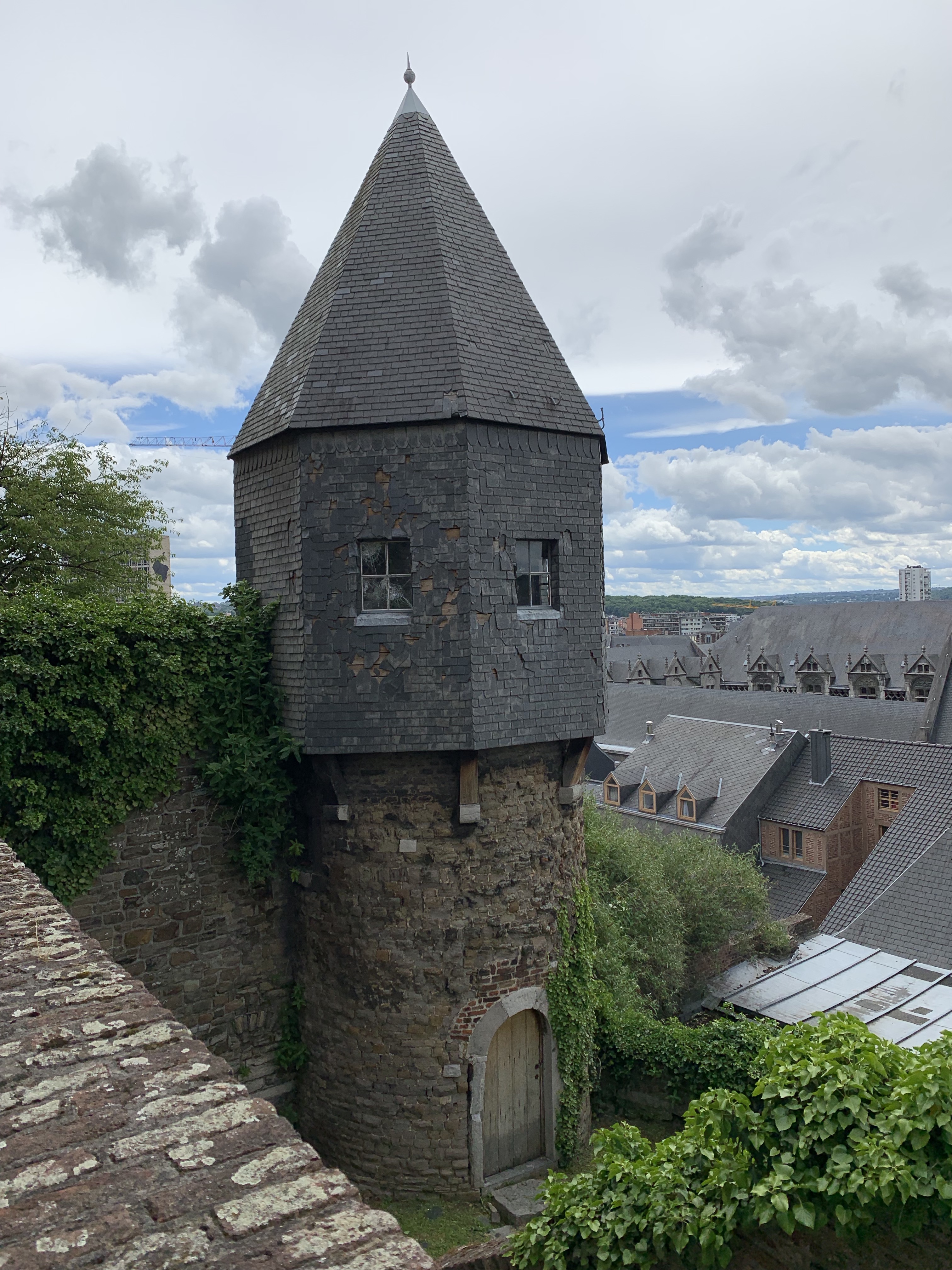
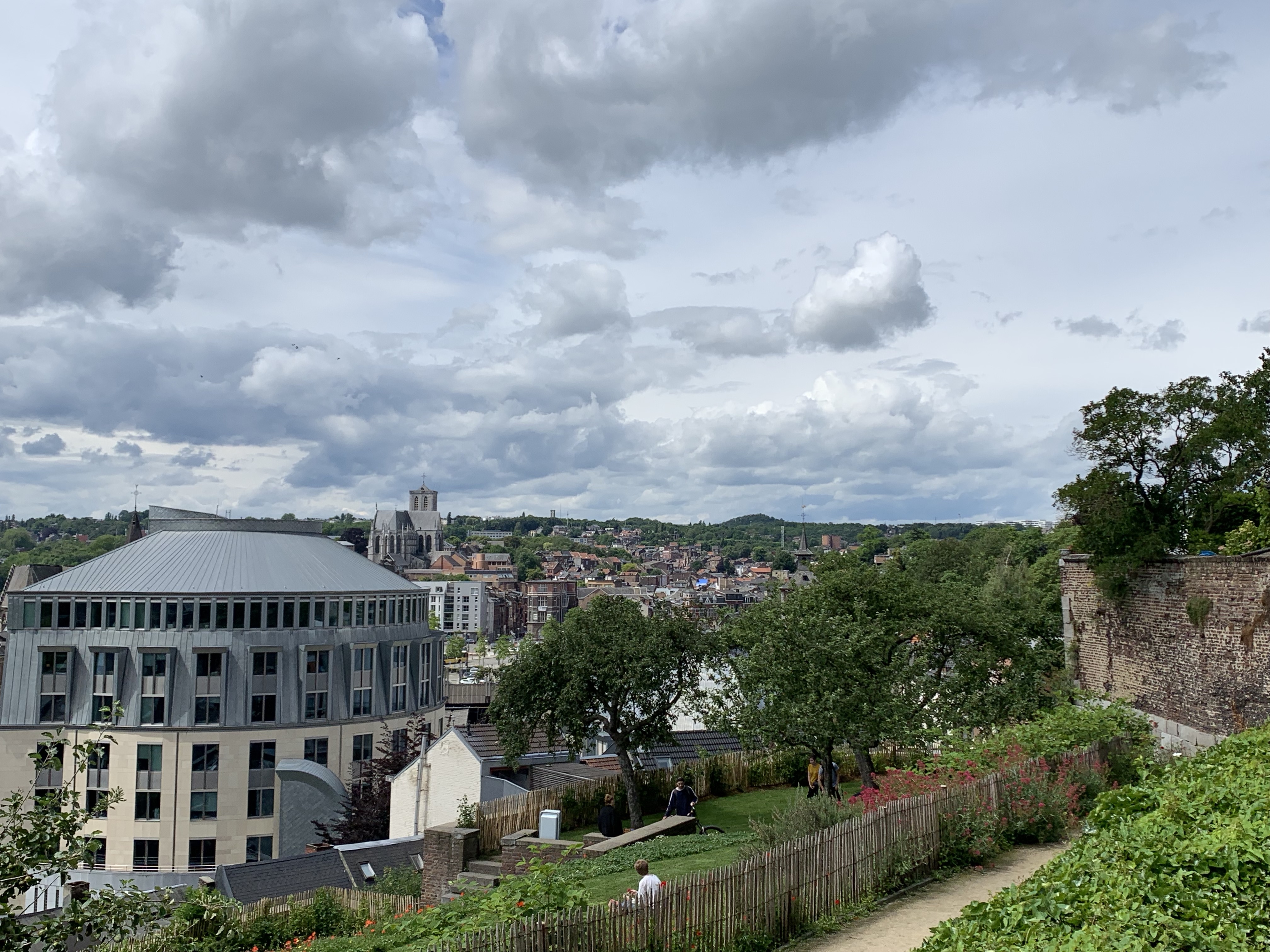
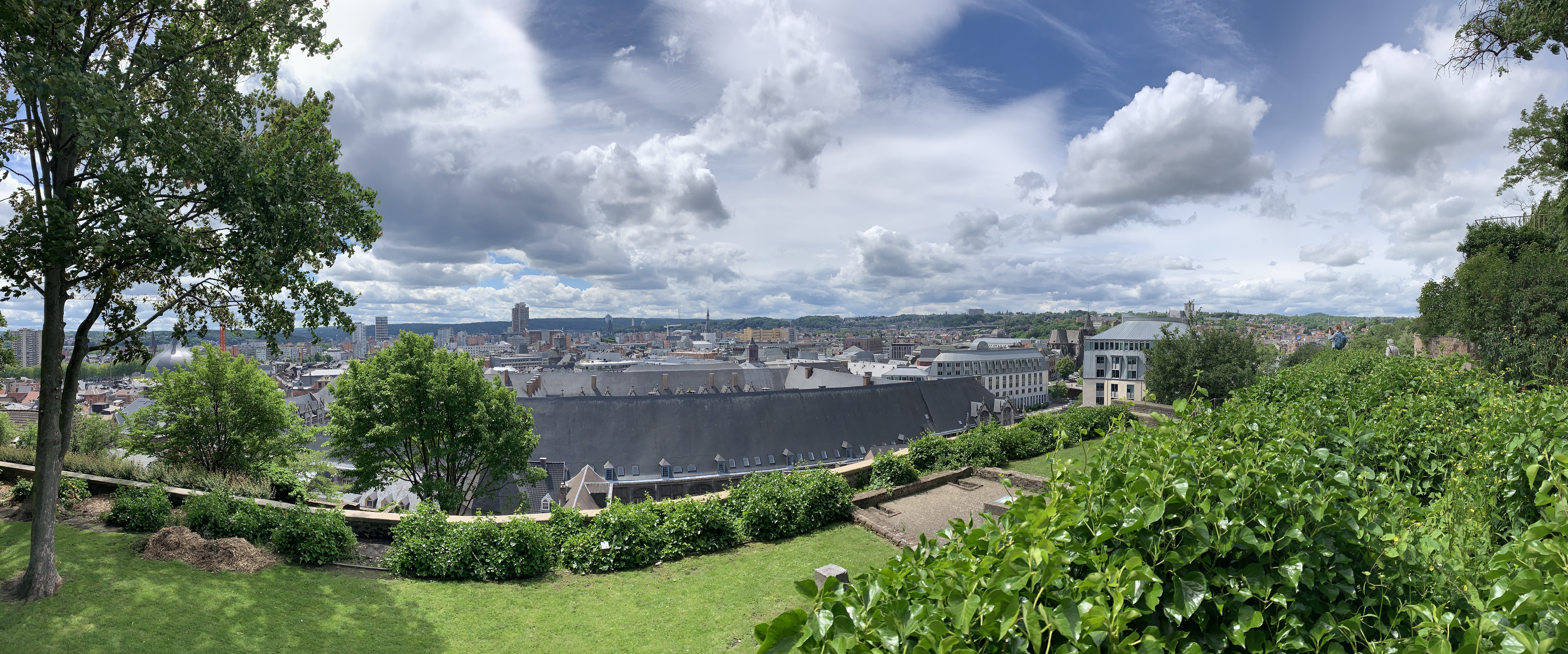
After our tour of Liège airport, we made our way to the historic center and went on a walking tour of Liège were our tour guide informed my International Environmental Laws and Sustainability and Global Corporate Leadership class about the rich Catholic history and beautiful nature surrounding the city. During the tour I learned that during prehistoric times, a group of humans settled at the confluence of the Meuse and Légia rivers, on the site of the current Place Saint-Lambert. The first remains of settlement date back to the Middle Paleolithic era.
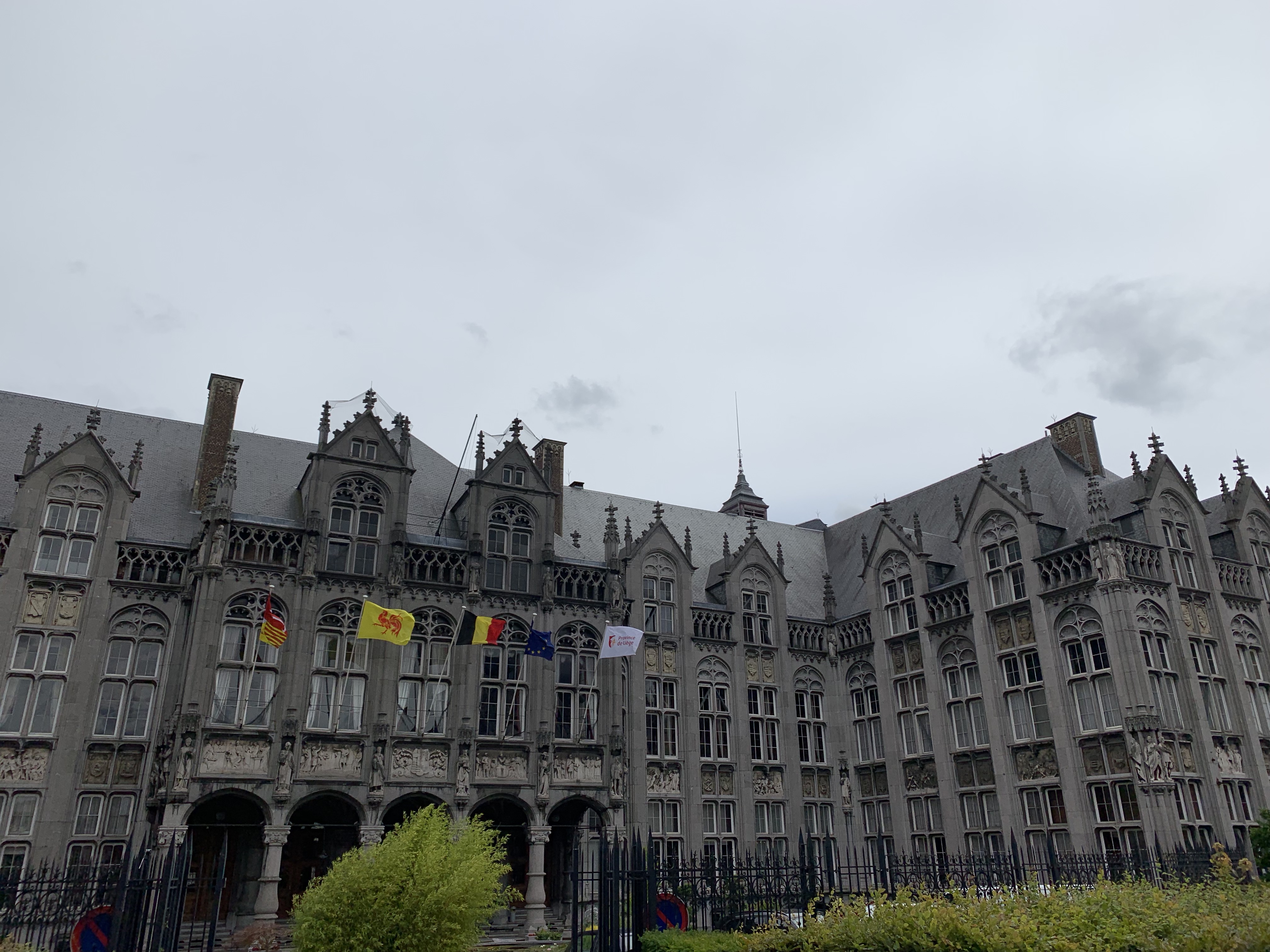
Thousands of years later, it was also on this site that, in the 2nd century AD, a vast Roman villa was built due to a certain number of people coming together, attracted by the site’s proximity to water. Once they had become Christianized, they built a place intended for worship and in the humble chapel, Lambert, the Bishop of Tongeren-Maastricht, was assassinated circa 705. This event was decisive for Liège’s future. The site soon became a much-visited place of pilgrimage; the village expanded and took on genuine importance when the holy seat of the bishopric was transferred there. A palace was soon built next to the church. The calling of Liège was henceforth sealed for the entire Ancien Régime period: it was to be an episcopal city and soon bristled with the spires of many church towers.
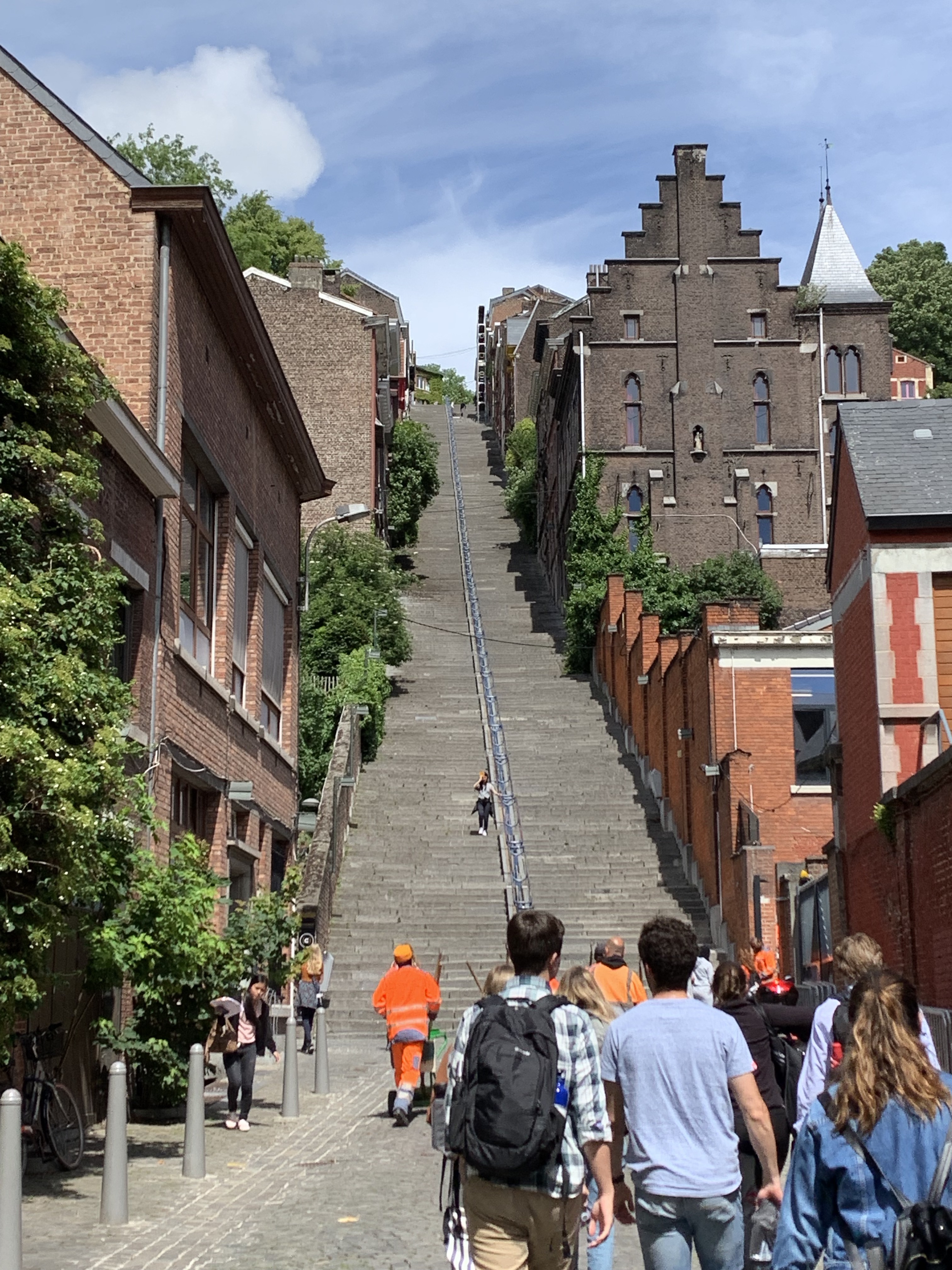
A highlight of the tour was seeing and climbing (part of) the famous Montagne de Bueren staircase, a 374-step staircase named after Vincent de Bueren, who defended Liège against an attack by the Duke of Burgundy, Charles the Bold in the 15th century.
Brewery Tour
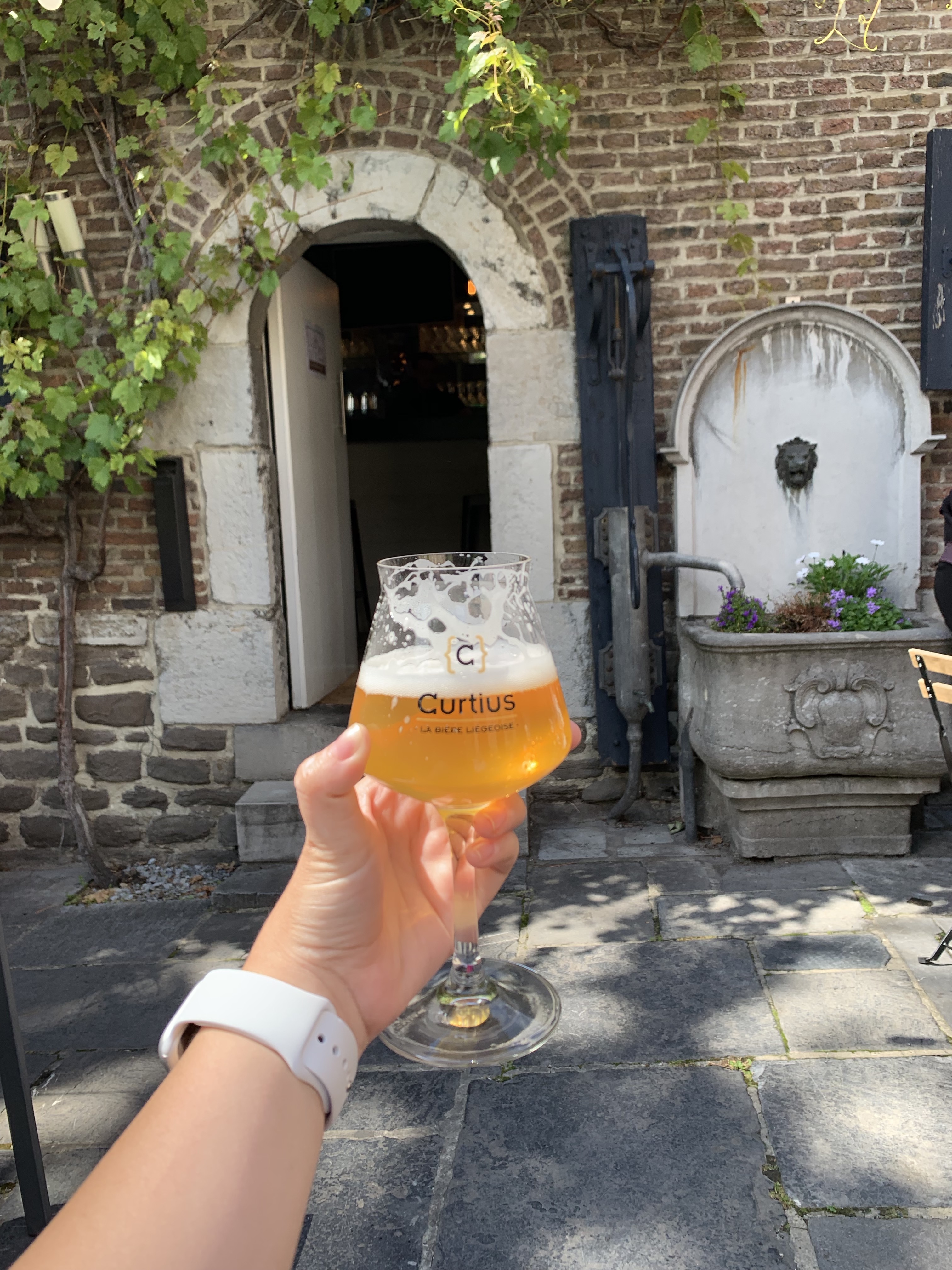
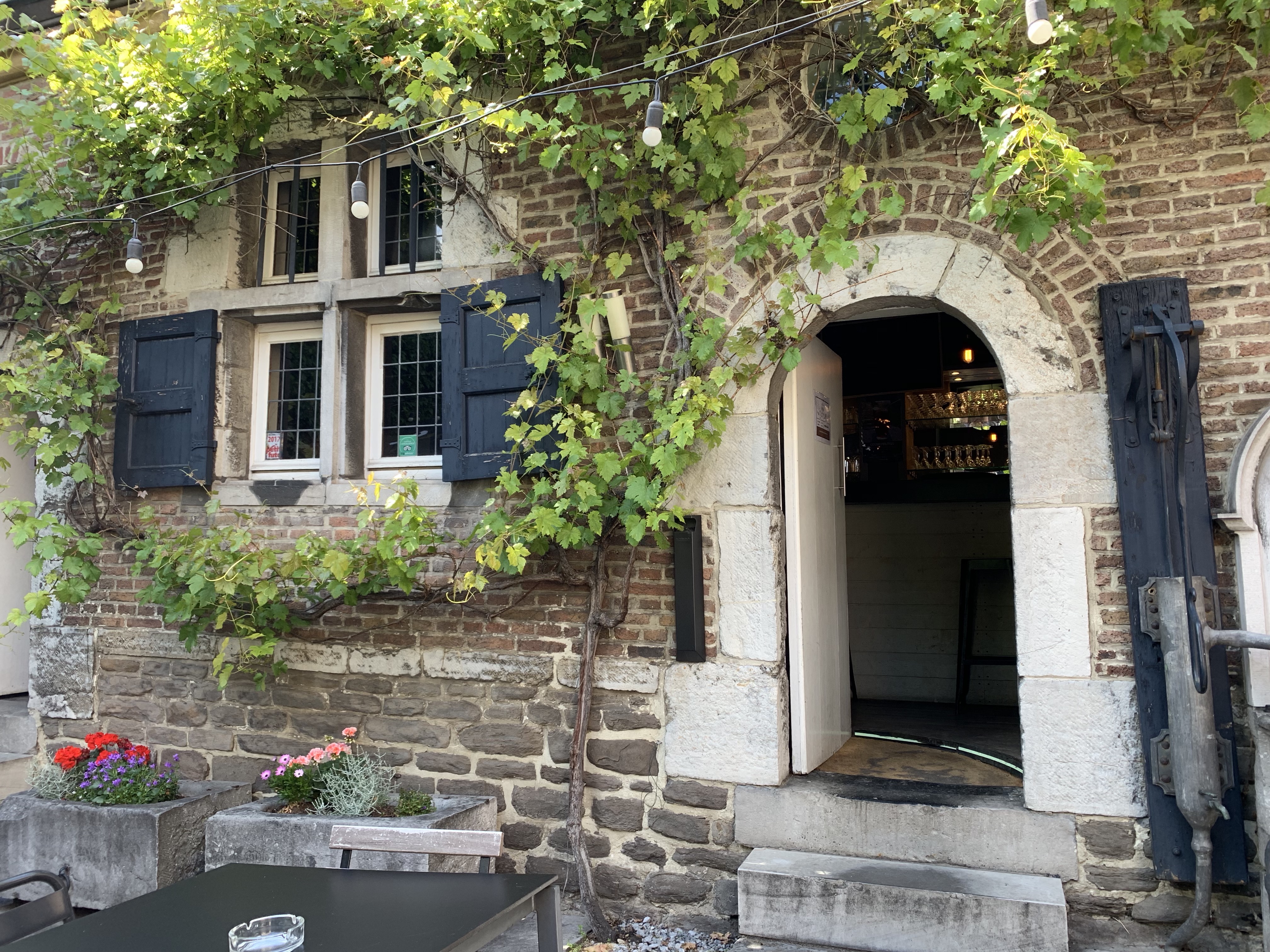
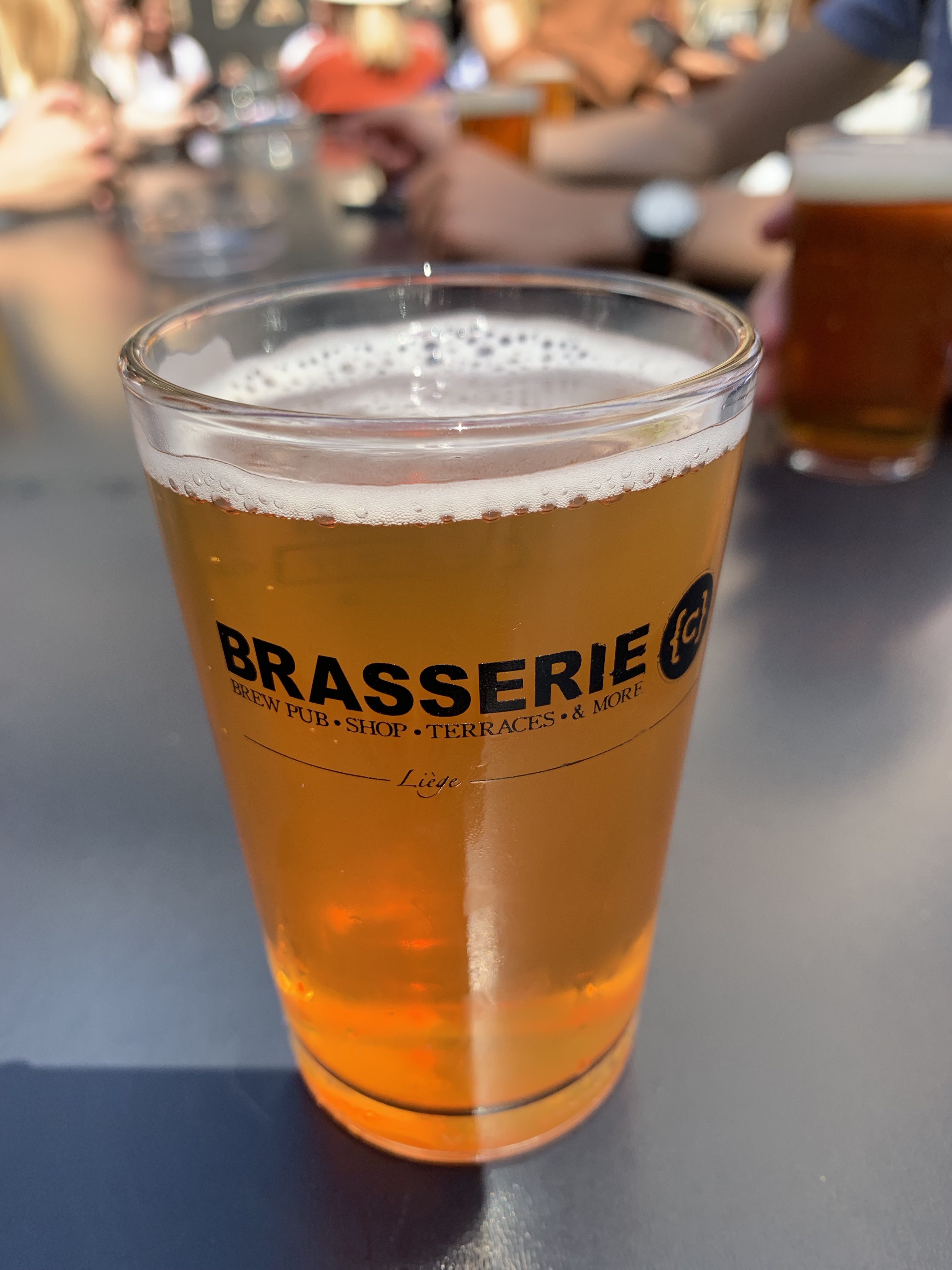
To end our day, we toured a local microbrewery, Brasserie C, and learned about the process and history of brewing Belgium beer. Curtius established when Renaud Pirotte and François Dethier decided to create a Liège beer during their agri-food studies. They went on to become winners of the first edition of the TV program “Starter” (the Belgian version of Shark Tank). As a result, both businessmen were able to realize their project and bought an industrial space, right in the historic heart of Liège were Curtius is brewed with high quality products composed of various barley malts and wheat.
 Sarah's European Voyage