
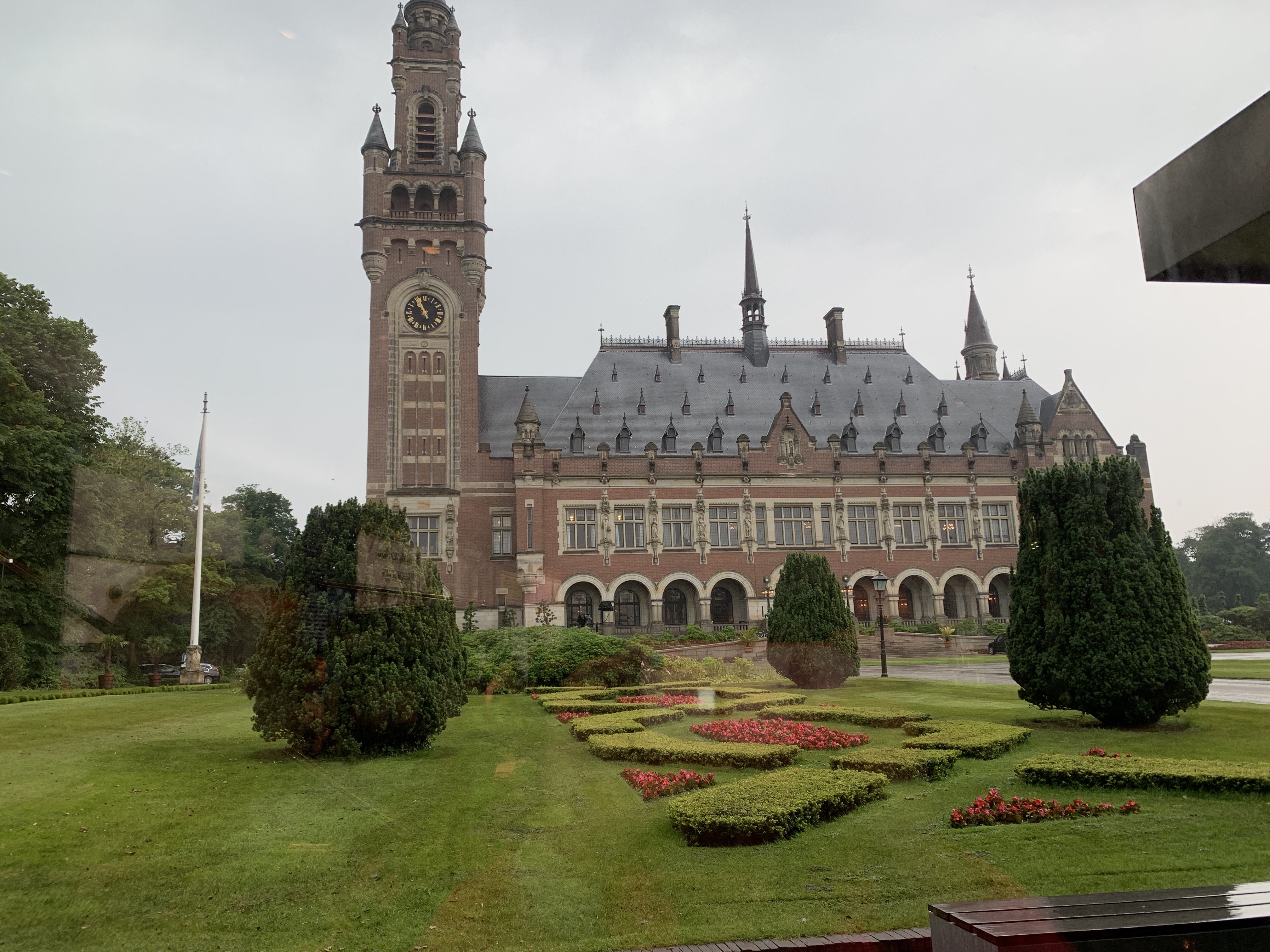
Today, my International Environmental Laws and Sustainability and Global Corporate Leadership class started our day early with a 3:45 am wake-up call to catch a 2.5-hour train to The Hague. Our first stop at the Hague, once we arrived, was the Peace Palace, where we met with Tom, our guide, at 8:30 am. He taught us that as a reaction to the centuries of violent wars that had raged in Europe, Czar Nicholas II initiated an international peace conference. During the First Hague Peace Conference of 1899, 26 countries came together to speak about disarmament and about the possibility of international jurisdiction, which led to the establishment of the Permanent Court of Arbitration. By the time the second peace conference took place, the first stone of the palace could be laid. Scottish-American steel magnate Andrew Carnegie donated USD 1.5 million to build the Peace Palace.
The prestigious institutions at the Peace Palace work on a daily basis towards peace through law. The palace houses the only principal organ of the United Nations outside of New York, the International Court of Justice (1946), which aims to prevent war between states by applying international law. The palace also houses the Permanent Court of Arbitration (1899) that arbitrates many conflicts between different parties, such as states, companies and other organizations.
These international courts and the many international organizations in The Hague, the International City of Peace and Justice, are all supported by the Peace Palace Library. One of the highlights of the tour was the chance to see The Peace Palace Library, which is he largest and oldest library in the field of international law and peace in the world.
Environmental Adjudication In The Hague
The Hague adjudicates a number of Environmental laws form forest fires on Indonesian islands; huge quantities of CO2 emissions that contribute to climate change; deforestation that causes loss of biodiversity, wildlife preserves (global trust) being threatened and the plant and animal species endemic to regions that are threatened with extinction (i.e. orangutan); haze from forest fires causing damage to human health, economy (tourism, agriculture, travel), and the regional environment (acid rain, poor air quality, poorer visibility). For example, indigenous people being deported from their ancient lands to nature to conservation groups trying to save the orangutan, to a local farmer finding his crops polluted by smog and the director of Singapore Changi Airport seeking compensation for recurring closure of his airport as a result of poor visibility can use the legal facility in The Hague to assist themselves in seeking justice. The legal facility in The Hague can help in directing Parties to a proper (alternative) dispute resolution mechanism and provide advice on environmental legal expertise at a local level and on obtaining the financial means to resolve disputes through adjudication as well as mediation or arbitration.
After our tour of the Peace Palace, we made our way in the wind and rain to lunch at S-Team were we got the chance to dry off under warm heaters and eat a hot meal (Grilled cheese and Tomato soup, yum!)
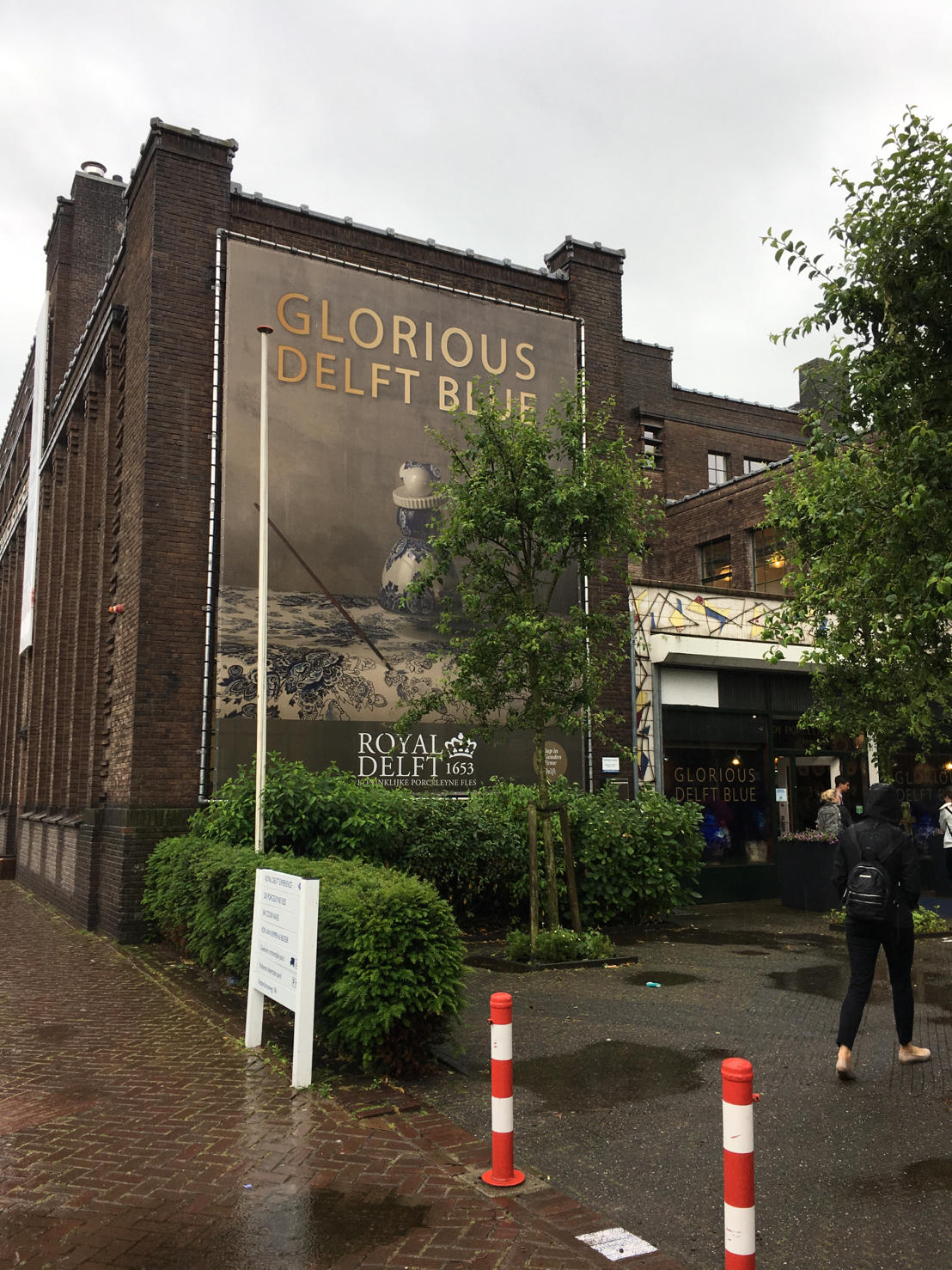
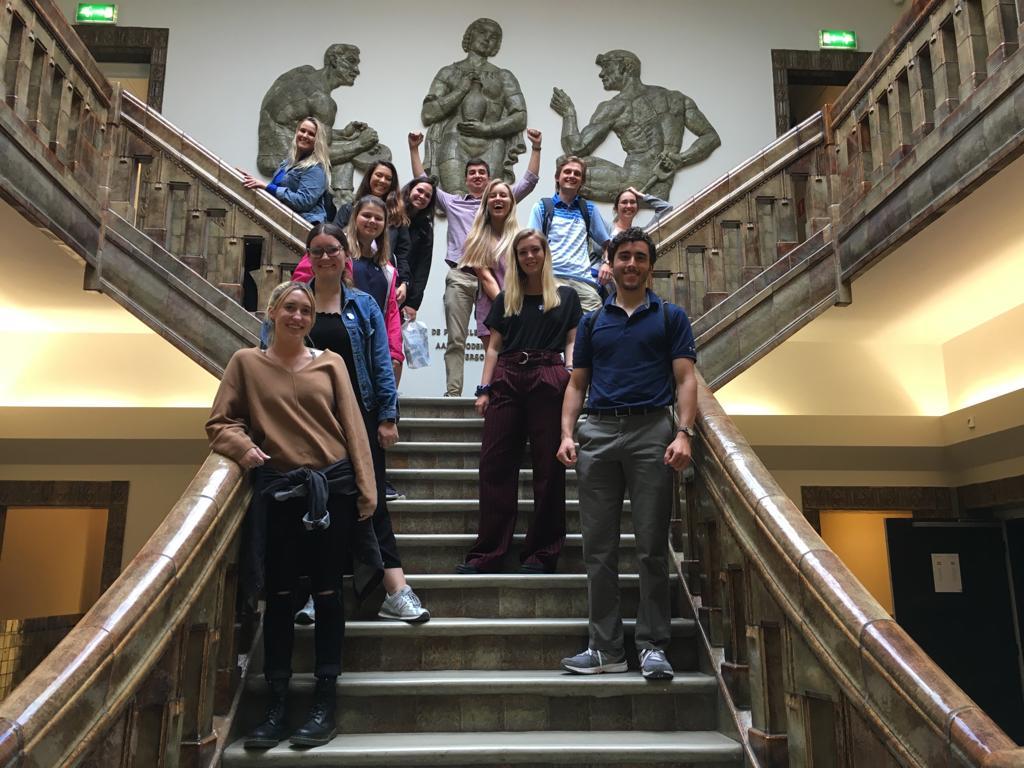
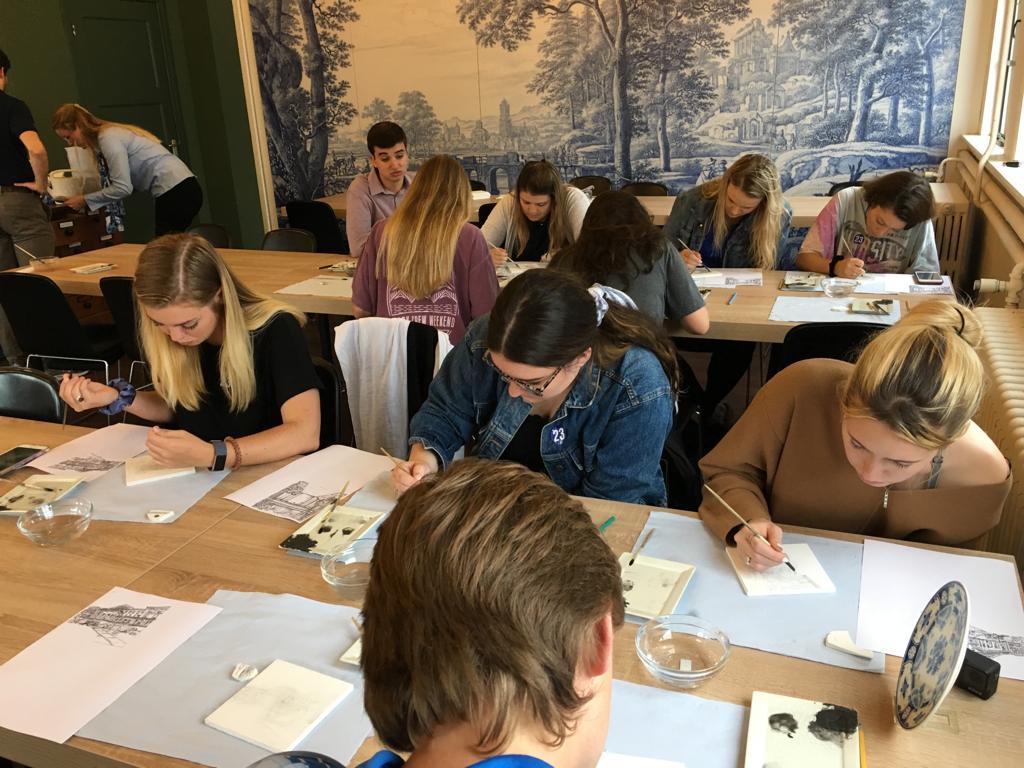
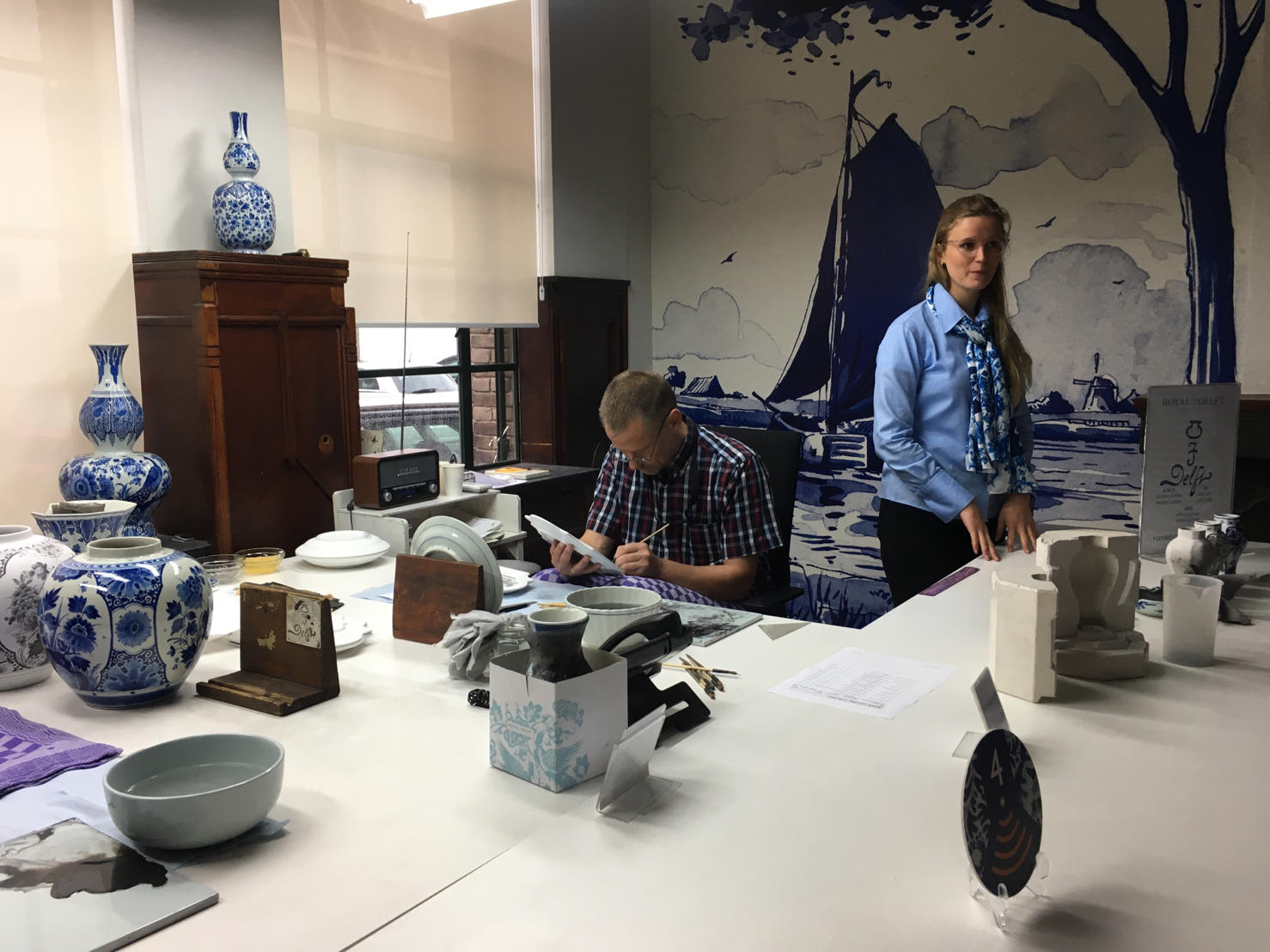
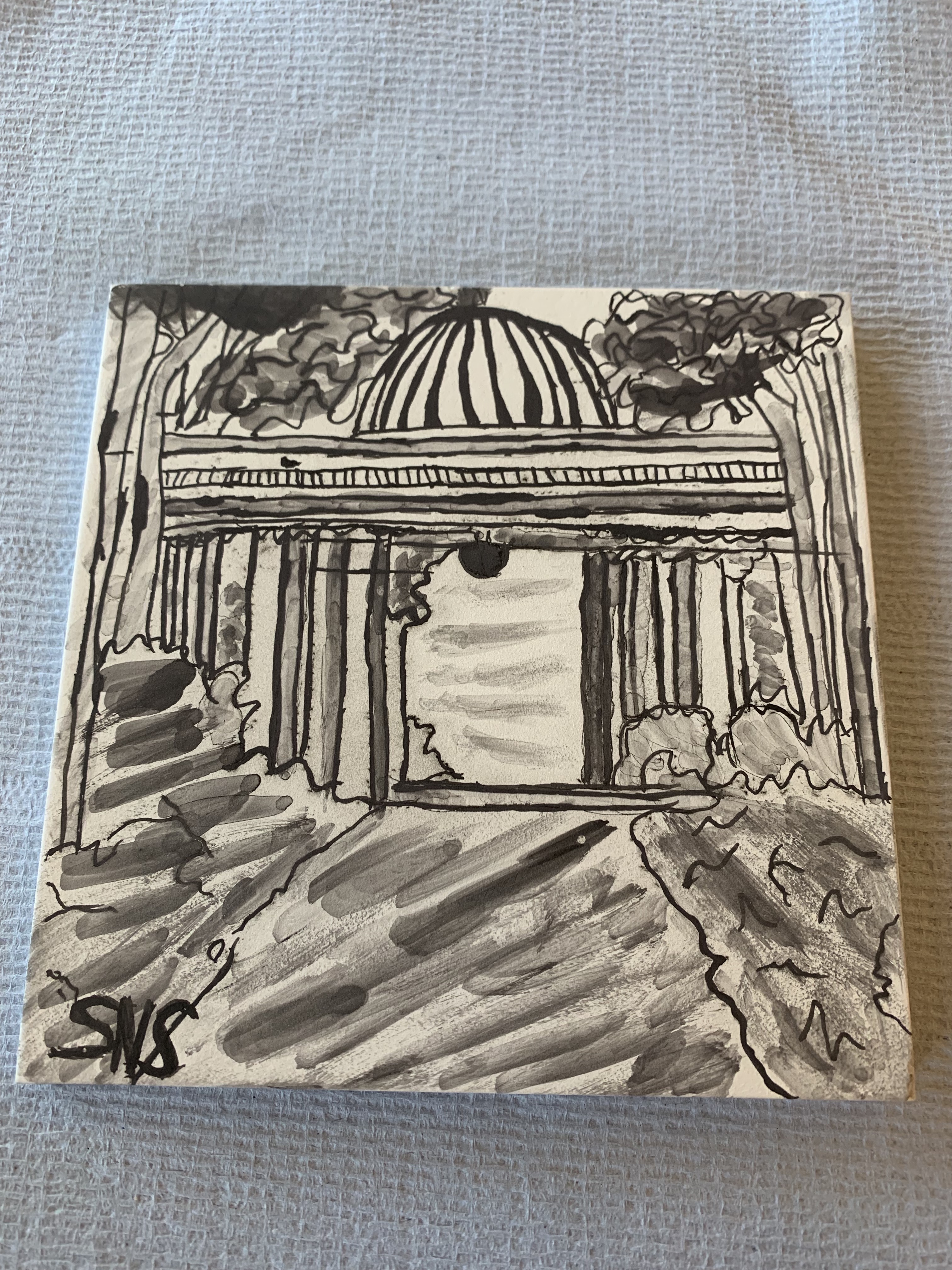
Following lunch, we headed to our last stop, The Royal Delft, where we learned that Delft Blue was originally created as a more affordable alternative to the blue-and-white porcelain from China, which was immensely popular with wealthy families and the European nobility. When the import of Chinese porcelain decreased due to civil wars in China, the enterprising Dutch seized their chance and developed their own variant. Its popularity soared and in its heyday, between 1650 and 1750, hundreds of potteries were active in the city. We also go the opportunity to watch an artist paint with the famous cobalt blue glaze (which actually paints on as black but as a reaction to the extreme heat of the kiln, turns a deep royal blue) and see the construction of a porcelain piece.
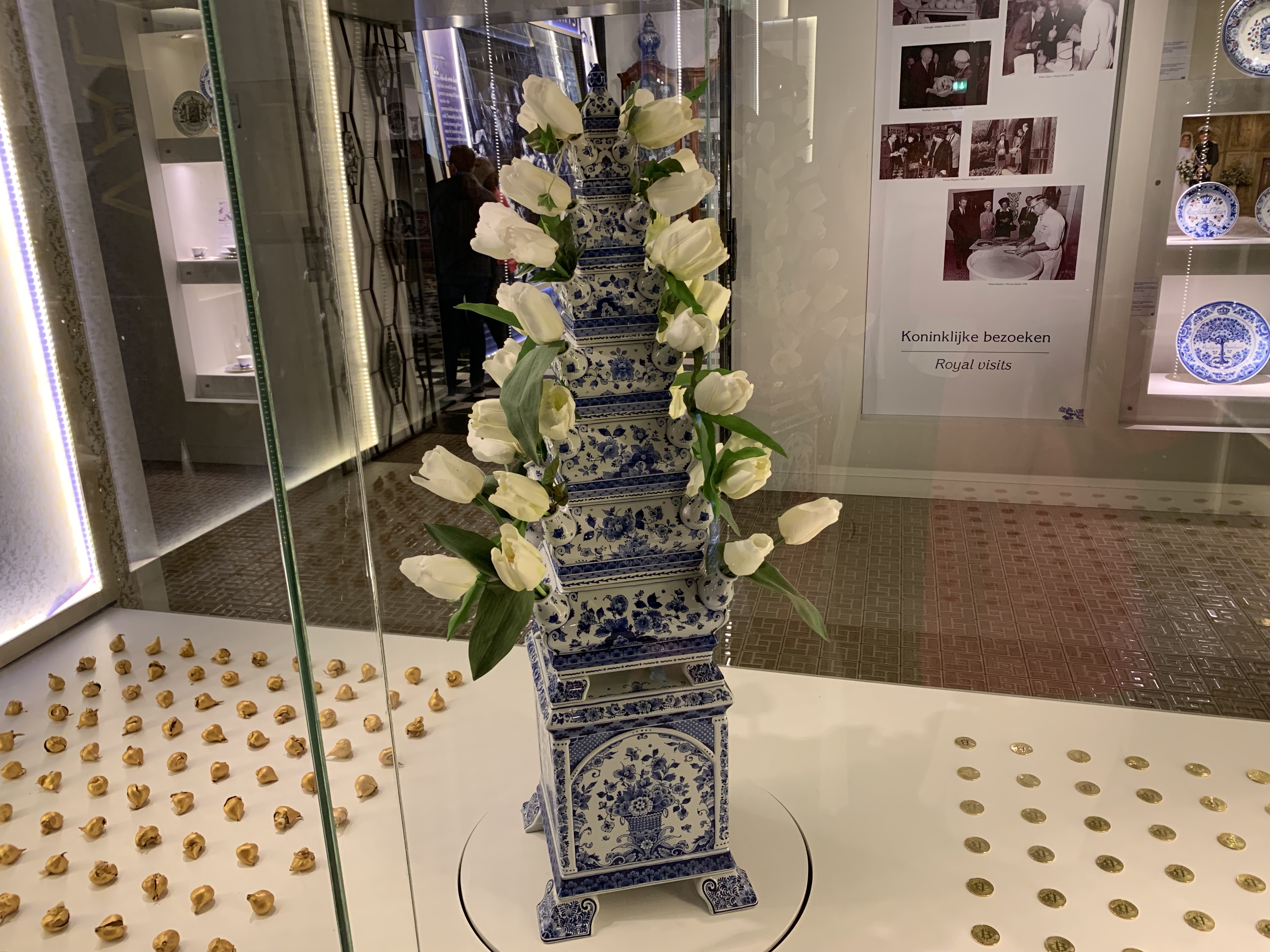
A highlight of the tour, apart from getting to create my own tile, was seeing the Royal Delft’s famous tulip pyramid, surrounded by tulips and bitcoins, and learning about Mary Stuart II, the wife of Dutch William III of Orange who was a great admirer and collector of Delft Blue.
 Sarah's European Voyage