
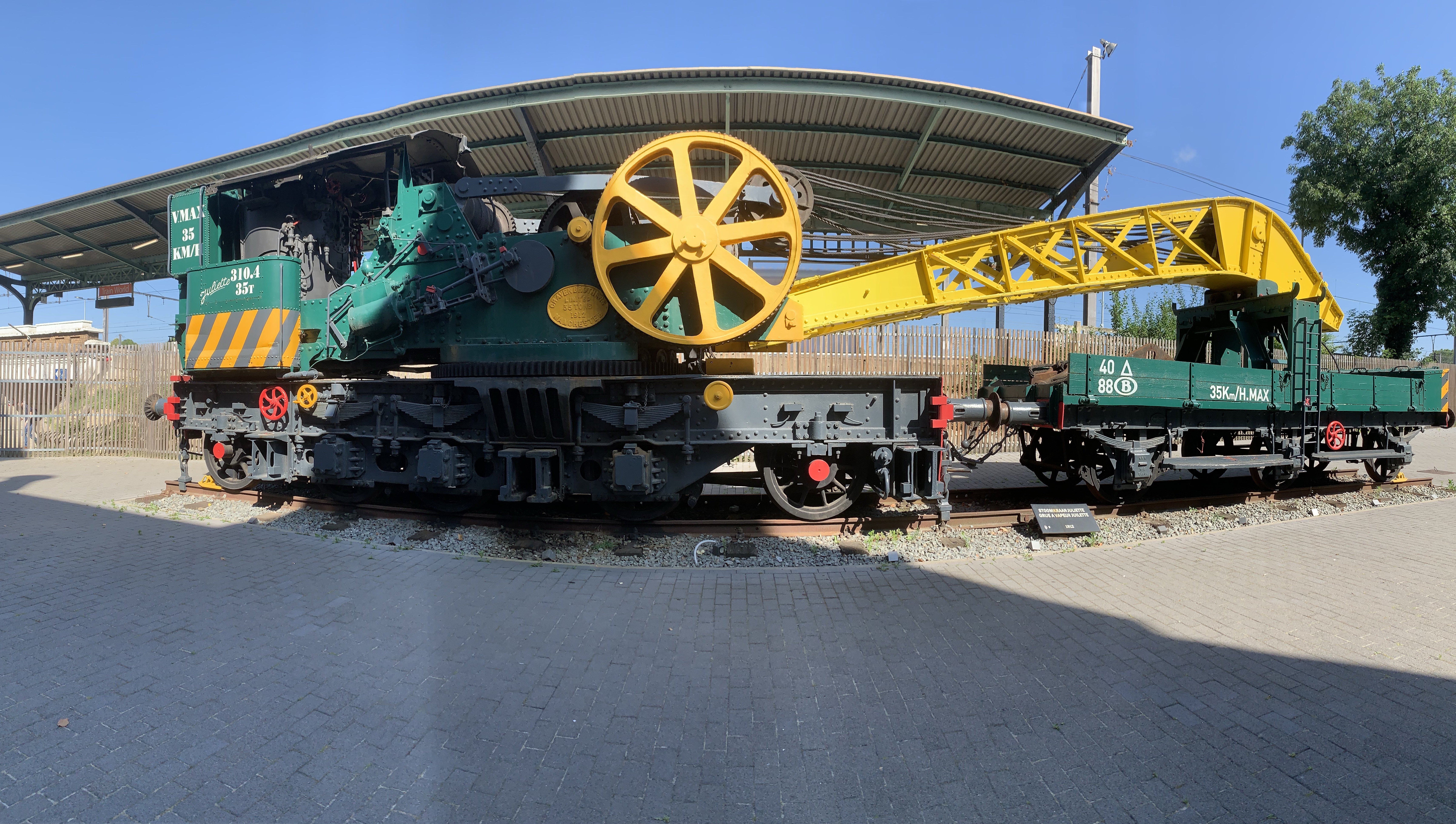
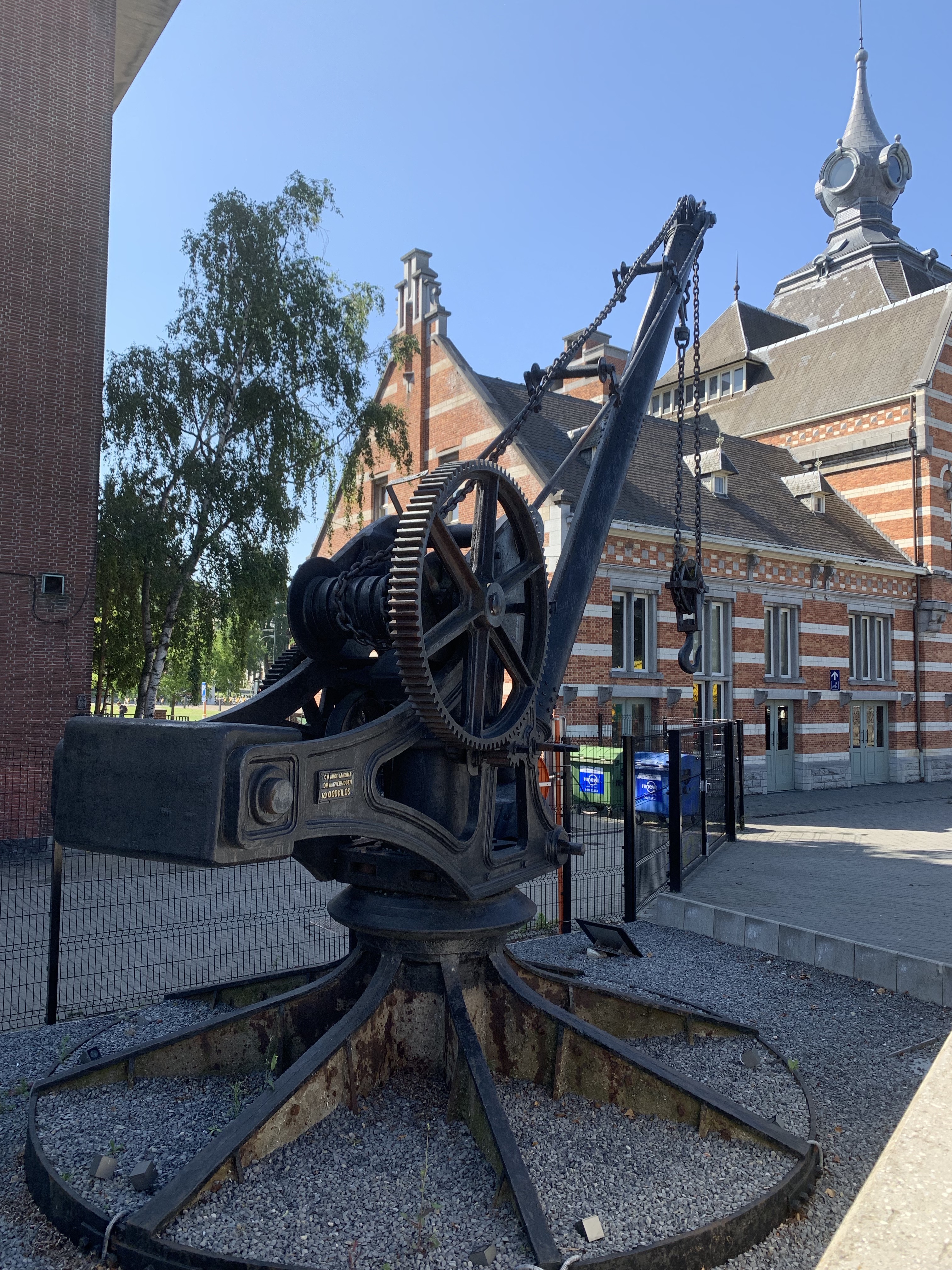
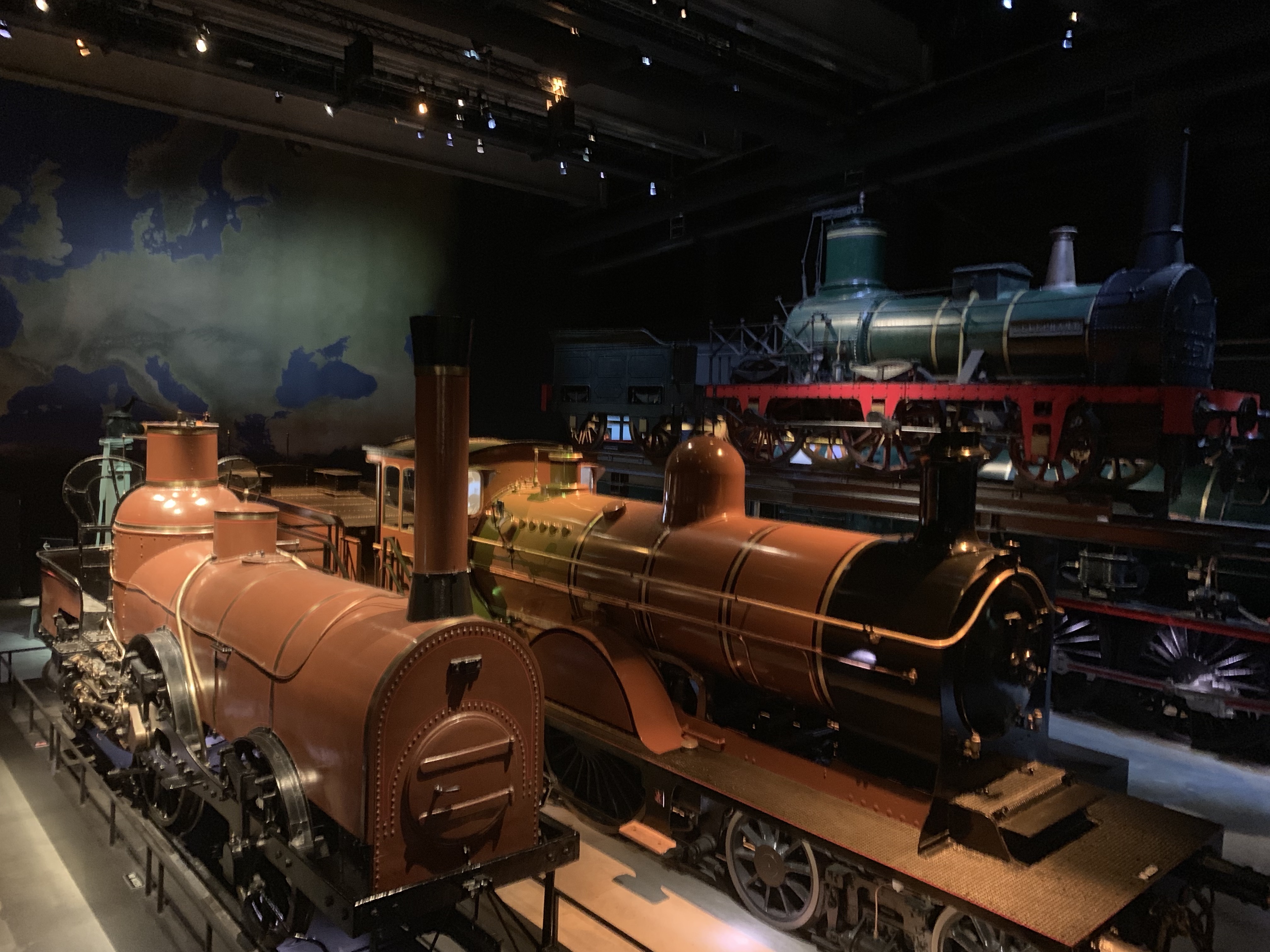
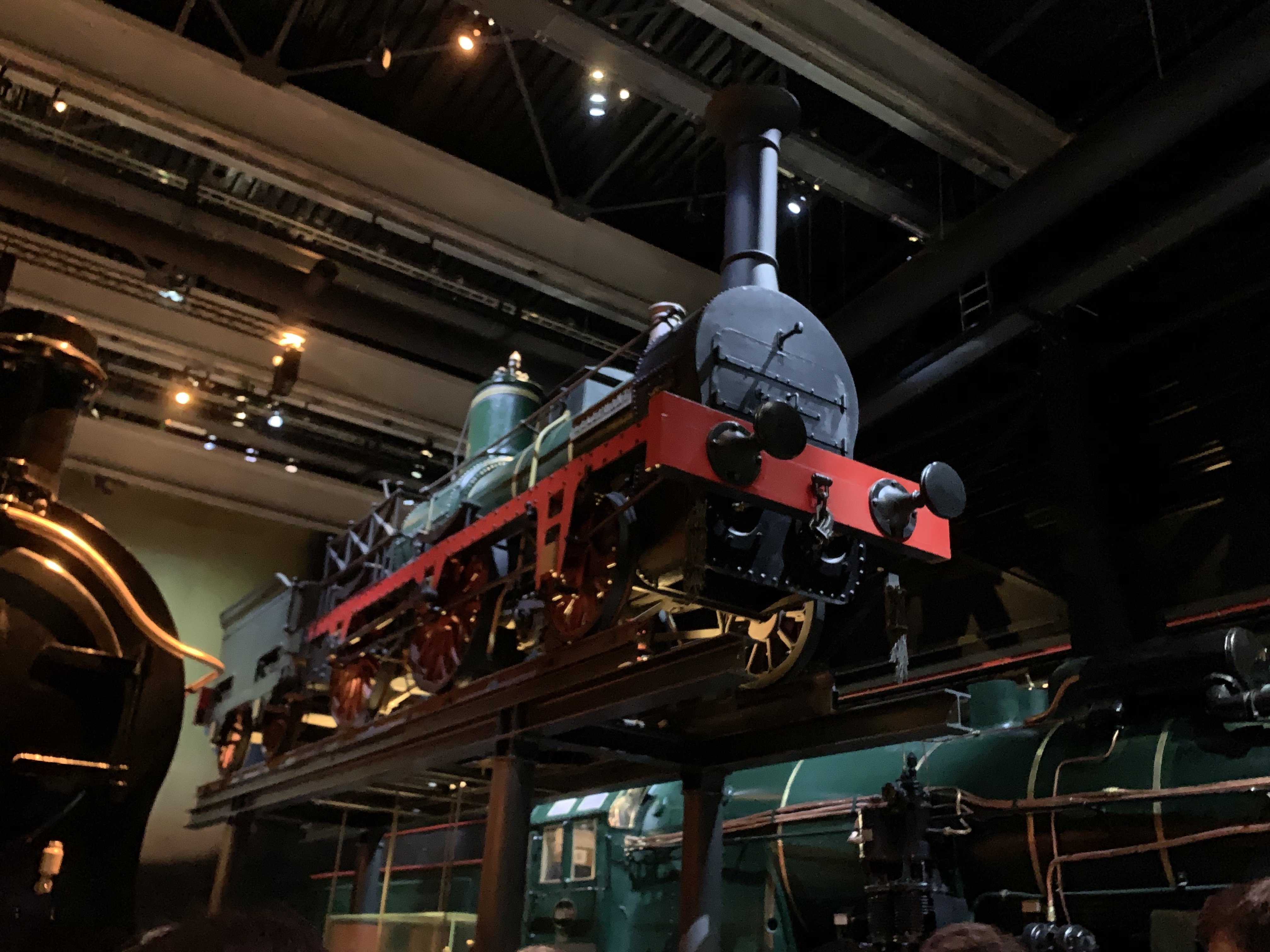
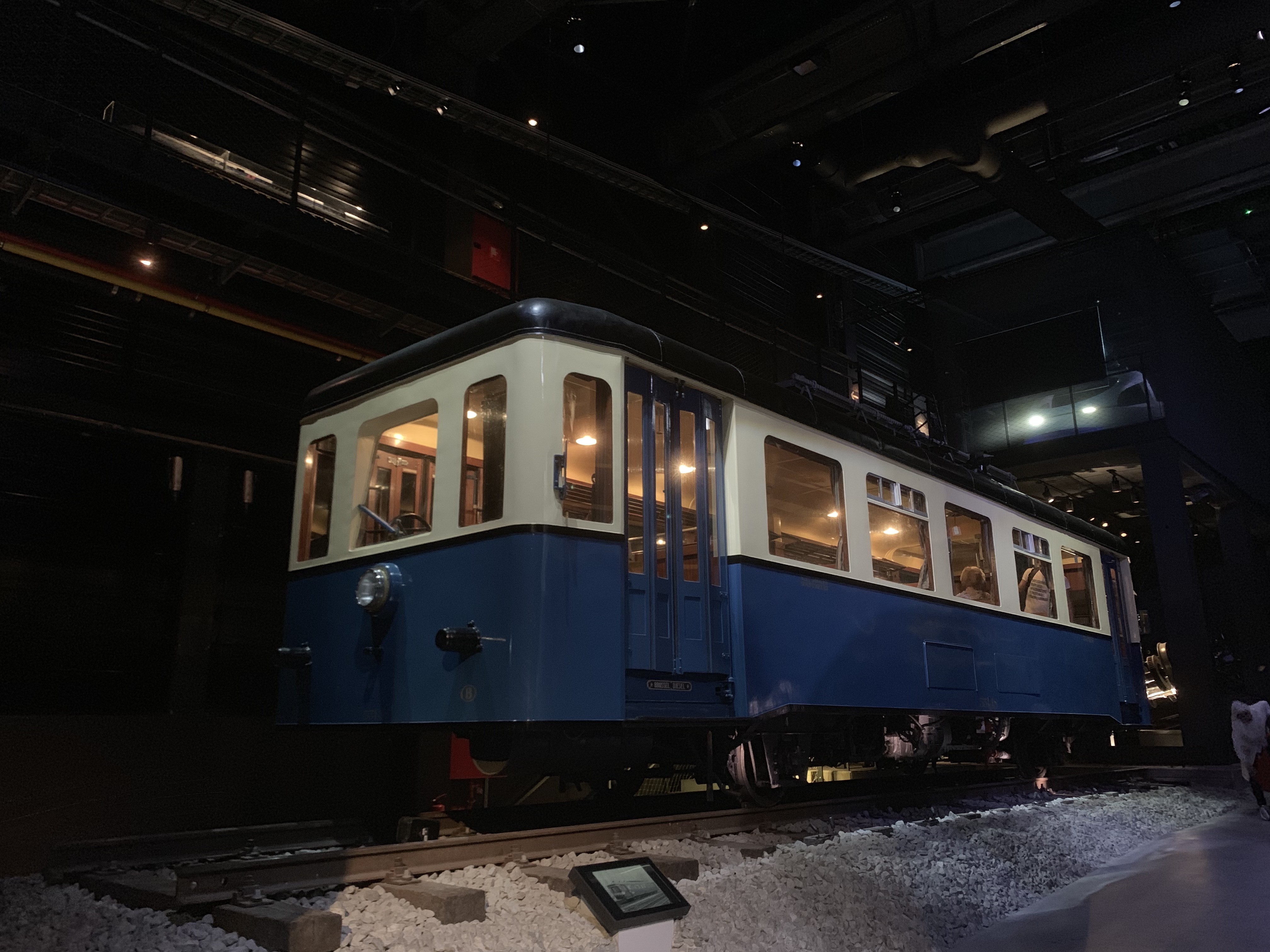
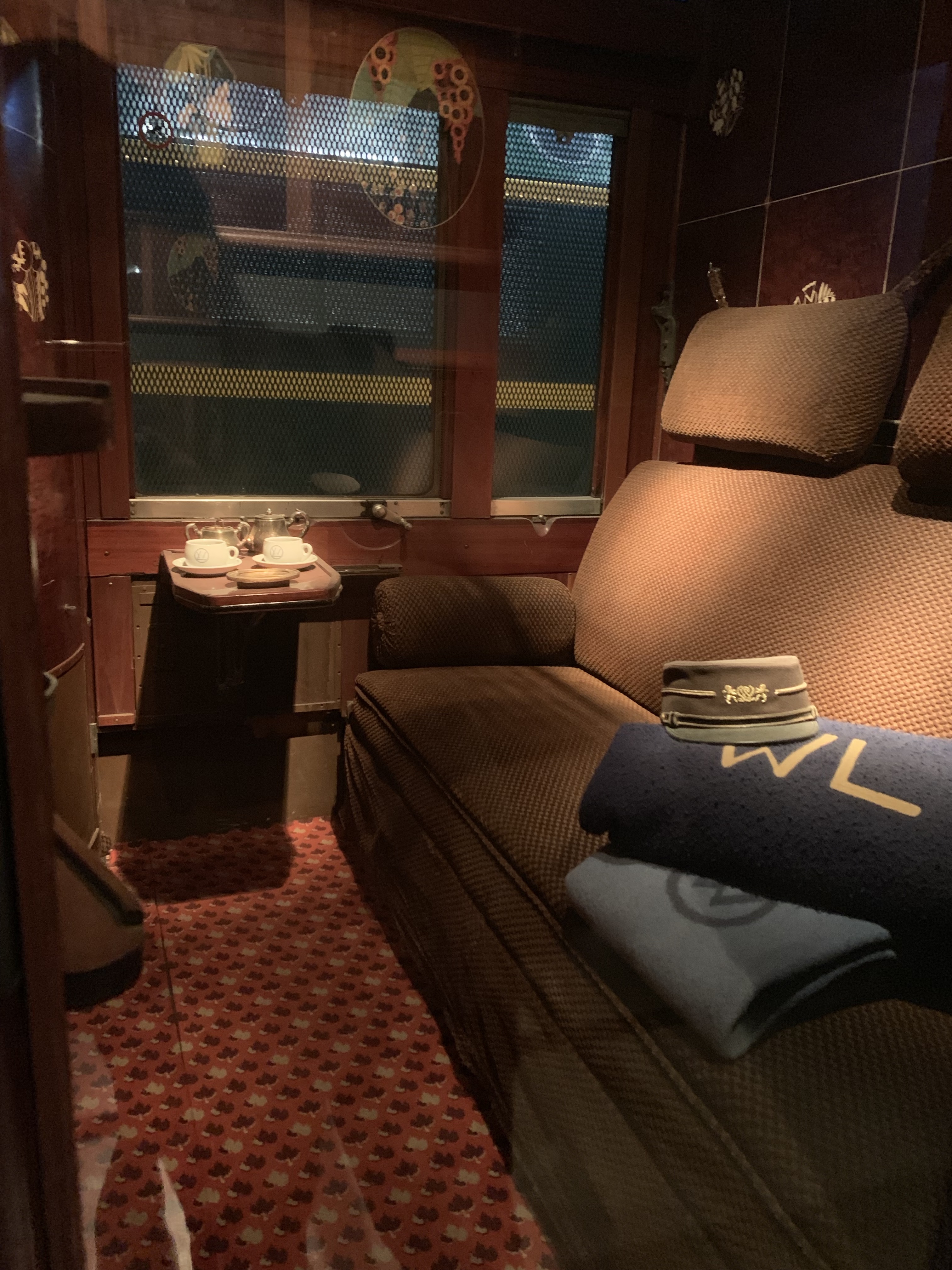
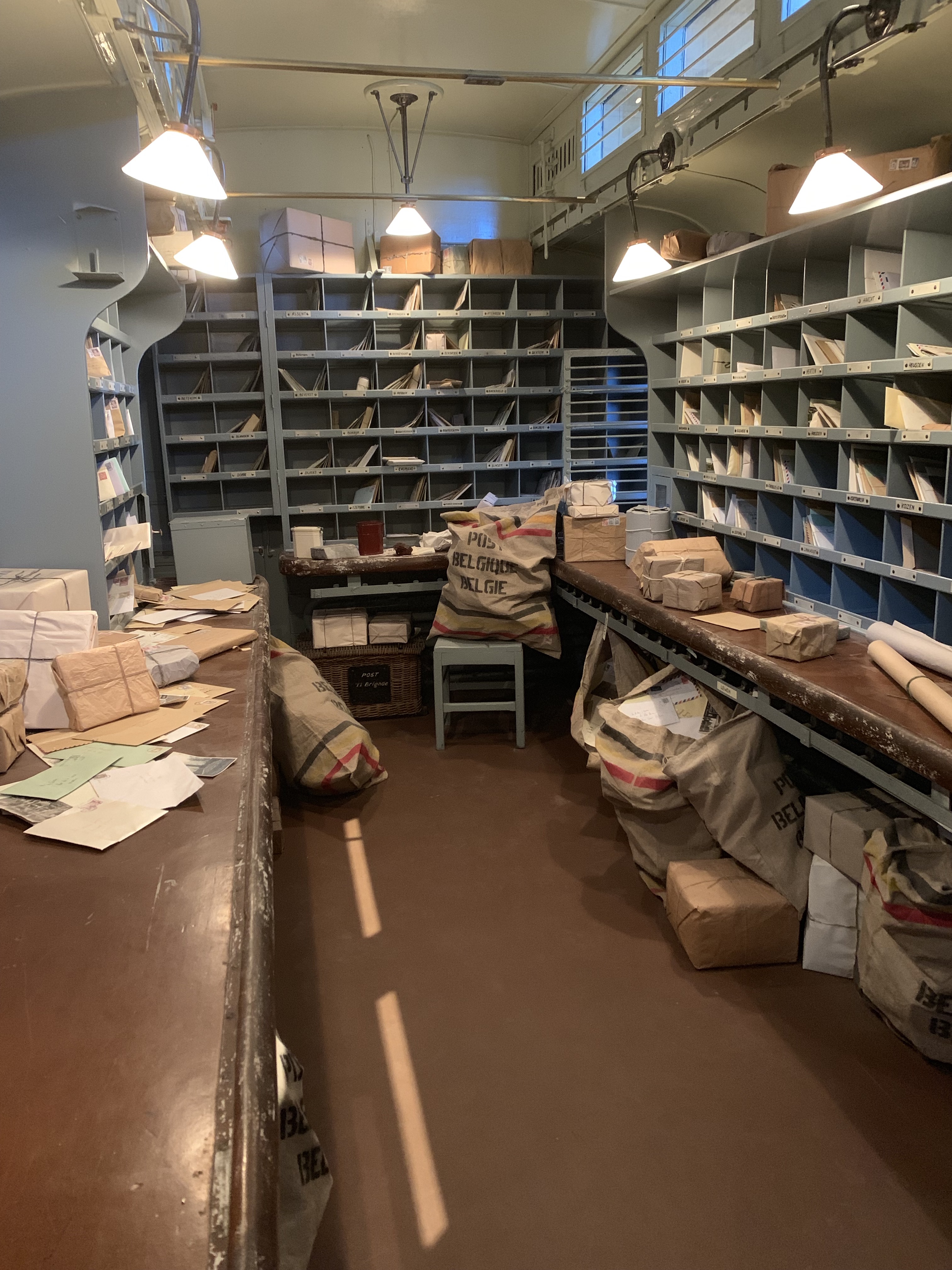
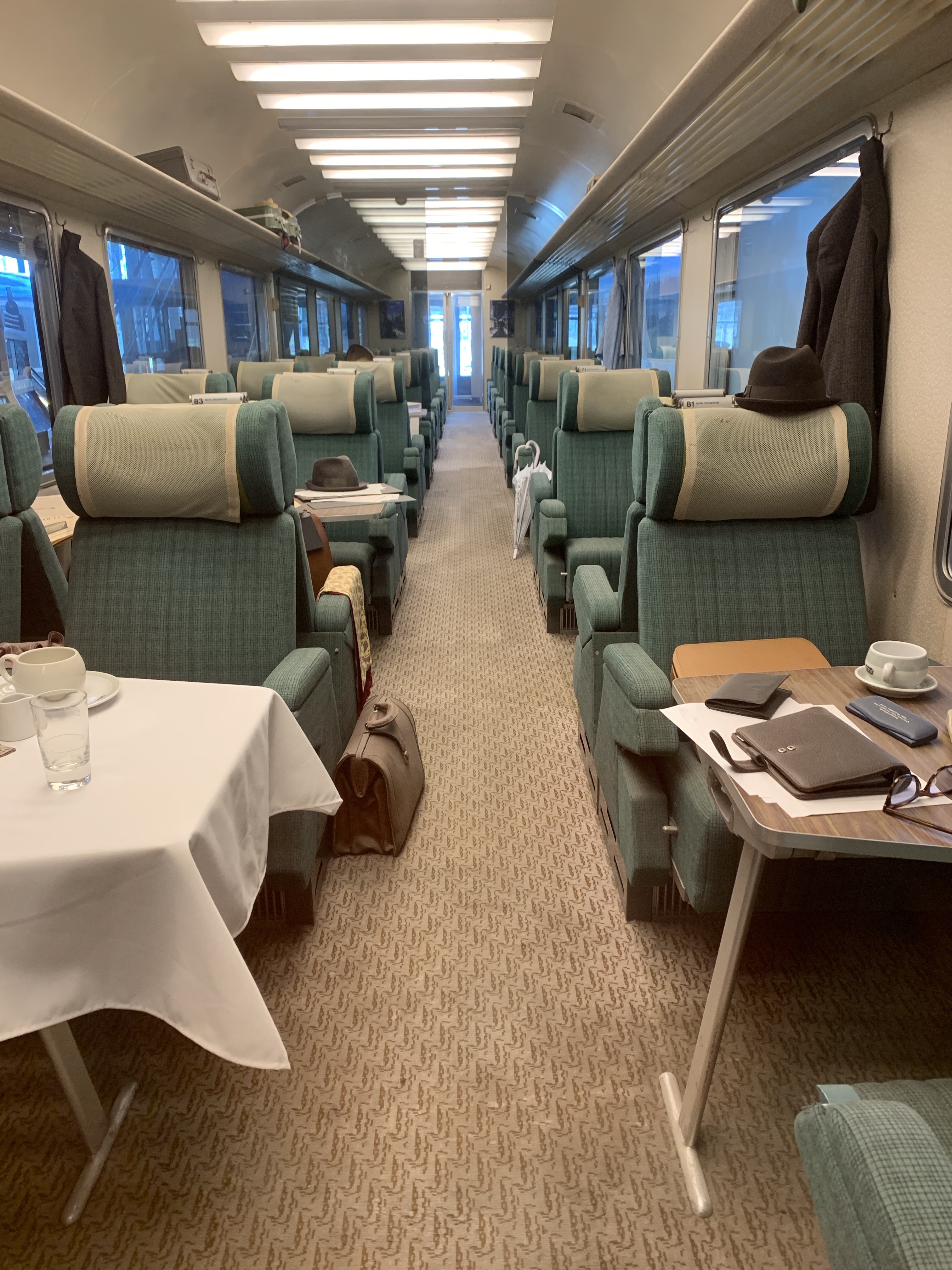
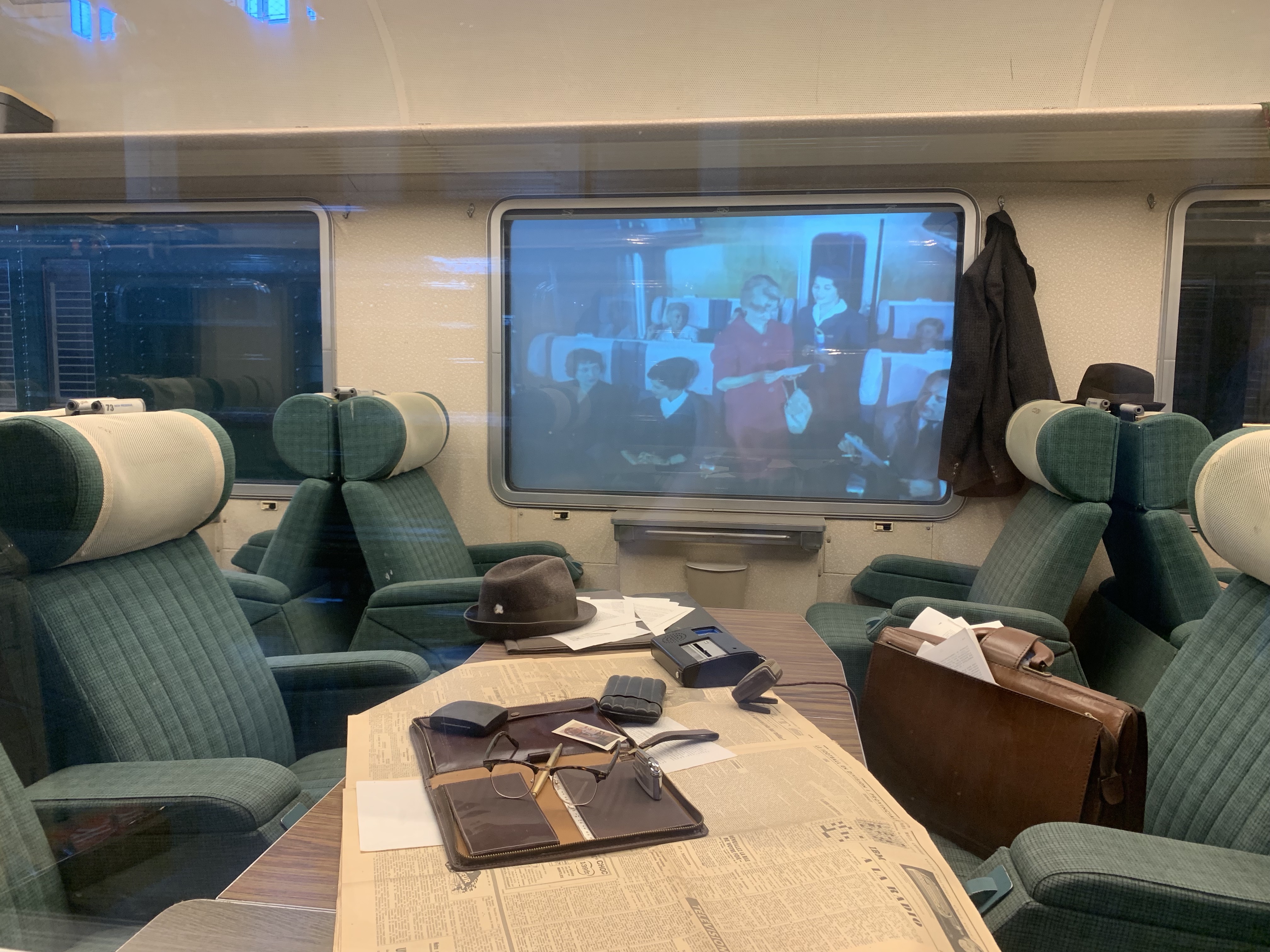
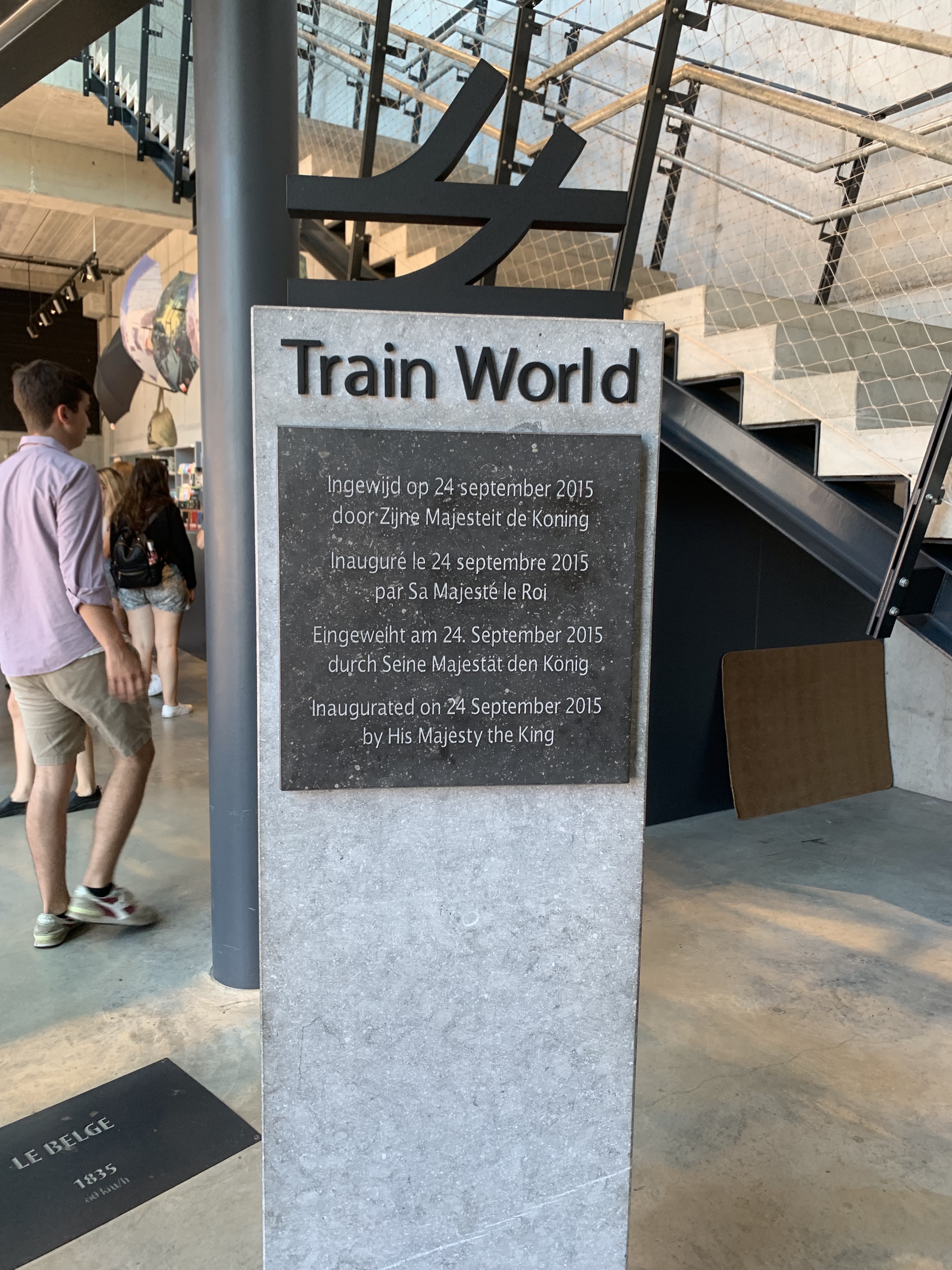
Today my International Environmental Law and Sustainability and Global Corporate Leadership Class went to Train World, a railway museum in Belgium that houses some of the most beautiful and unique pieces from the history of the Belgian railways in an almost dreamlike environment designed by François Schuiten, a famous Belgian comic book artist. This place combined the fascinating stories of the train throughout the centuries with a look into the future. Located in the Schaerbeek station, one of Belgium’s oldest and most original station buildings, with a new museum complex in the form of a sawtooth shape, the location represented a wonderful symbiosis of old and new in the Art Nouveau heart of Schaerbeek.
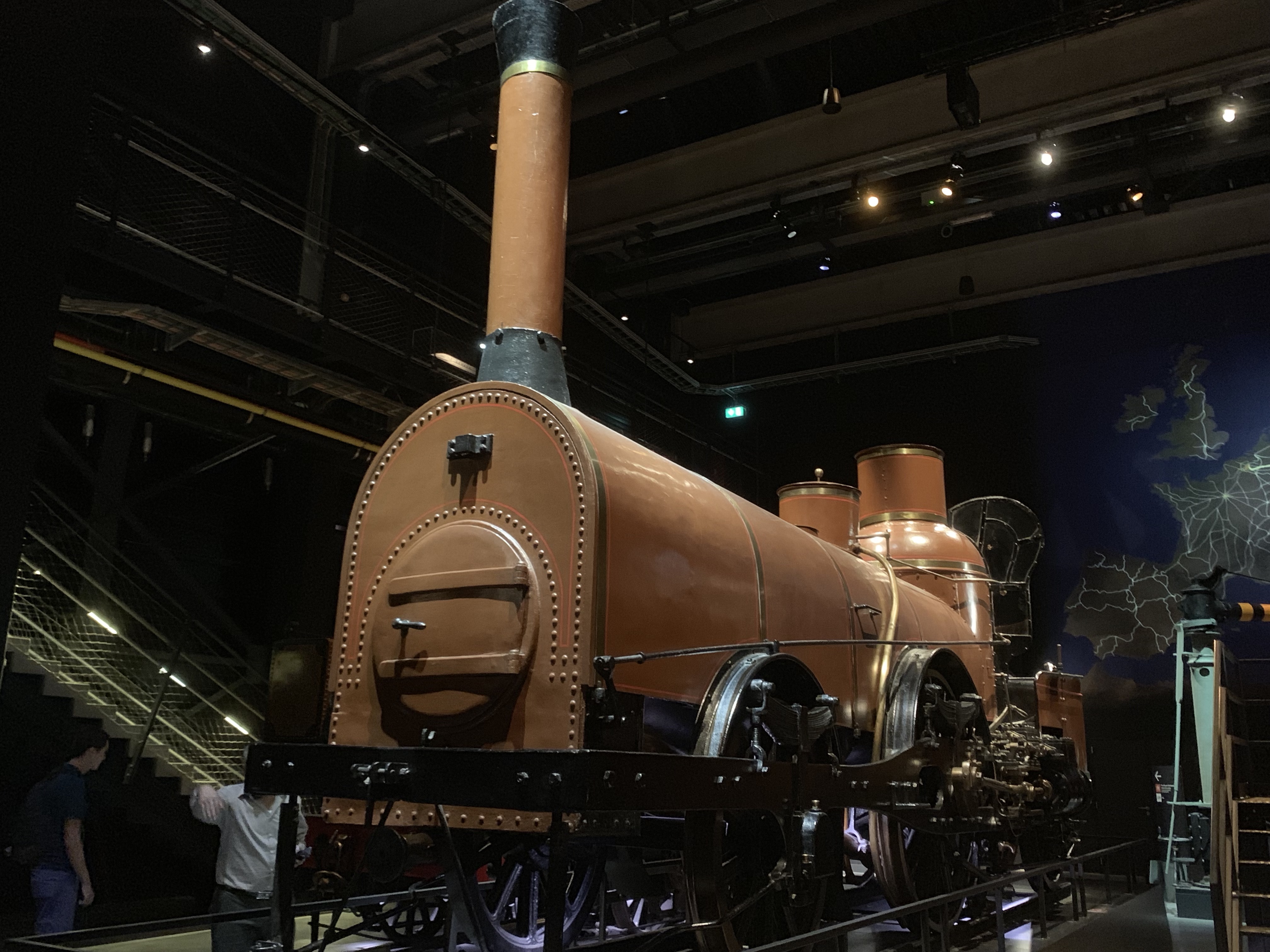
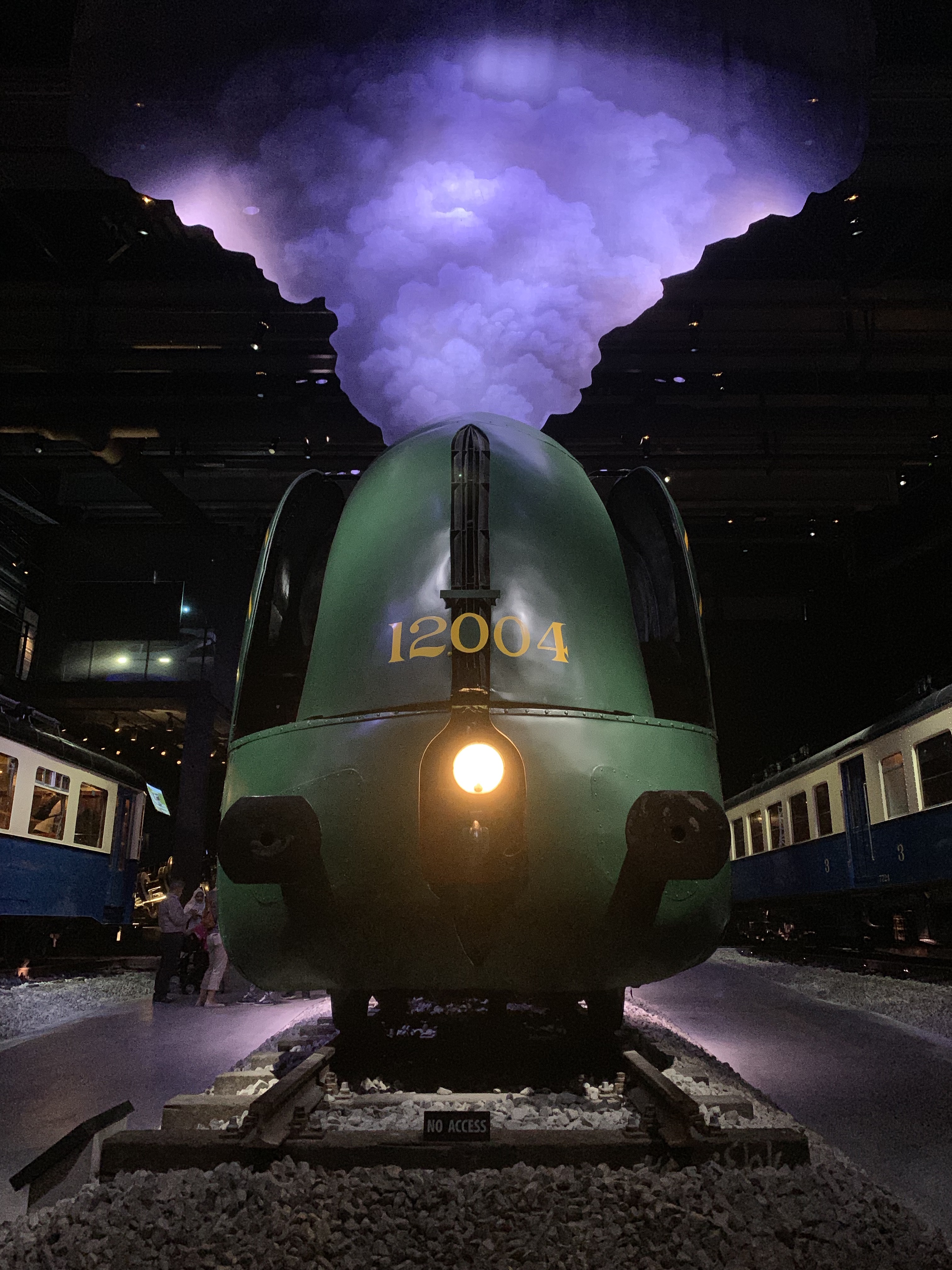
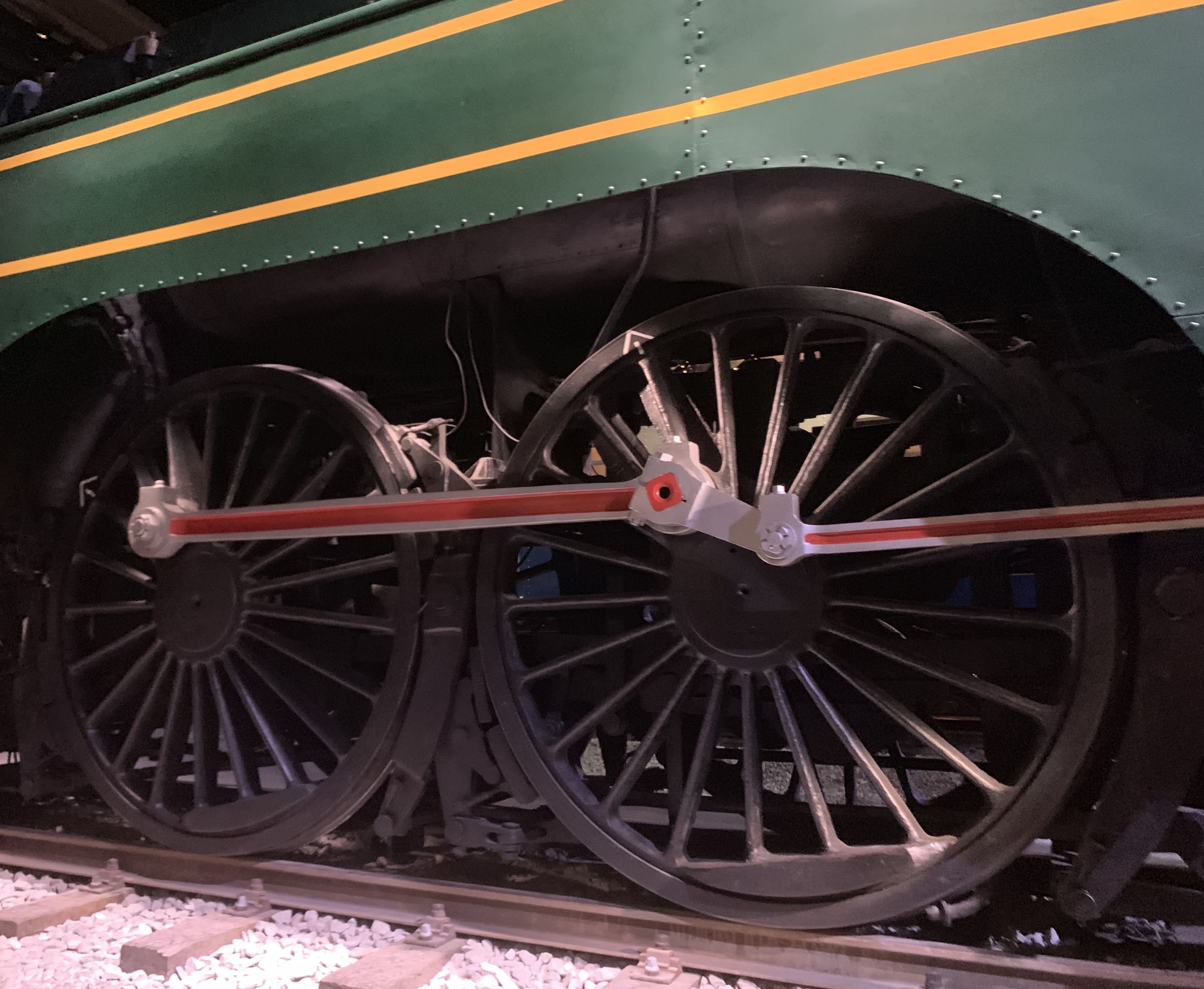
A highlight of the tour was seeing the oldest steam locomotive conserved in Belgium, the “Pays de Waes” and the “Type 12” streamlined steam locomotive whose speed in 1939 beat all records. I also enjoyed learning that the introduction of electric traction in the late 19th century was to replace the use of steam traction on heavy duty rapid transit suburban railways, underground railways and, subsequently main line railways. Electric traction was found to offer higher energy efficiency, ability to meet increased capacity demands, provision of frequent rail services, environmental friendliness compared to steam traction, higher scheduled speeds, and conservation of fuel. From the financial point of view, operating costs for electric traction are lower than steam traction for the same amount of traffic.
The most common methods experimented were Low Voltage Direct Current (LVDC, up to 750 V) with the use of electrified 3rd rails or the use of overhead trolley wire, similar to tram electrification. Through these experiments conducted by various European railways emerged five standard types of electrification systems found across Europe: 750 V DC 3rd rail, 1.5 kV DC, 3 kV DC, 15 kV 16.7Hz AC and 25 kV 50Hz AC.
As a result, in 1950 there was a need for standardization of voltage and frequencies, to allow interoperability of rail traffic on high speed and conventional lines across Europe to eliminate the need for multi-voltage locomotives or locomotive changeover at borders for the operation of through services between neighboring countries. Consequently, this led to the development of the 25 kV 50Hz AC power supply system by both Germany and France. 25 kV AC was found not only to have the advantages over DC in terms of producing higher power with low current but also substantial savings in energy and equipment costs for mainline railways. This development led to 25 kV 50Hz being defined as the standard for mainline railway electrification since in European countries like the Netherlands, Belgium, Germany, Finland, Bulgaria, Romania, Denmark, and Greece.
The Brussels Journey
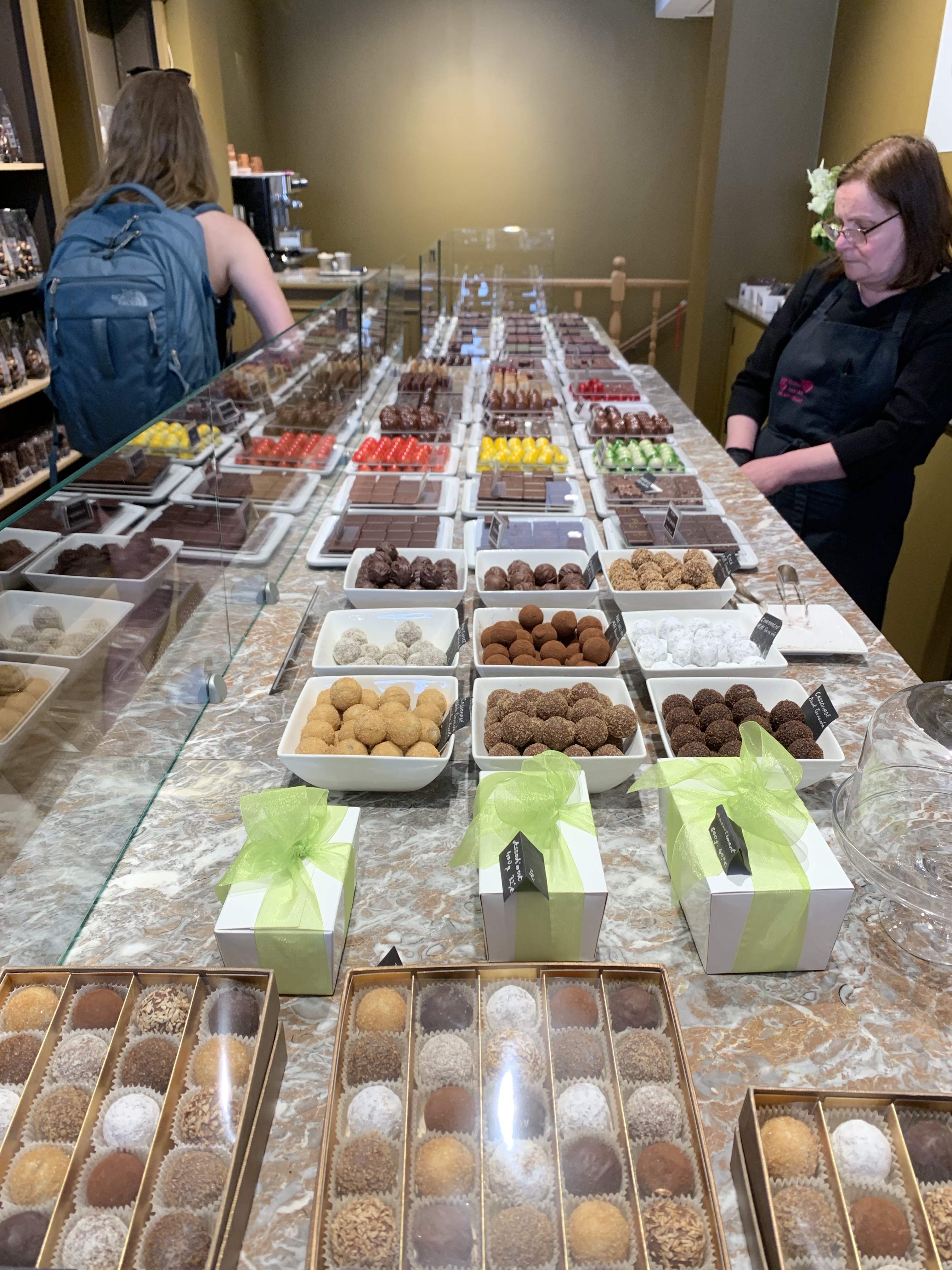
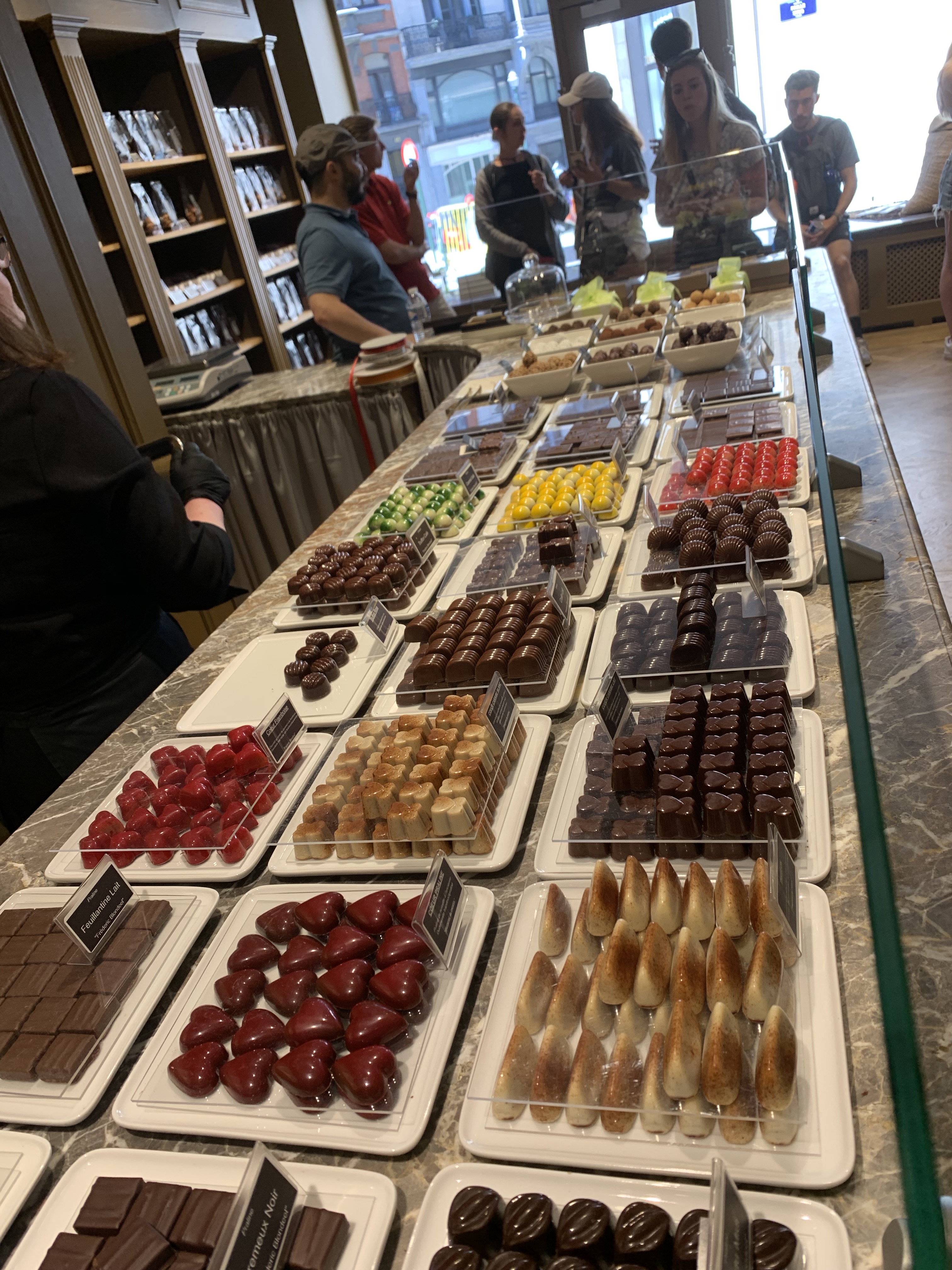
To end our day we went on a beer and chocolate tour around Brussels. During the tour we stopped by various chocolate shops, where we got to try amazing samples of chocolate crafted by some of the finest chocolatiers in Belgium who are continuously experimenting with new flavors, textures and cocoa bean types.
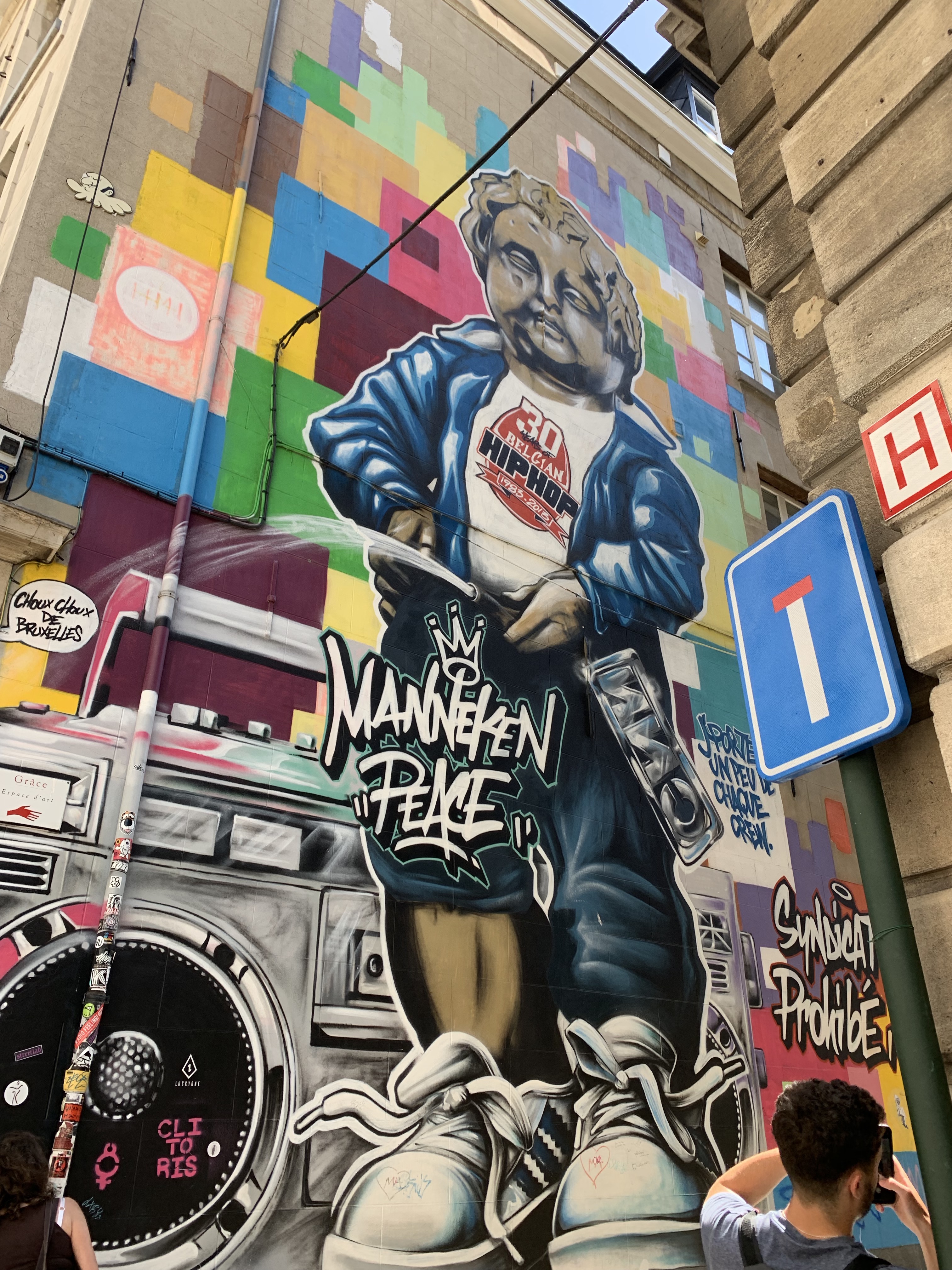
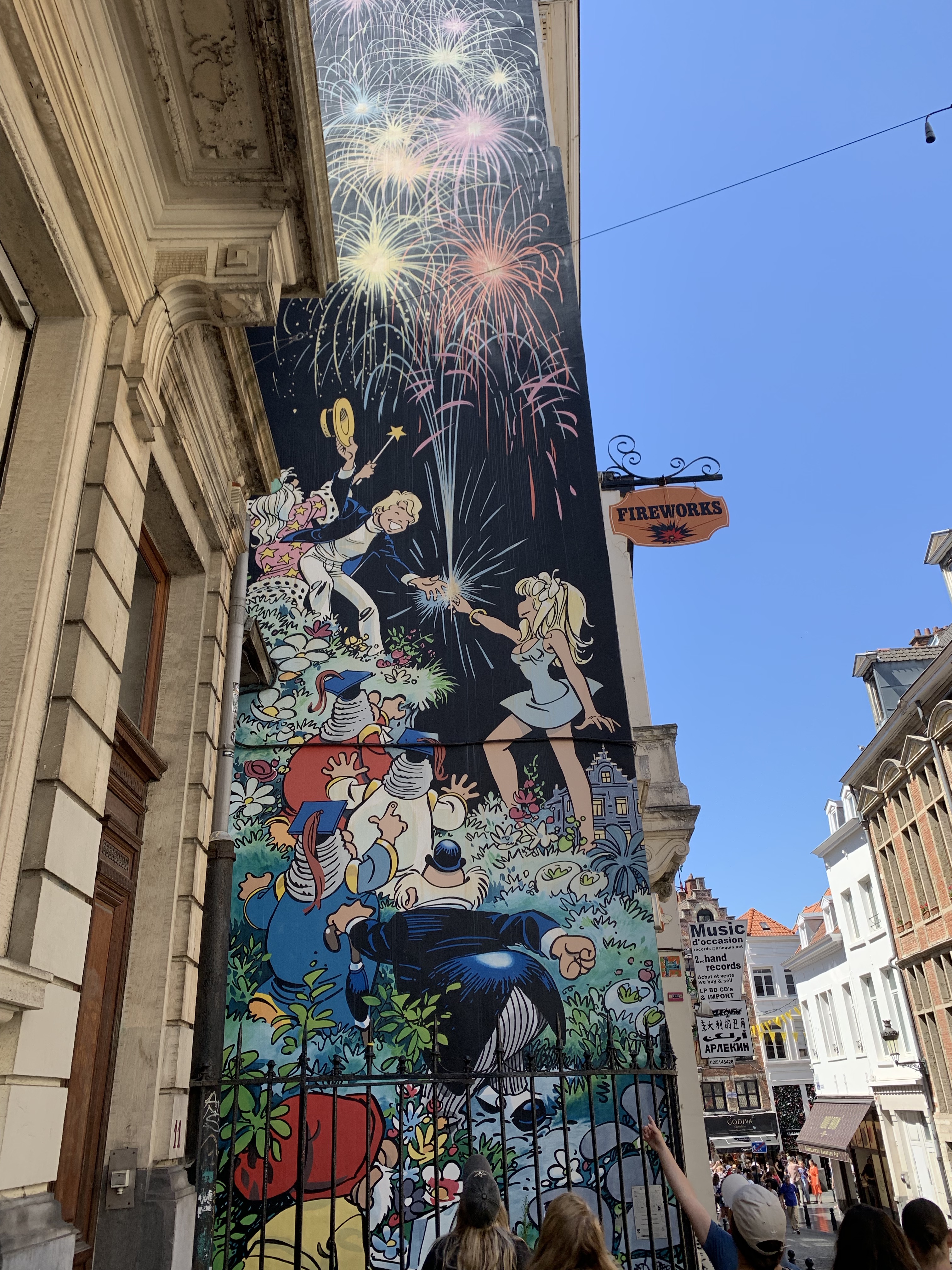
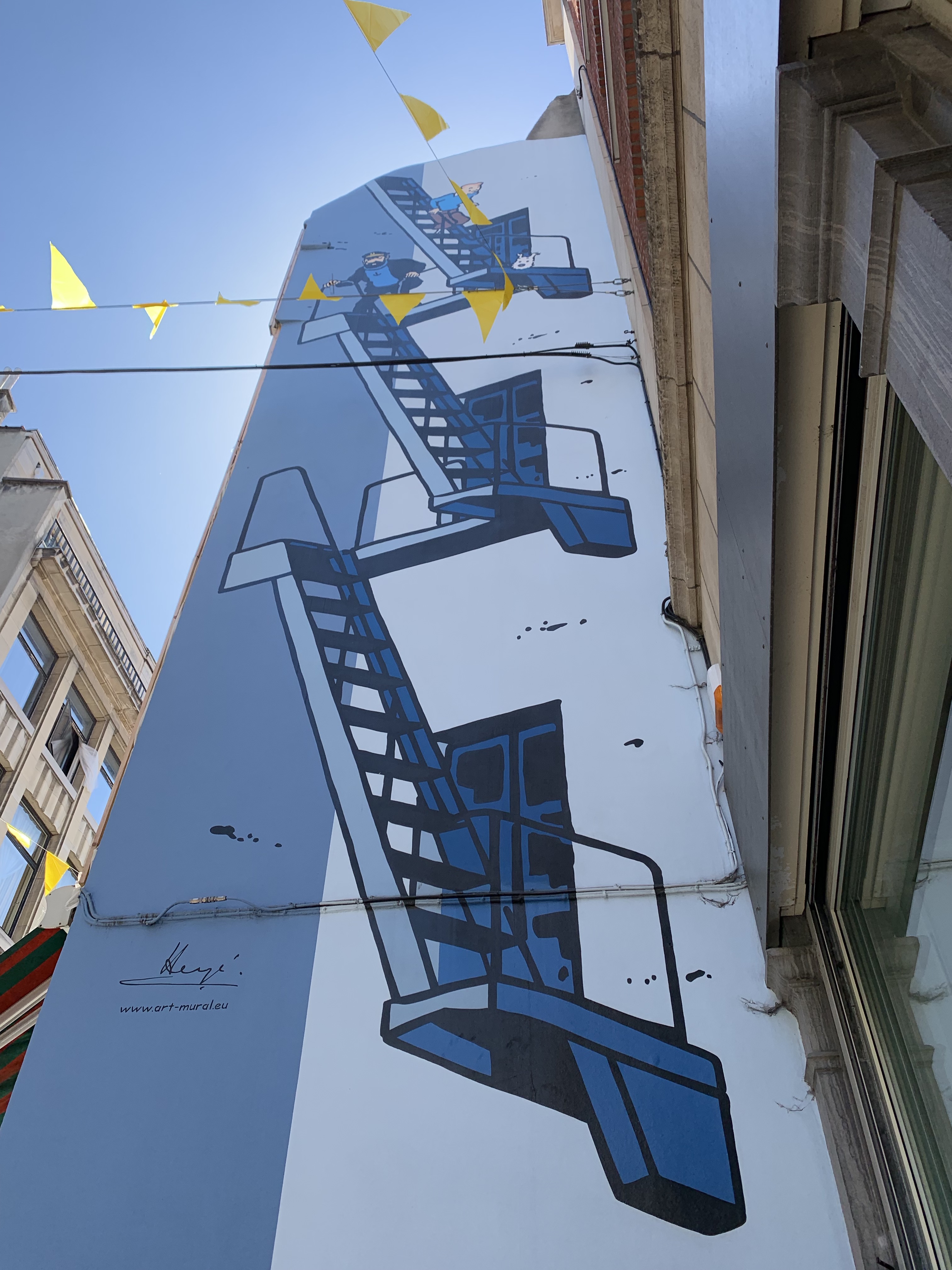
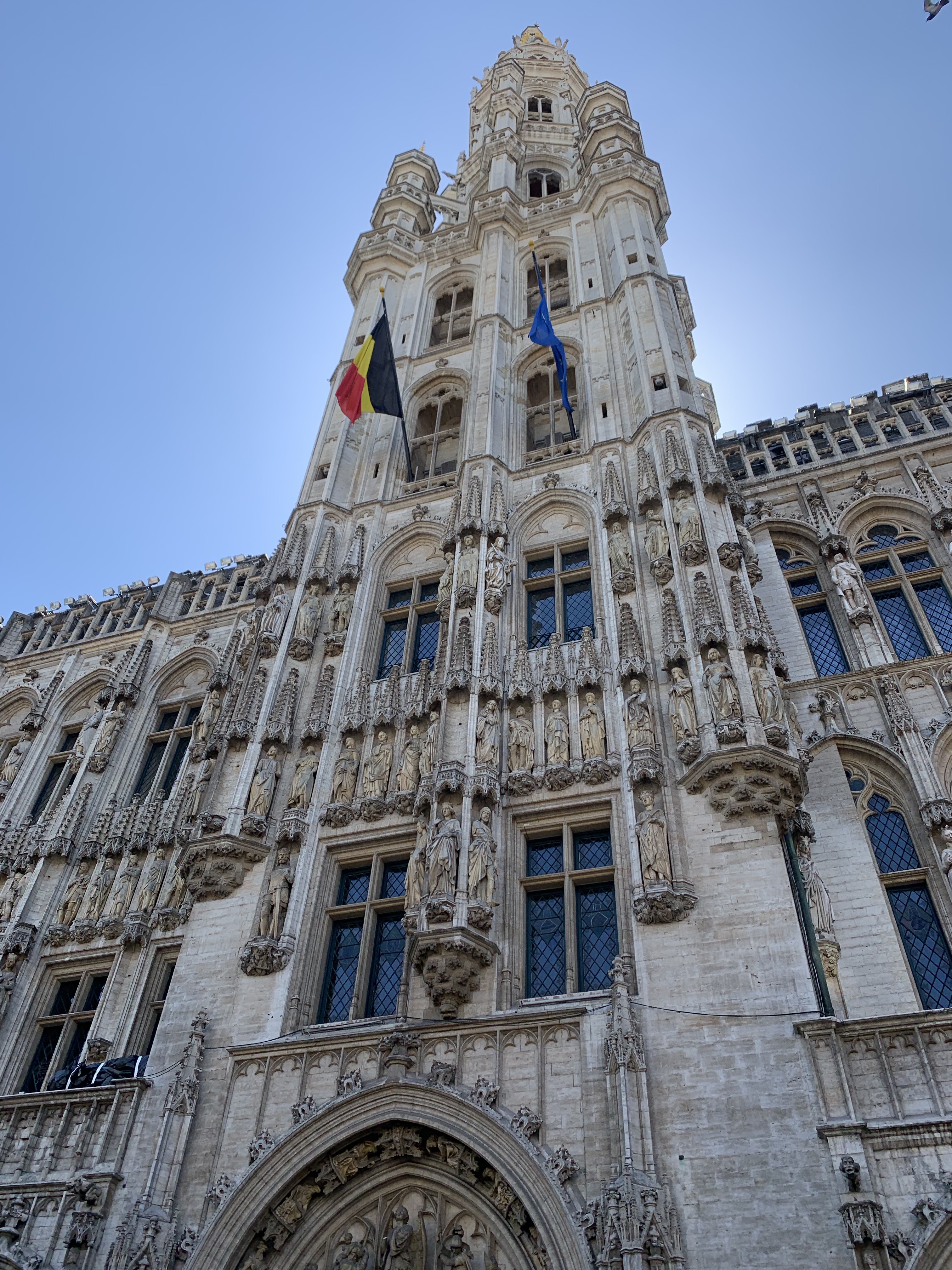
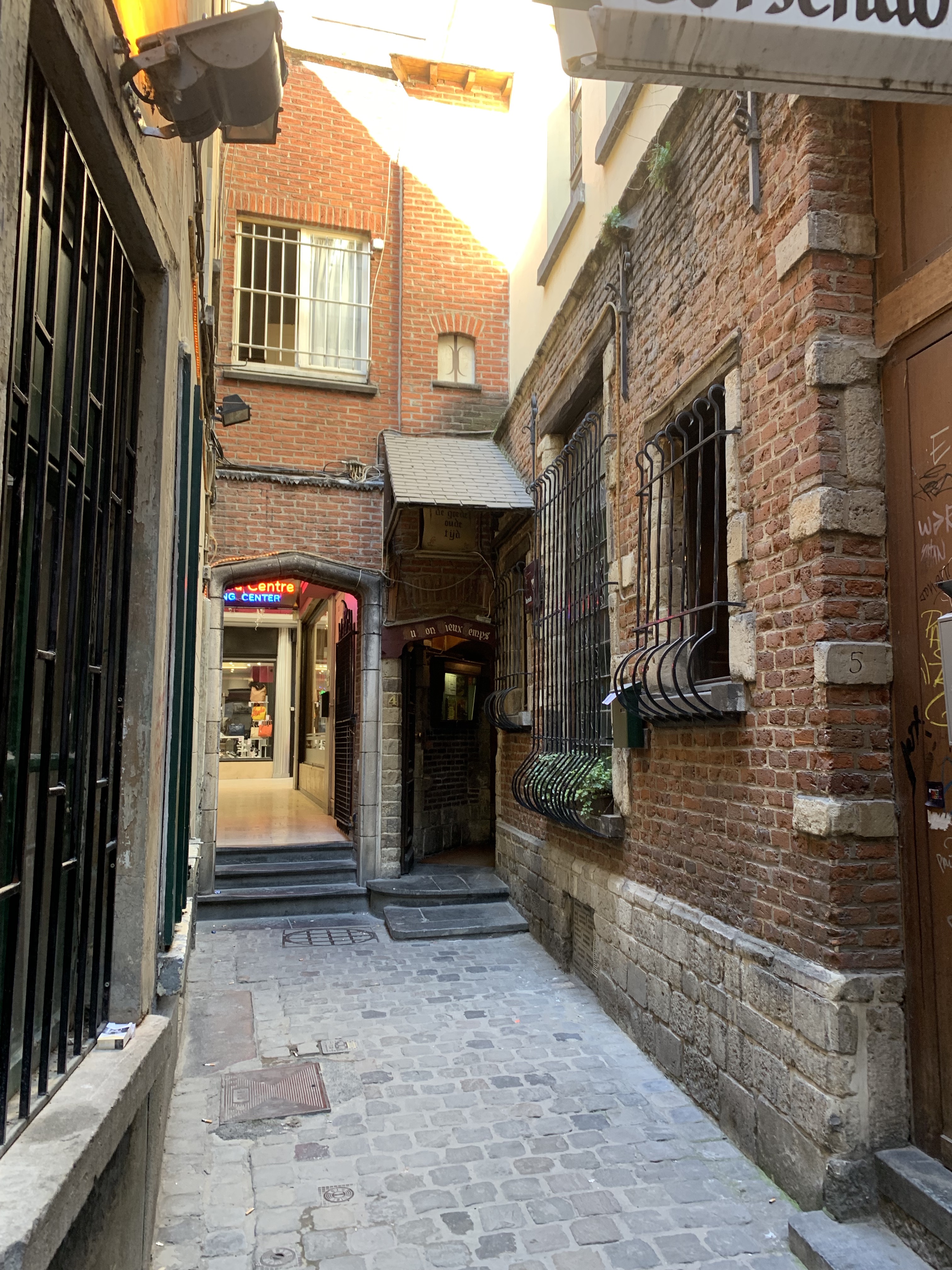
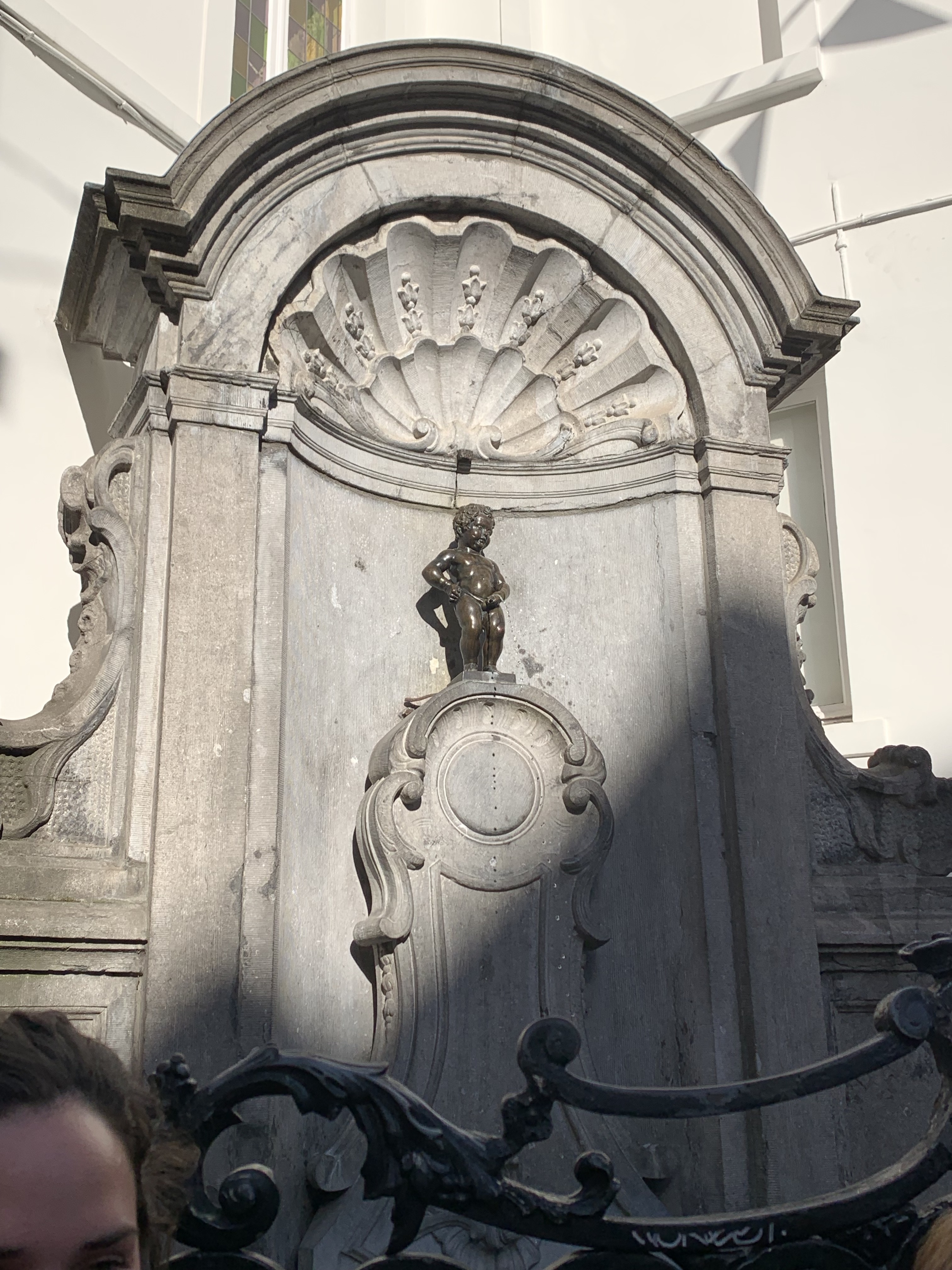
After eating an excessive amount of chocolate samples, we did a walking tour around the city center where we learned about the city’s history, discovered hidden corners, and wandered off the beaten path. Highlights of the tour included seeing Belgiums national monument, Manneken Pis, (Yes ― I know what you’re thinking but its true their national monument is indeed a boy holding his penis and peeing) and the comic strip wall of Tintin and Olivier Rameau.
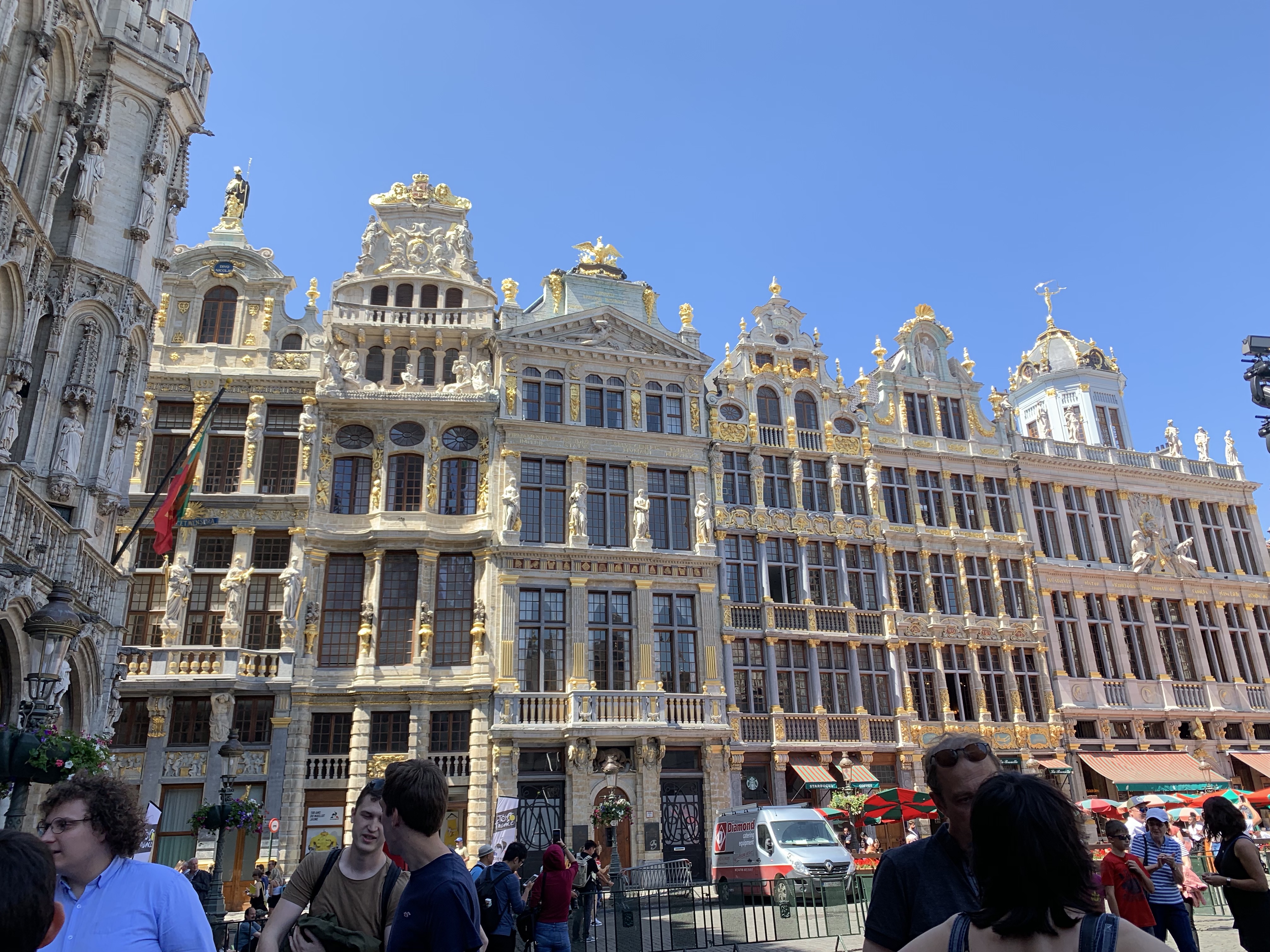
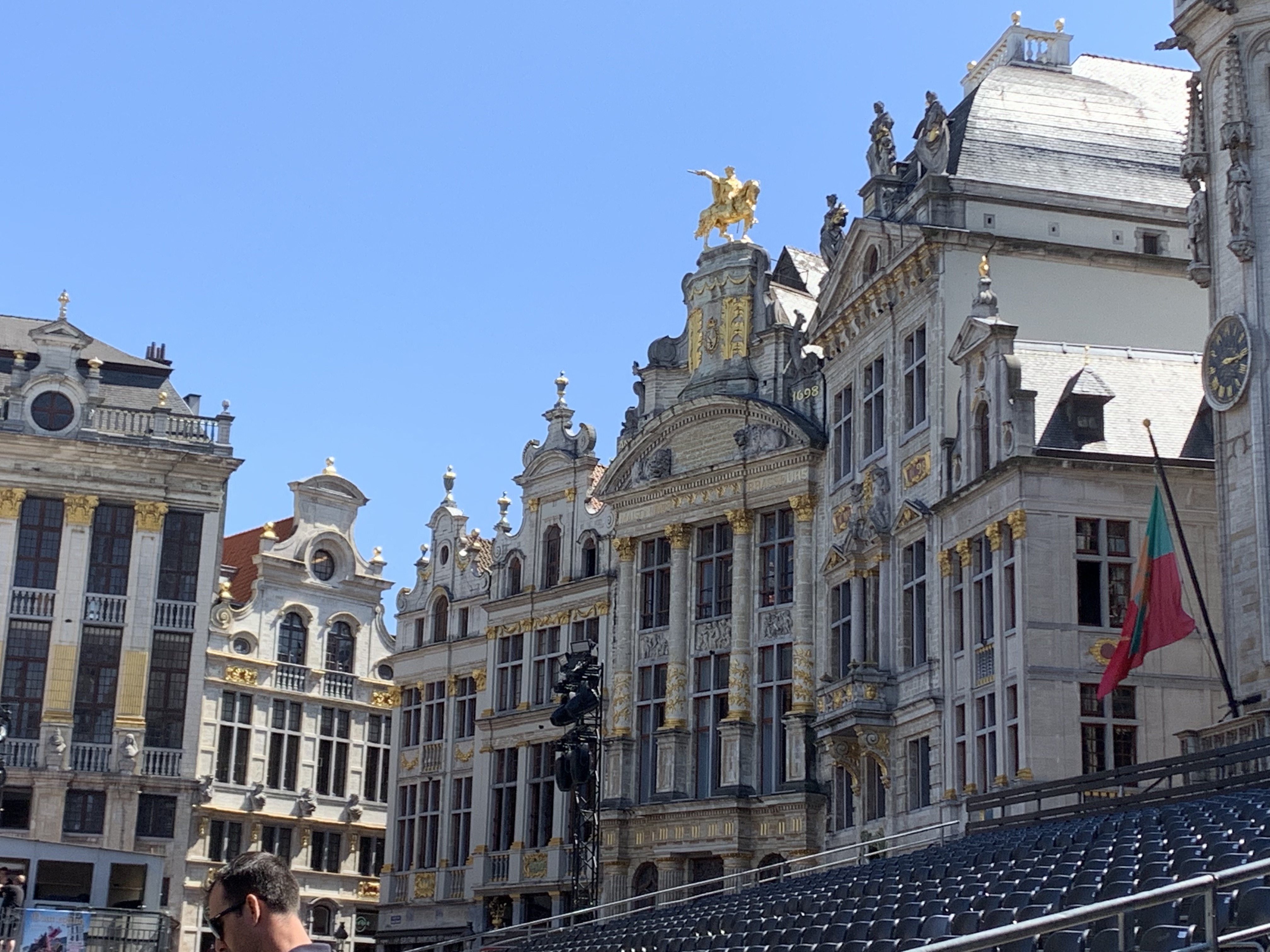
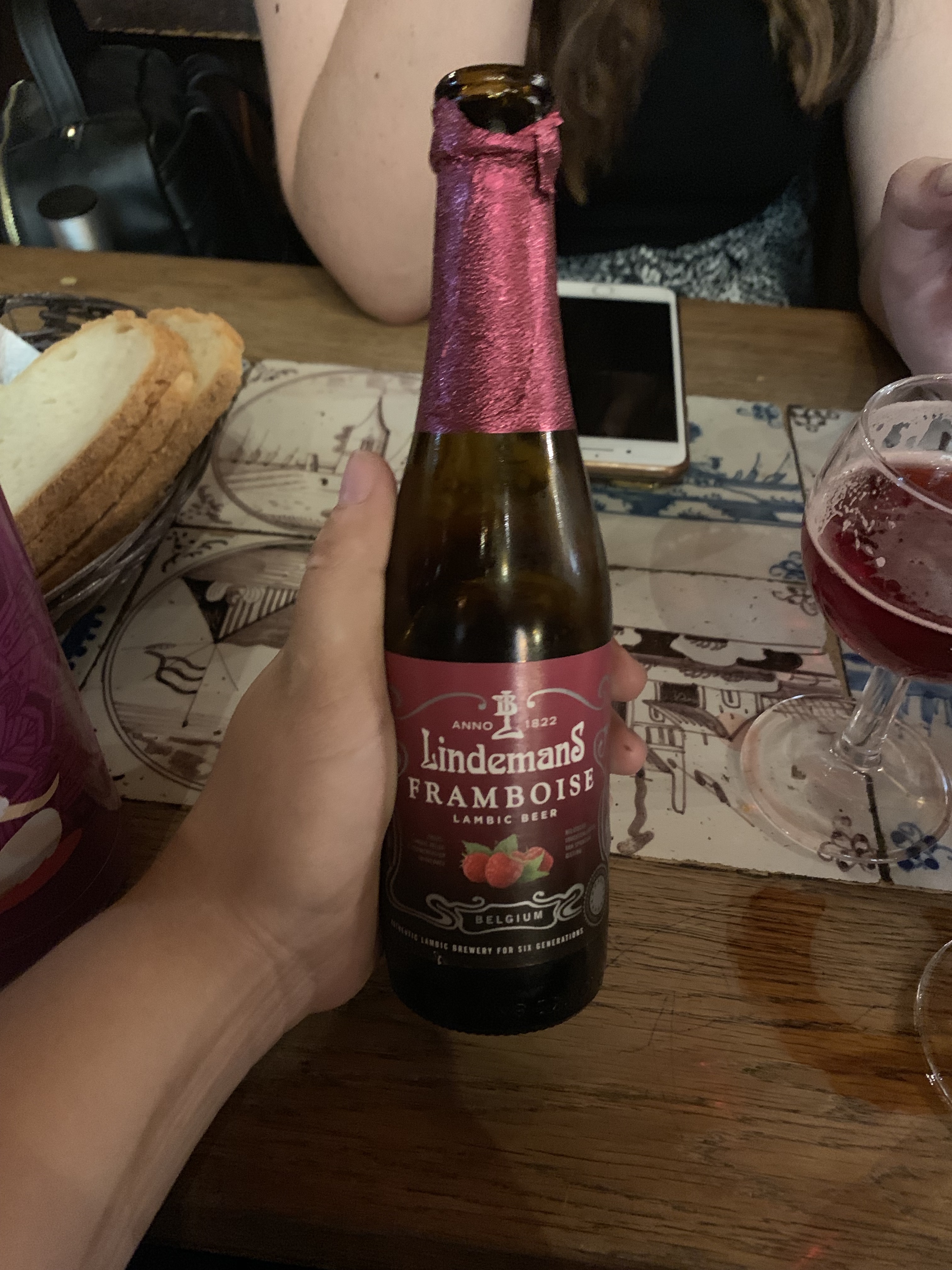
After our walking tour, we had a Belgian Beer tasting session were we went to local bars and taverns around the Grand Place. While snacking on cheese and cured meats nibbles, we samples all kinds of specialty Belgian beers from Abbey beers, Trappists, Lambics, Krieks, Belgian IPAs, Triple Blonds, Double Browns… you name it! I even discovered my favorite beer brand during the tour, Lindemans, and sure to buy two bottles of their raspberry beer before I left.
The business that impressed me the most on the Brussels Journey was Atelier Sainte Catherine. The owner and founder of the chocolate shop, Frederic Blondeel, was awarded the Gault & Millau award (similar to achieving a Michelin star), making him the best chocolatier in Brussels in 2018. It is evident in his chocolates that he is a rooster at heart and puts his passion and soul into burning cocoa beans until they have taken on a desired taste and texture. His variety of chocolates (i.e. pralines, truffles, and chocolate coated domes with a sweet fruit coating) allow you to experience the intense and decadent flavors of the chocolate along with the other ingredients its infused with (i.e. raspberry, jasmine, sea salt, crunchy hazelnut, salted butter caramel, rose, etc.) His chocolate is truly world class and cannot be found anywhere else and I intend to take as much home with me as I can before I leave!
 Sarah's European Voyage