
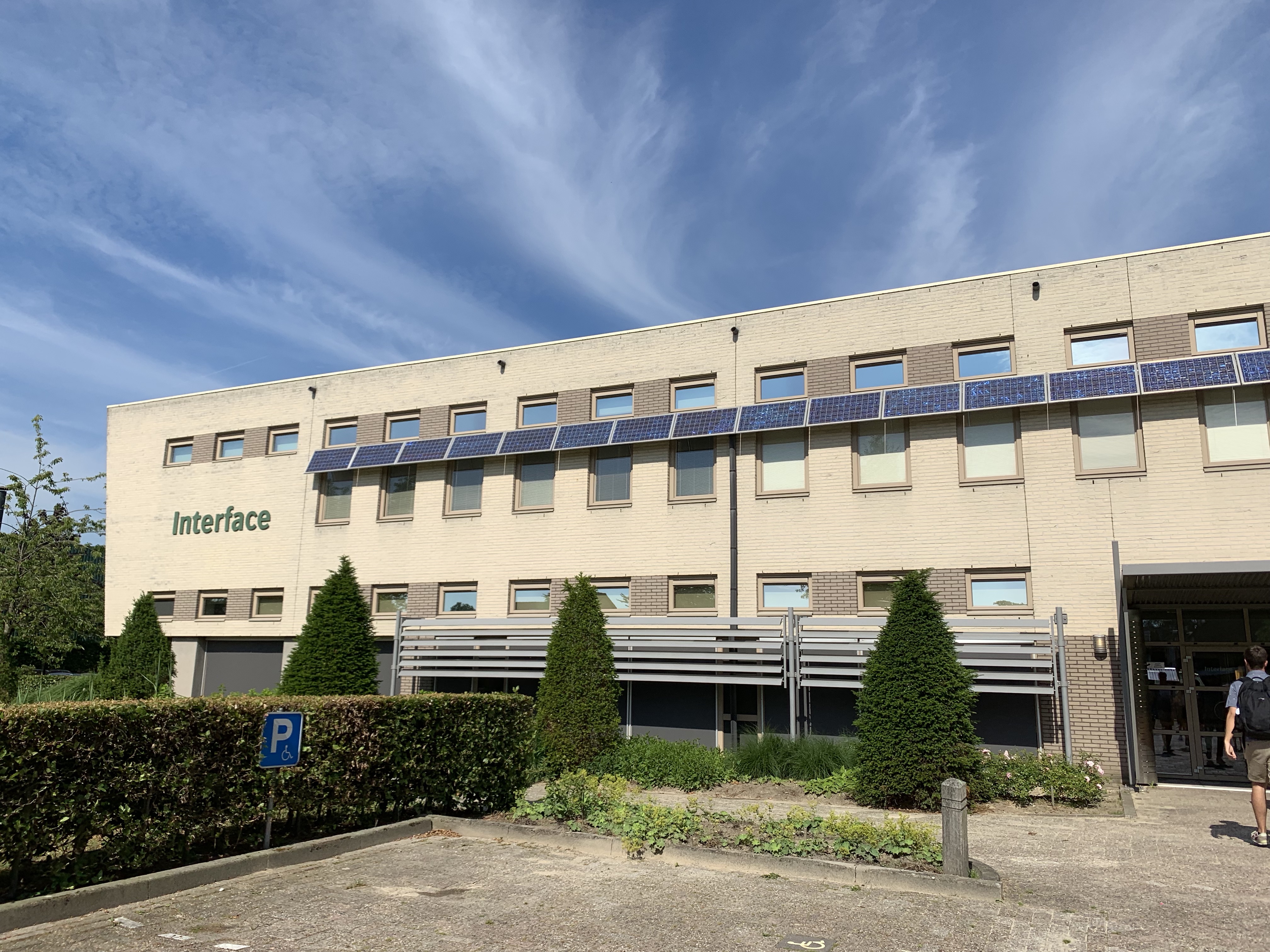
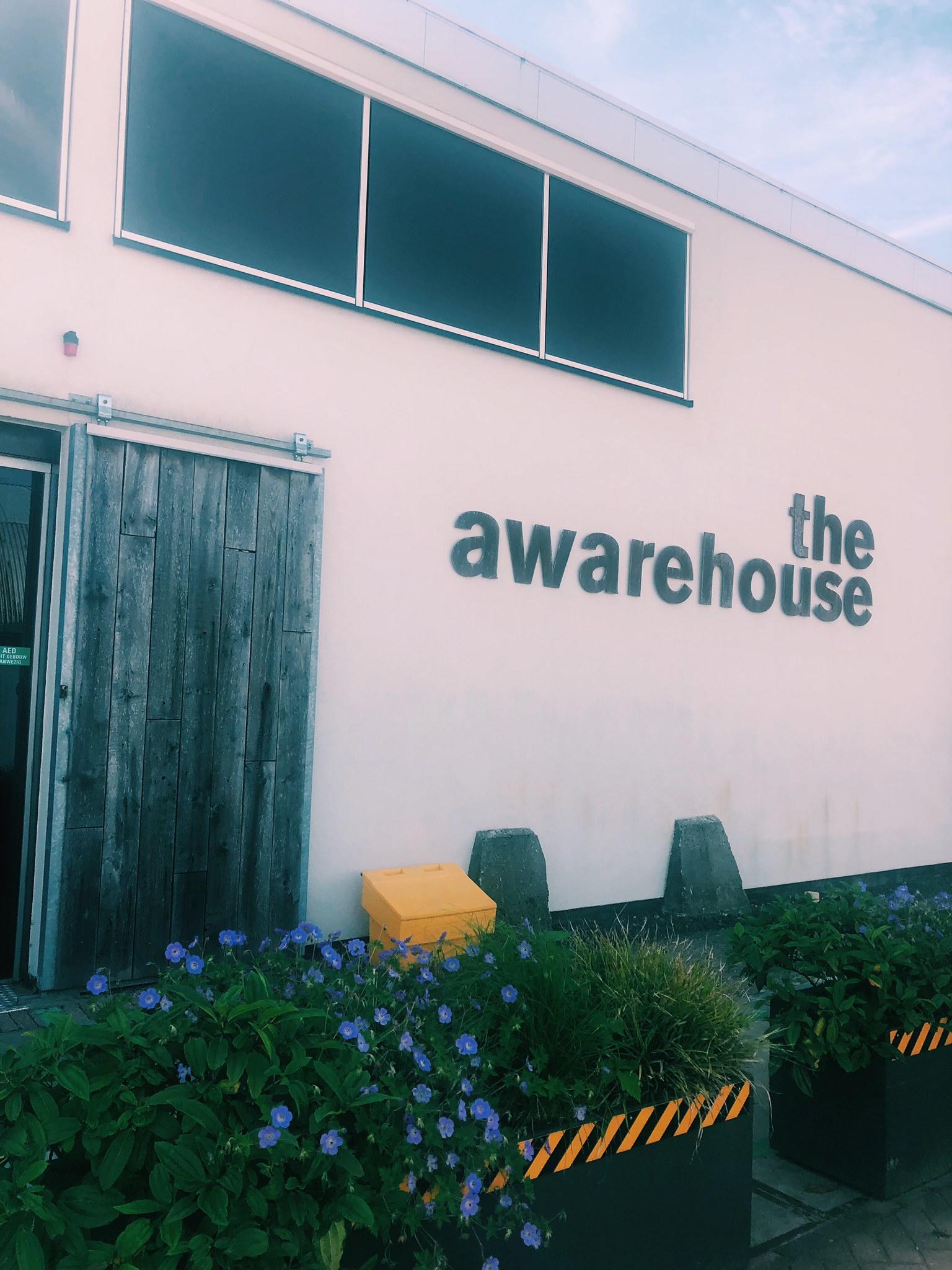
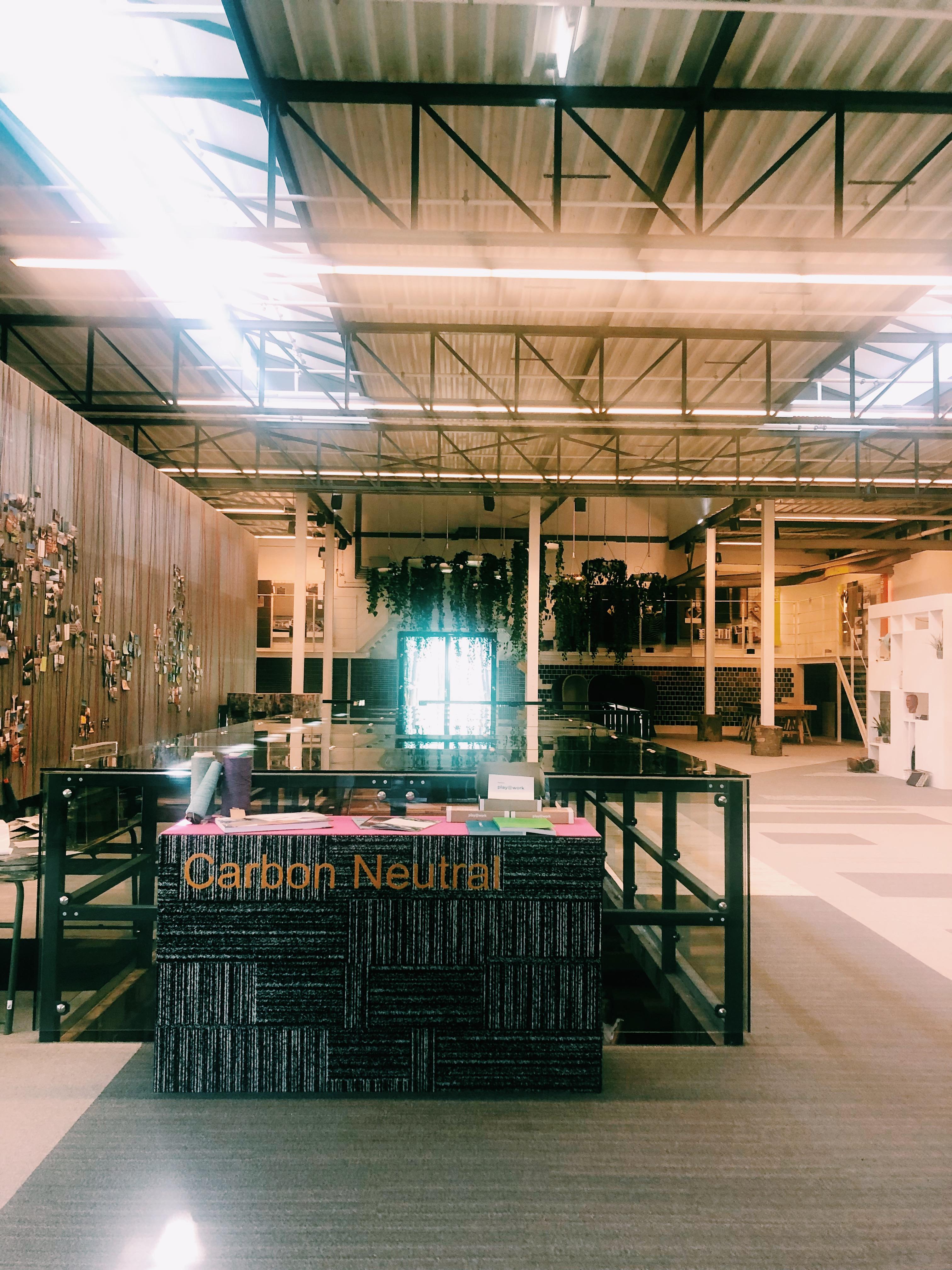
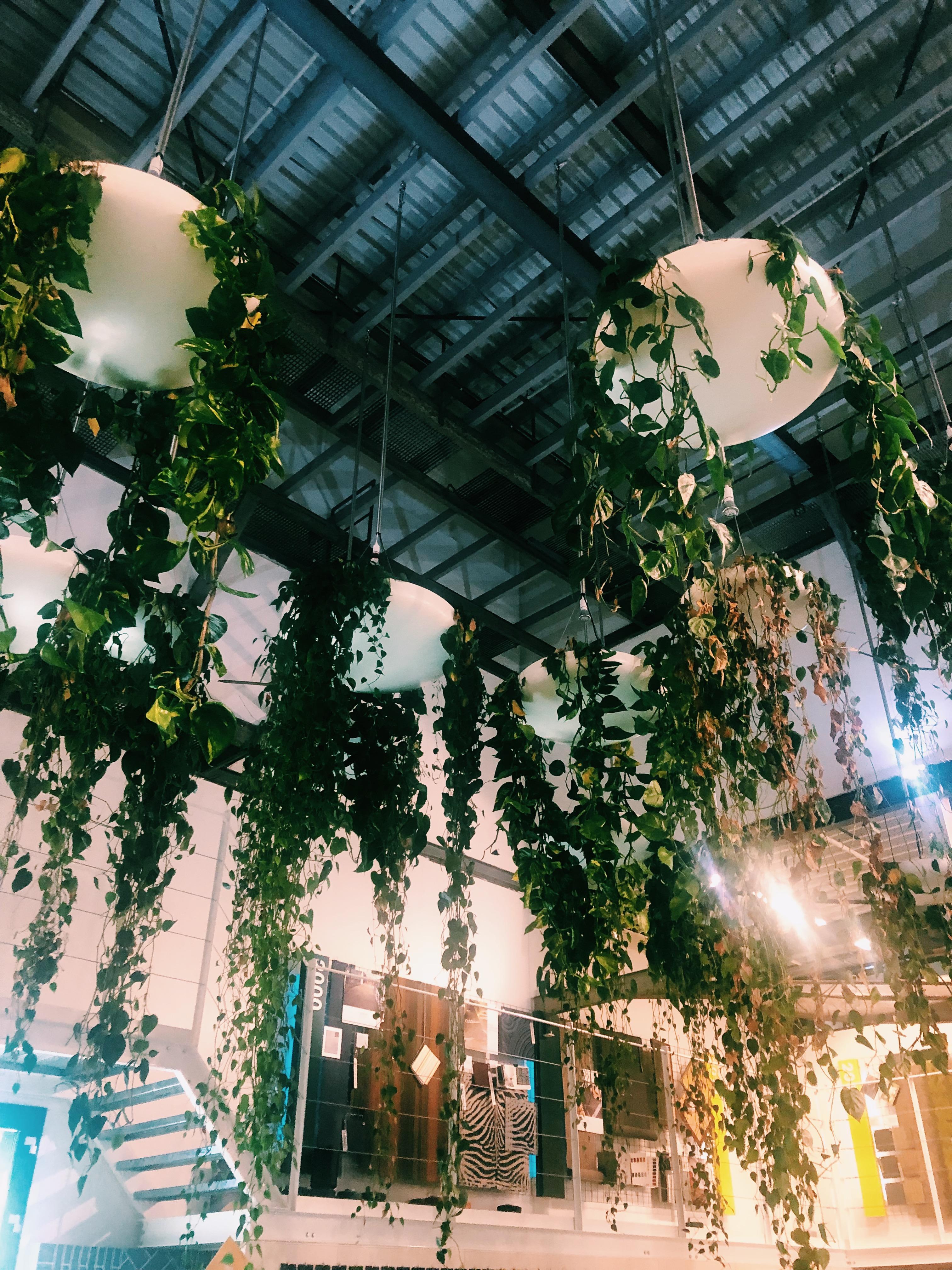
To start off our day my International Environmental Law and Sustainability and Global Corporate Leadership class took a 7am train to Scherpenzeel where we toured the Awarehouse. Upon entering the Awarehouse, I was amazed at how the buildings design was created using only recycled and sustainable materials and that every effort was made to retain as much of the old factory as possible by reusing whatever they could from the demolished building, so that they could recycle and eliminate waste. I was also impressed that the building ran on 100% renewable energy with virtually no water in their manufacturing and no waste being sent to landfills.
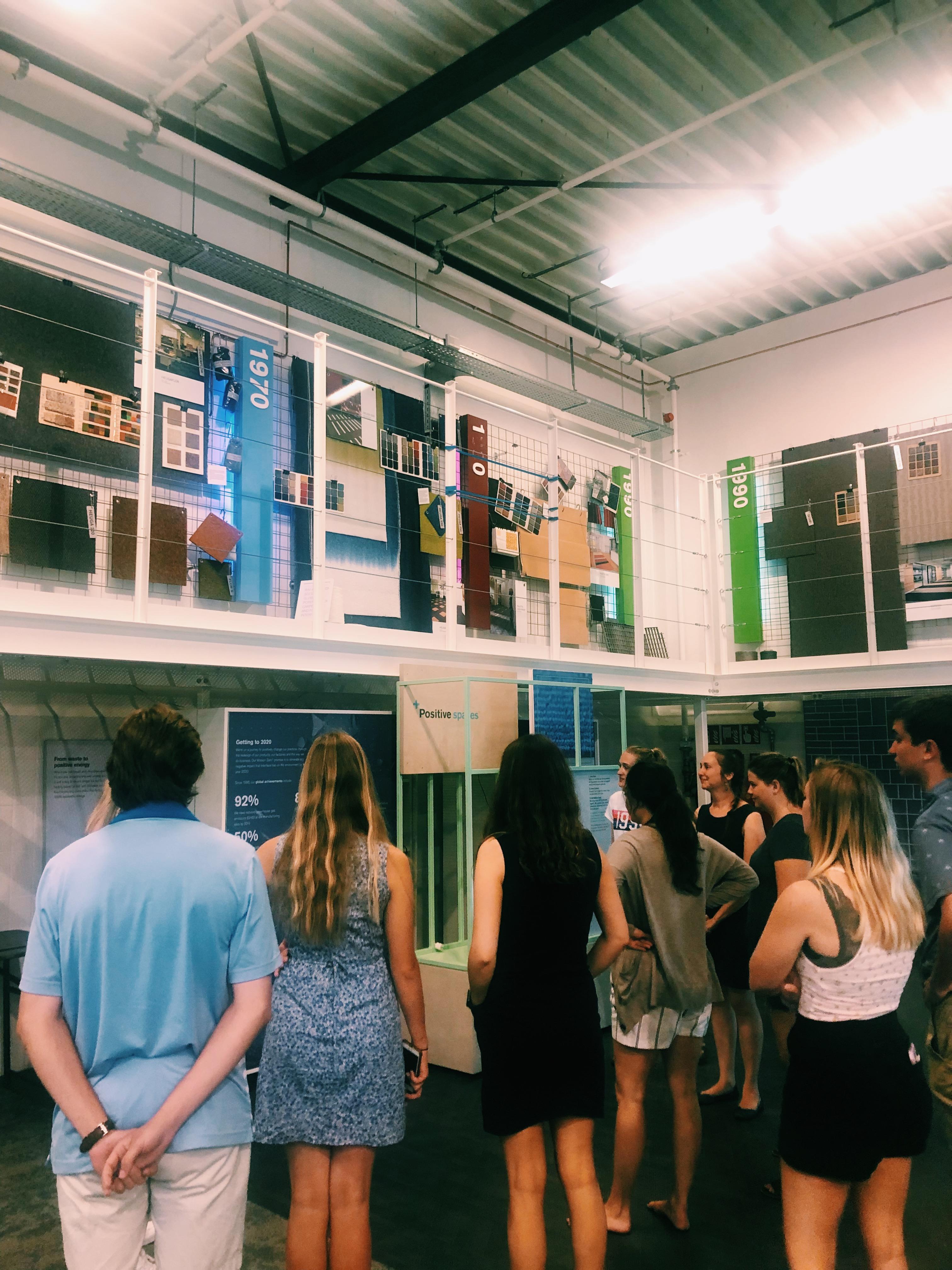
After admiring the building and settling in, we did presentations in regards to the history, values, and corporate climate at Interface, one of the world’s largest manufactures of modular carpet for commercial and residential applications and a leading producer of commercial broadloom and commercial fabrics. During our presentations we learned that Ray Anderson, the founder and chairman of Interface, Inc. was a graduate of the Georgia Institute of Technology and started Interface as a Georgia- based carpet tile manufacturer in 1973 with the goal to produce the first free-lay carpet tiles in America.
Additionally, we learned that Anderson first turned his focus toward the environment in 1994 when he read The Ecology of Commerce by Paul Hawken and Ishmael by Daniel Quinn, seeking inspiration for a speech to an internal task force on the company’s environmental vision. Hawken argues that the industrial system is destroying the planet and only industry leaders are powerful enough to stop it. As a result, Anderson established “Mission Zero” in 2009, which was the company’s promise to eliminate any negative impact it may have on the environment by the year 2020 through the redesign of processes and products, the pioneering of new technologies, and efforts to reduce or eliminate waste and harmful emissions while increasing the use of renewable materials and sources of energy. Anderson later chronicled the Mission Zero journey in two books, Mid-Course Correction: Toward a Sustainable Enterprise: The Interface Model (1998) and Confessions of a Radical Industrialist: Profits, People, Purpose: Doing Business by Respecting the Earth (2009).
Moreover, I learned about Interface’s values: Design a Better Way, Be Genuine & Generous, Inspire Others, Connect the Whole, and Embrace Tomorrow, Today and how they are using these values in their FairWorks Project, which looks to link global business with improving livelihoods in India. This is done by using materials such as banana bark and river grass to incorporate traditional weaving techniques to create both beautiful and sustainable flooring tiles.
After learning about the history, values, and corporate climate at Interface, we went on a factory tour to learn about the process of making carpet tiles and their sustainability efforts in the manufacturing process. We learned that Interface uses patented technology to efficiently tuft yarn and recapture the excess, significantly diminishing waste. Reclaimed carpet is also fed into a machine that cleanly separates the face fiber from the backing. The fiber is processed into fluff and baled for shipment to their premium yarn suppliers who convert it to post-consumer recycled content type 6 and 6,6 nylon. The backing is chopped into pieces that can then be used in their Cool Blue backing process, which creates their post-consumer content backing, GlasBac RE.

Global Marketing
Interface stands by the phrase: “We make Carpet Tile, but we sell Design.” They strongly believe in challenging themselves to be better, think differently, and develop products that have a positive impact on people’s lives, their spaces, and the planet. They know that people crave control of the environments in which they live, work, and learn, so they put people’s needs as their top priority. As a result, they develop modular flooring systems that create connected, integrated solutions that offer flexibility and functionality with aesthetics to fit any style. In other words, Interface creates spaces that are designed to foster collaboration and to create a sense of identity.
Tesla / Elon Musk
During a break from our Interface tour Sara talked to use about Tesla and its CEO Elon Musk. During her presentation I learned that Elon Musk is the wealthiest South African billionaire with a net worth of over $18 billion. A very successful and powerful business man, he not only co-founded Tesla but also is the CEO of both Tesla and SpaceX.
Additionally, I learned that in the 1990s, Elon Musk began a start-up company called Zip2, which helped create websites for companies like the New York Times and the Chicago Tribune during the start of the Internet boom. Through this venture he became a multimillionaire by his late 20s after selling Zip2 Corporation to Compaq Computer Corporation. He then started a new company, X.com, which later came to be known as PayPal. After selling this company as well, he began his third company, Space Exploration Technologies Corporation (SpaceX), an aerospace manufacturer and space transport service company that has been very successful working with NASA and launching numerous rockets to help astronauts conduct research. In 2003, Musk entered into his forth business venture when he helped funded a company called Tesla, Inc., an electric vehicle and solar panel manufacturer. Five years later in 2008, he climbed the ranks within the organization and became their CEO and product architect. In 2017, Tesla beat General Motors to become the most valuable U.S. car maker.
Moreover, I learned that Elon Musk’s leadership style is very transformational and that he leads in a way that motivates his employees to do bigger and better things. His drive and ambition inspires his employees, and people who have worked with him say he has the ability to make people believe in his vision. He is also an environmental leader and firmly believes in doing everything he can to help the environment by providing consumers with cleaner, more eco-friendly cars. Tesla focuses heavily on renewable energy production with their solar panels and sustainable vehicle transportation with their electric cars.
Lastly, I learned that Elon Musk has recently announced an ambitious goal to create a Hyperloop, which is a transportation tube that will theoretically move at 800 miles per hour, making it possible to travel from San Francisco to Los Angeles in half an hour!
 Sarah's European Voyage